John Singer Sargent's Studio, 31 Tite Street, Chelsea — History & Facts
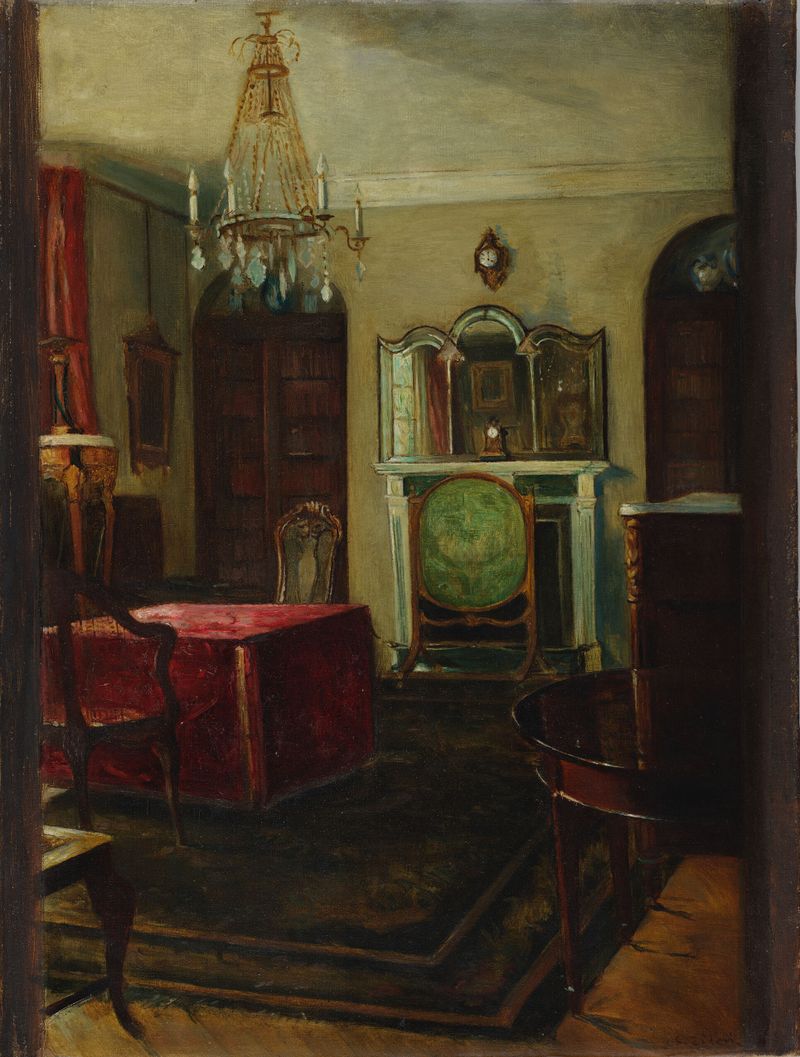
Could beauty survive in a century of chaos? The question lingers like a whisper amid the clamor of a tumultuous era. Look to the left at the vibrant palette that spills across the canvas, inviting you into the intimate space of an artist’s studio. The light dances through the window, illuminating brushes and palettes strewn carelessly, yet with purpose, like the remnants of a creative storm. Notice how the warm hues of ochre and deep reds contrast with the cool blues that suggest a fleeting serenity, capturing the essence of artistic frenzy amidst the chaos of daily life. Hidden meanings weave intricately through the details of the scene.
The disarray suggests both inspiration and madness, a reflection of the artist's struggle to maintain clarity against the backdrop of a rapidly changing world. The scattered materials embody the tension between order and chaos, hinting at the fragility of creation when faced with societal upheaval. Each object holds a narrative, a memory of the creative process that can be both exhilarating and overwhelming. Anne Susan Zileri painted this work during the late 19th to early 20th century, a time marked by both innovation and instability in the art world.
As movements shifted and philosophies clashed, she sought to capture the essence of an artist’s sanctuary, a place where beauty could emerge despite the surrounding turmoil. In a world on the brink of modernity, her canvas serves as a testament to the enduring power of creativity.