
Joseph Stevens Buckminster (1784-1812), after Gilbert Stuart — History & Facts
Did the painter know this moment would outlive them? In Joseph Stevens Buckminster, the weight of existence hangs in the balance, captured in the delicate brushstrokes of a fleeting moment, frozen yet alive with meaning. Look to the left at the soft illumination of Buckminster's face, where light caresses his features, casting shadows that reveal both strength and vulnerability. Notice how his deep, contemplative gaze seems to peer beyond the canvas, drawing the viewer into his inner world. The subtle hues of blue and gray form a somber backdrop, contrasting with the vivid richness of his attire, suggesting a life both accomplished and haunted by impending loss. The tension between promise and despair pulses through the painting.
The gentle curve of Buckminster’s shoulders conveys an unspoken burden, while the deliberate placement of his hands gestures toward a quiet resolve. Each detail—the fabric of his clothes, the folds of the backdrop—echoes a sense of longing, as if the artist is mourning both the subject's transient life and the greater human experience of mortality itself. Gilbert Stuart Newton painted this work around 1815-1817, during a tumultuous period that reflected the larger struggles of Romanticism. At this time, the artist was grappling with personal losses and a profession marked by shifting tastes, balancing the demands of a changing art world with his desire to capture the essence of his subjects.
In Joseph Stevens Buckminster, we see not just a portrait, but a profound meditation on the legacies we leave behind.
More Artworks by Gilbert Stuart Newton
Browse all →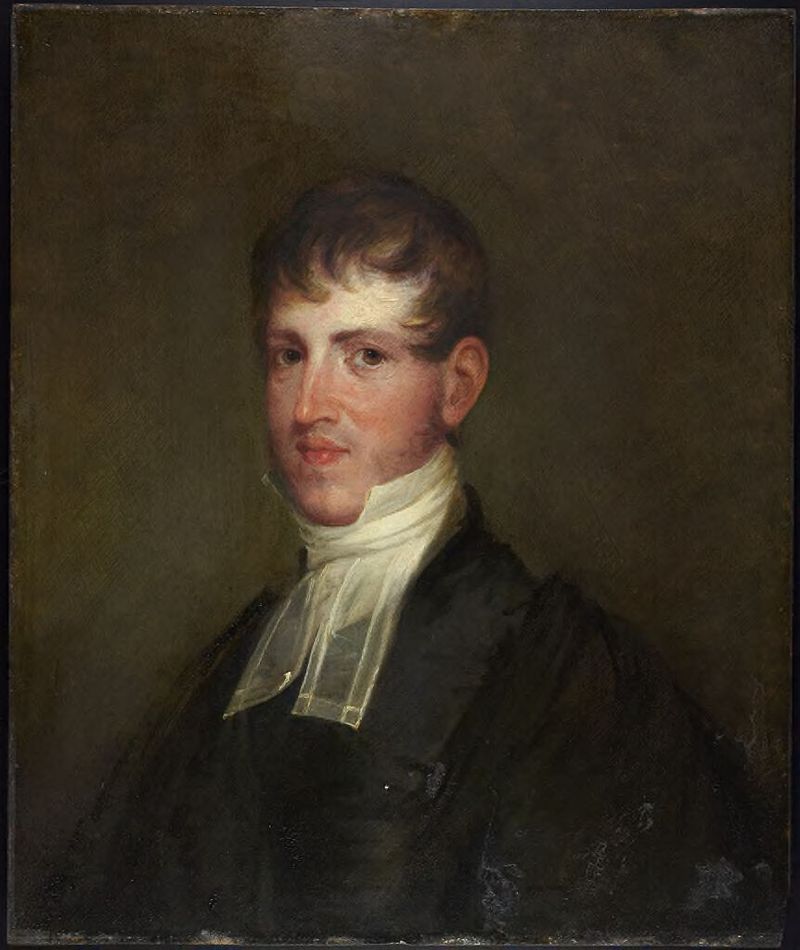

More Portrait Art
Browse all →
Las meninas
Diego Velázquez

Self-portrait with a Bandaged Ear and Pipe
Unidentified artist

Girl with a Pearl Earring
Johannes Vermeer

The Sampling Officials of the Amsterdam Drapers’ Guild, Known as ‘The Syndics’
Rembrandt van Rijn

The Hundred Guilder Print: the man seen on the back in the lower left corner
Rembrandt van Rijn

Portrait of Dr Gachet
Vincent van Gogh