
Samuel Appleton (1766-1853) — History & Facts
Who listens when art speaks of silence? In the stillness of captured time, there lies a profound yearning, a whisper of emotions held just beneath the surface. Look to the left at the gentle curve of Samuel Appleton’s profile, lit softly by a warm, diffused light that bathes his features in a golden glow. The artist employs rich, deep hues, a palette filled with earth tones that evoke the weight of history and the intimacy of the moment. Notice how the delicate brushwork reveals both the softness of Appleton’s attire and the resolute nature of his expression, hinting at a man of substance and contemplation.
Every fold in the fabric seems to carry a story, drawing the viewer’s eye towards the thoughtful gaze that gazes beyond the canvas. Beneath the surface lies a complex interplay of identity and legacy. The quiet confidence in Appleton’s stance contrasts sharply with the profound stillness of the background, suggesting a man caught in the web of societal expectations and personal aspirations. Each stroke reflects a yearning for recognition and connection, drawing attention to not just the physical likeness of the subject, but also the essence of his character.
The absence of extraneous elements heightens this focus, inviting contemplation of the silent narratives that live within us all. In 1818, during a period marked by burgeoning American identity and artistic aspiration, the artist found himself grappling with the tensions of evolving national pride and personal ambition. Painted in Boston, which was a hub for cultural growth, Samuel Appleton emerges from a time when portraiture sought to bridge personal histories with the collective memory of a young nation. Newton's choice to capture Appleton reflects not only the individual’s significance but also the broader narrative of America’s quest for self-definition.
More Artworks by Gilbert Stuart Newton
Browse all →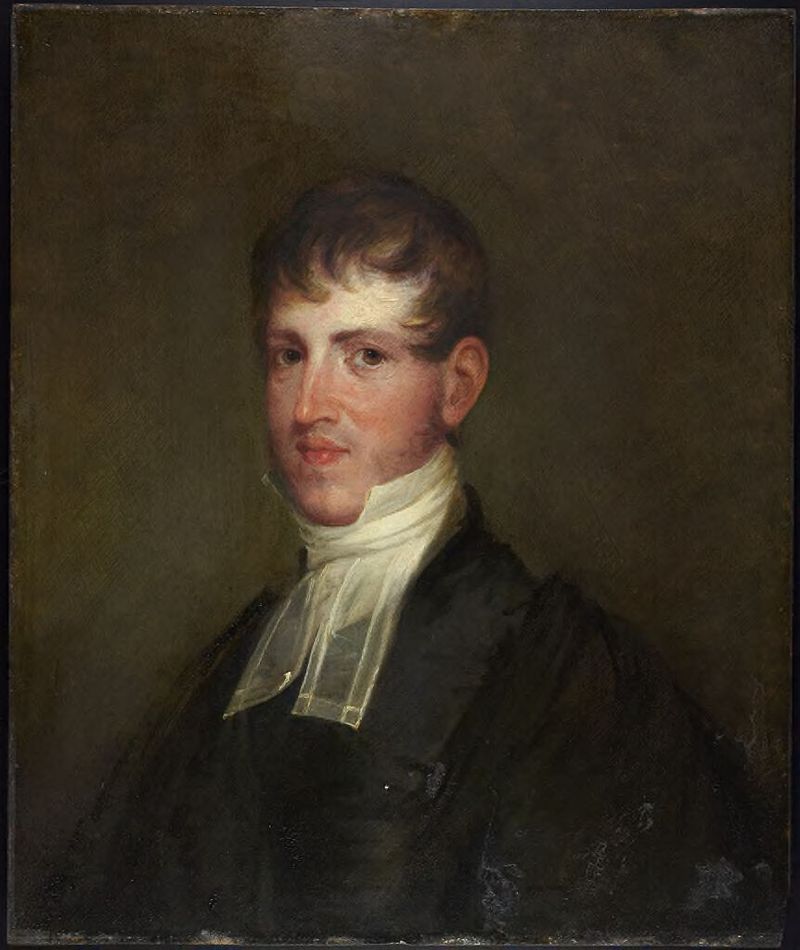

More Portrait Art
Browse all →
Las meninas
Diego Velázquez

Self-portrait with a Bandaged Ear and Pipe
Unidentified artist

Girl with a Pearl Earring
Johannes Vermeer

The Sampling Officials of the Amsterdam Drapers’ Guild, Known as ‘The Syndics’
Rembrandt van Rijn

The Hundred Guilder Print: the man seen on the back in the lower left corner
Rembrandt van Rijn

Portrait of Dr Gachet
Vincent van Gogh