
Thomas Palmer (1743-1820) — History & Facts
Can paint confess what words never could? In the silent depths of memory, emotions often linger unspoken, yearning for expression. Look closely at the subject’s visage, where the gentle play of light unveils the subtle transitions of skin tone and the soft contours of his face. The rich, earthy palette evokes a sense of warmth and nostalgia, inviting viewers to engage with the deep hues that surround him. Notice the way the background fades into a muted darkness, allowing the subject to emerge as the focal point, a testament to the artist’s skill in drawing in the observer's gaze. As you explore the painting more intently, consider the implications of the subject’s gaze, which seems to traverse time and space, inviting reflection on the nature of legacy and remembrance.
The thoughtful tilt of his head suggests an introspective moment, capturing the delicate balance between presence and absence, between the vitality of life and the shadows of the past. Each brushstroke carries the weight of experience, hinting at a deeper narrative woven into the fabric of his existence. Created between 1818 and 1820, this portrait emerges from a period when the artist was re-establishing his career after a challenging period abroad. Newton, who was influenced by the Neoclassical style, sought to capture the essence of his subjects with both precision and emotional depth.
In a world increasingly fascinated by individual identity and memory, this work reflects a broader cultural shift towards personal introspection and the significance of human connection.
More Artworks by Gilbert Stuart Newton
Browse all →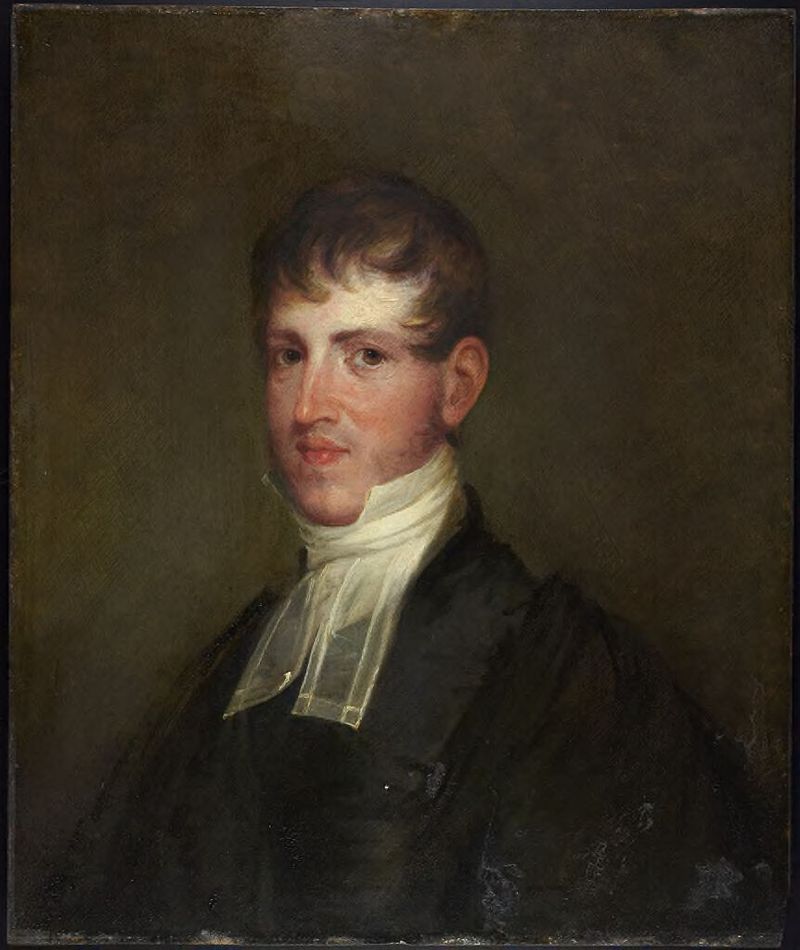
More Portrait Art
Browse all →
Las meninas
Diego Velázquez

Self-portrait with a Bandaged Ear and Pipe
Unidentified artist

Girl with a Pearl Earring
Johannes Vermeer

The Sampling Officials of the Amsterdam Drapers’ Guild, Known as ‘The Syndics’
Rembrandt van Rijn

The Hundred Guilder Print: the man seen on the back in the lower left corner
Rembrandt van Rijn

Portrait of Dr Gachet
Vincent van Gogh