Kahnfahrer in Landschaft — History & Facts
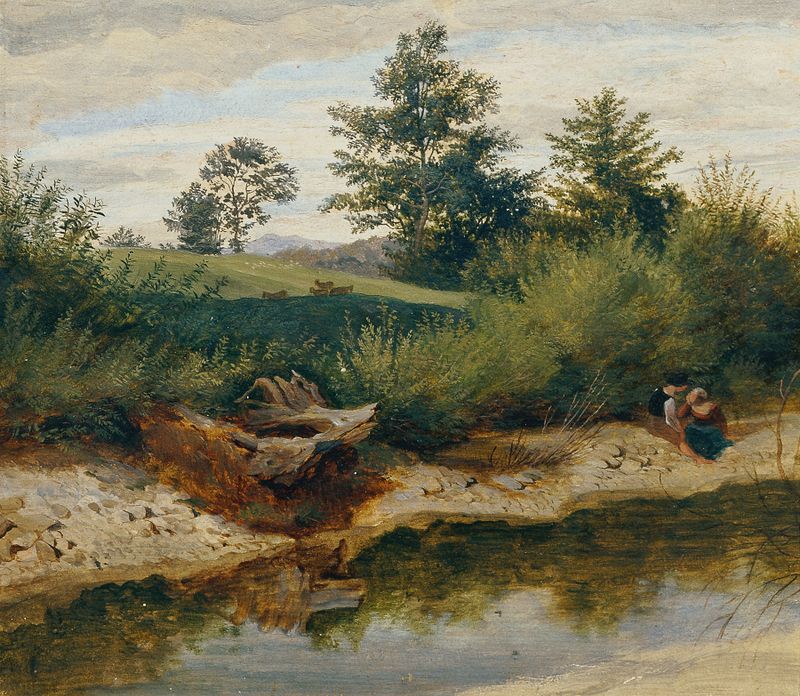
What secret hides in the quiet of the canvas? In Kahnfahrer in Landschaft, the stillness of the landscape invites contemplation, echoing the profound emptiness lurking beneath its surface. The viewer is drawn into a world where nature reigns supreme, yet the solitude speaks of human absence and longing. Look to the center of the painting, where a solitary figure navigates a small boat across a placid waterway. The gentle ripples reflect the muted tones of green and blue that dominate the scene, while wisps of clouds drift lazily in the expansive sky above.
Notice how the soft, diffused light bathes the landscape, creating an ethereal atmosphere that amplifies the sense of isolation. The careful brushwork and harmonious color palette evoke a serene yet contemplative mood, drawing attention to the delicate interplay between man and nature. Beneath its tranquil façade lies a weighty narrative of emptiness and introspection. The lone boatman, dwarfed by the vastness around him, symbolizes the human experience of solitude and the search for purpose.
The expansive landscape serves as both a backdrop and a character—its sweeping contours and quiet majesty contrasting sharply with the individual’s isolation. Here, emptiness is not merely a void but a canvas for reflection, suggesting a longing for connection that resonates deeply within the soul. Friedrich Philipp Reinhold painted Kahnfahrer in Landschaft in 1819 during a significant period of personal and artistic transformation. Living in Germany, Reinhold was influenced by the Romantic movement, which emphasized emotion and individual experience.
This work emerged at a time when artists were increasingly focused on the interplay between nature and human existence, highlighting the introspective themes that would come to define his oeuvre.