Paar in Landschaft — History & Facts
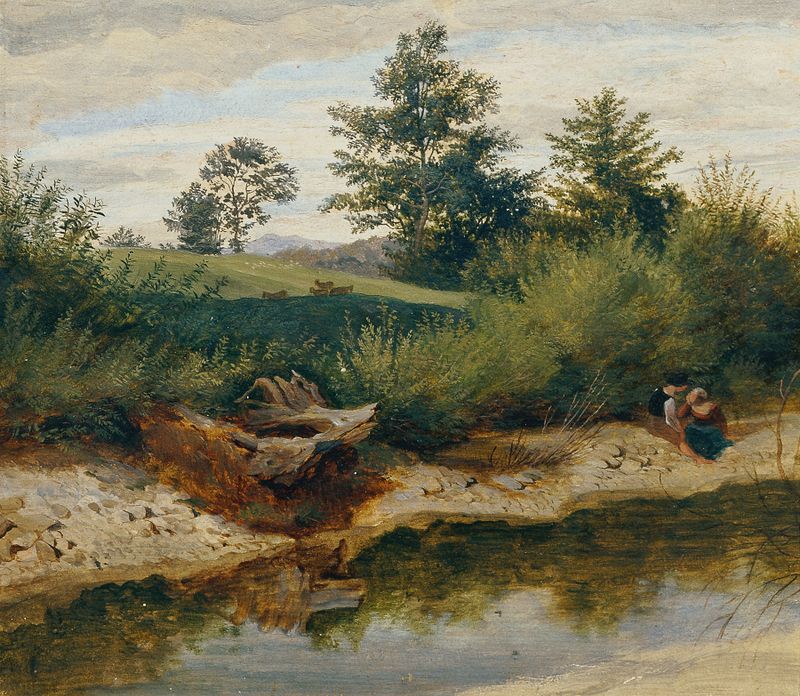
What if silence could speak through light? In Paar in Landschaft, the interplay of shadow and illumination evokes an intensity of emotion that words often fail to capture, resonating with the weight of unspoken grief. Look to the left, where a couple stands in quiet embrace against a vast, expansive landscape. Their figures are enveloped by soft, muted greens and browns, yet the rays of sunlight filter through the clouds, casting gentle highlights on their forms, drawing the viewer's gaze toward their shared solitude. Notice how the couple's posture—slightly turned away from us—suggests a world of internal struggle, a poignant contrast to the serene beauty that surrounds them. Delve deeper into the painting's nuances: the delicate intertwining of their hands speaks volumes of their bond, while the distant, shadowy hills seem to loom, representing both the weight of their past and the unknown future.
The ethereal quality of the light permeating the scene reinforces the idea of fragility, as if their moment of intimacy is both a refuge and a reminder of life's inevitable losses. Each blade of grass and leaf trembling in the wind holds the trace of unvoiced thoughts, reinforcing a collective mourning. Created in 1819, this work captures a time of personal and artistic reflection for Friedrich Philipp Reinhold. Living amidst the Romantic movement's emphasis on emotion and nature, he painted during a period of transformation in Germany, where personal loss and existential contemplation shaped the artistic dialogue.
This piece stands as a testament to Reinhold's ability to convey profound emotions through subtlety, inviting viewers to ponder the unspoken grief that often accompanies love.