
Karmeliterkirche Leopoldstadt — History & Facts
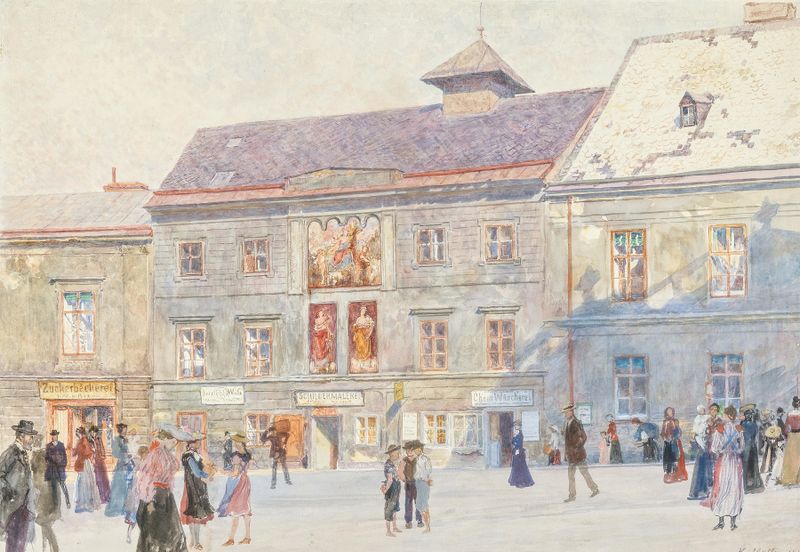
In a world racing forward, serenity stands as a quiet rebellion, an invitation to pause and reflect. Focus first on the harmonious interplay of shapes in the foreground, where the gentle arches of the Karmeliterkirche rise against a backdrop of soft hues. Notice the delicate brushwork that captures the texture of the stone, evoking a sense of ancient stillness. The subtle gradation of blues and warm earth tones creates a soothing atmosphere that envelops the viewer, suggesting both the passage of time and the stillness of the present moment. Yet, beyond the tranquil surface, a deeper narrative unfolds.
The juxtaposition of light and shadow hints at the duality of faith and doubt, reflecting the complexity of human existence. The church stands resolute, a symbol of continuity amidst the fleeting nature of time, while the almost ethereal quality of the background invites contemplation of what lies beyond the material world. Every detail, from the soft glow of the windows to the intricate framing of the structure, speaks to a longing for peace in a chaotic world. Created during a period when many artists were exploring new movements and styles, the work emerged from a time when Carl Müller sought to capture the essence of sacred spaces.
Painted at an unknown date, it resonates with an understanding of the spiritual and historical significance of architecture, reflecting the artist's desire to depict not only the physical form of the Karmeliterkirche but also its role as a refuge for the soul.
More Artworks by Carl Müller
Browse all →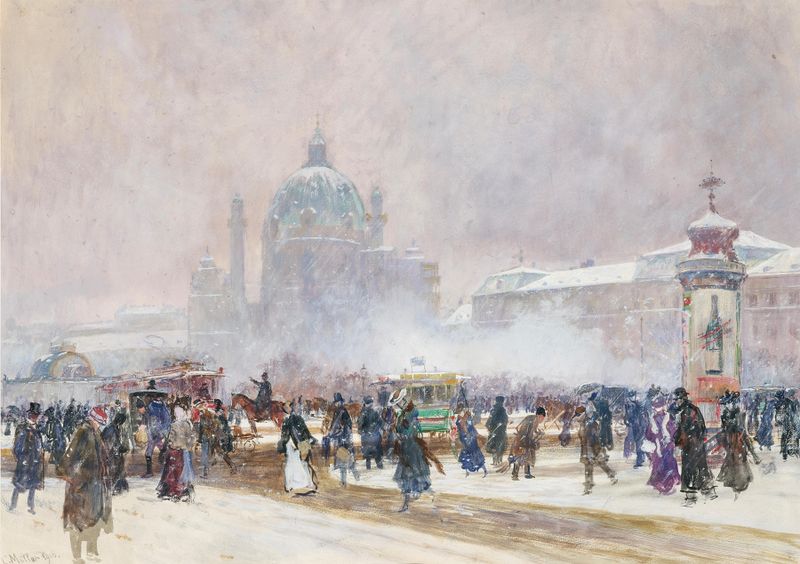


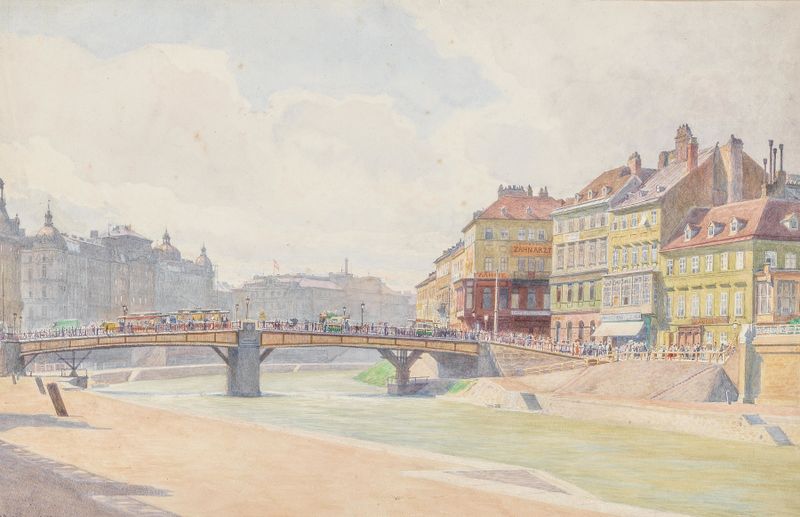
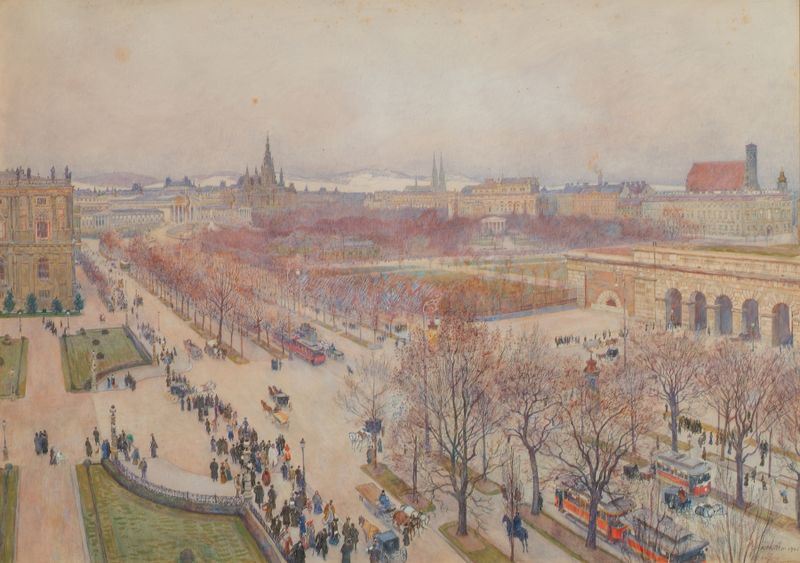

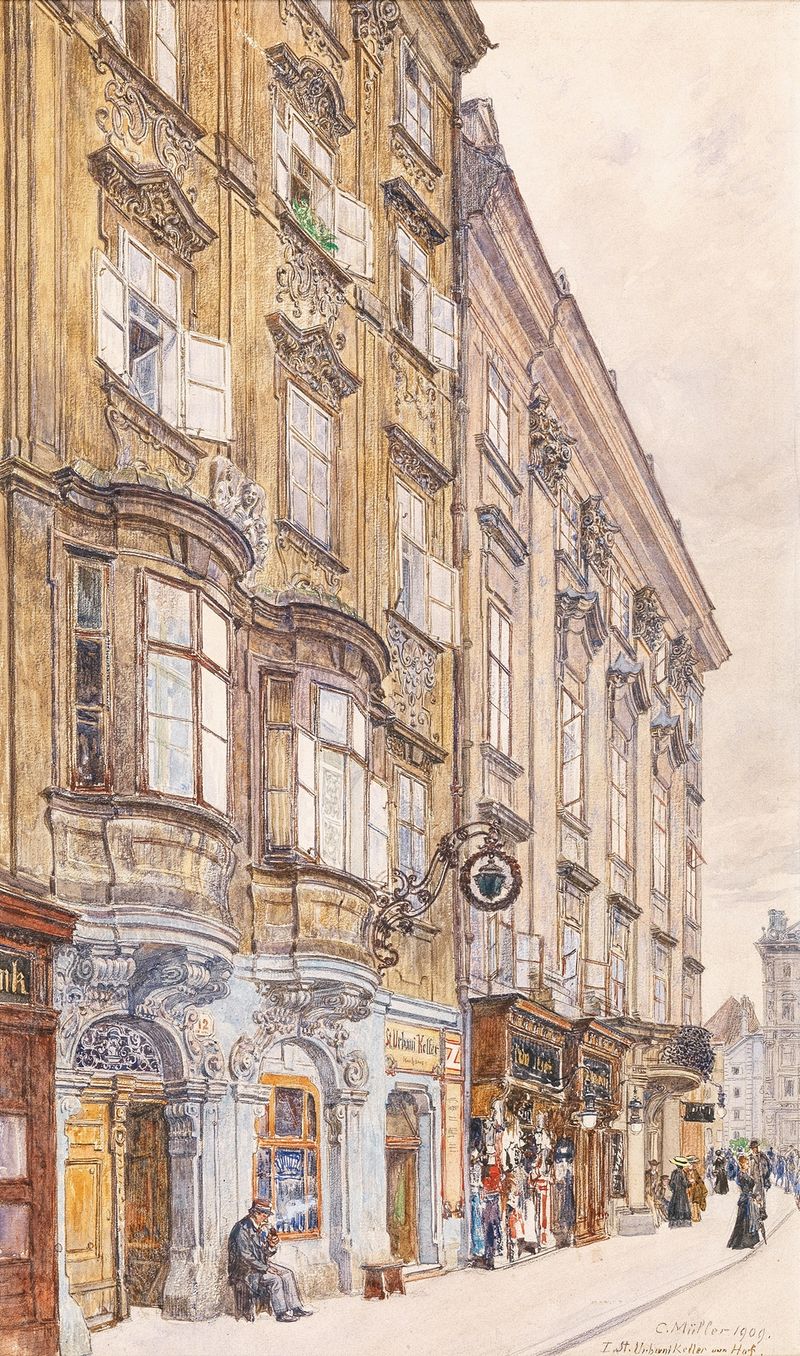
More Architecture Art
Browse all →
The statue of Liberty
Frédéric Auguste Bartholdi

View of Houses in Delft, Known as ‘The Little Street’
Johannes Vermeer

View of Houses in Delft, Known as ‘The Little Street’
Johannes Vermeer

The Cathedral in Rouen. The portal, Grey Weather
Claude Monet

The yellow house
Vincent van Gogh

The Church in Auvers-sur-Oise, View from the Chevet
Vincent van Gogh