Klerant — History & Facts
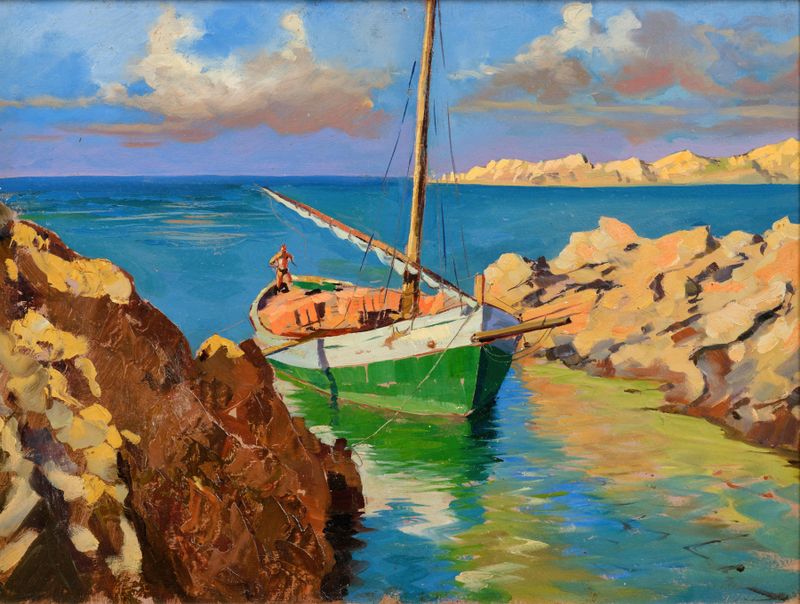
Did the painter know this moment would outlive them? In Klerant, memory is not merely an echo of the past but a vibrant presence, inviting contemplation and connection. Look to the center of the canvas, where the bold strokes coalesce into a vivid landscape, rich with hues of emerald green and deep cerulean blue. The foreground pulses with life, while the horizon line draws the eye upward, inviting exploration of the ethereal sky. Notice how the light dances across the surface, illuminating the interplay of color and shadow, creating an atmosphere both serene and dynamic.
The composition balances abstraction with representational elements, suggesting a world rooted in reality yet suspended in time. Within this vivid portrayal lies a tension between nostalgia and the fleeting nature of experience. The swirling patterns can evoke the turbulence of memory—both chaotic and beautiful—suggesting that our recollections are never static but rather fluid and evolving. The juxtaposition of vibrant colors against darker undertones implies a deeper emotional landscape, where joy and sorrow intertwine in the act of remembering. Created in 1929, Klerant emerged during a transformative period in Llewelyn Lloyd's life, as he navigated the challenges of the interwar years.
At this time, the world of art was in flux, responding to modernist movements that sought new interpretations of reality. Lloyd's work reflects both his personal journey and the broader artistic dialogue, capturing a moment that resonates through time, prompting viewers to consider their own memories and connections.