Klosterruine im Winter — History & Facts
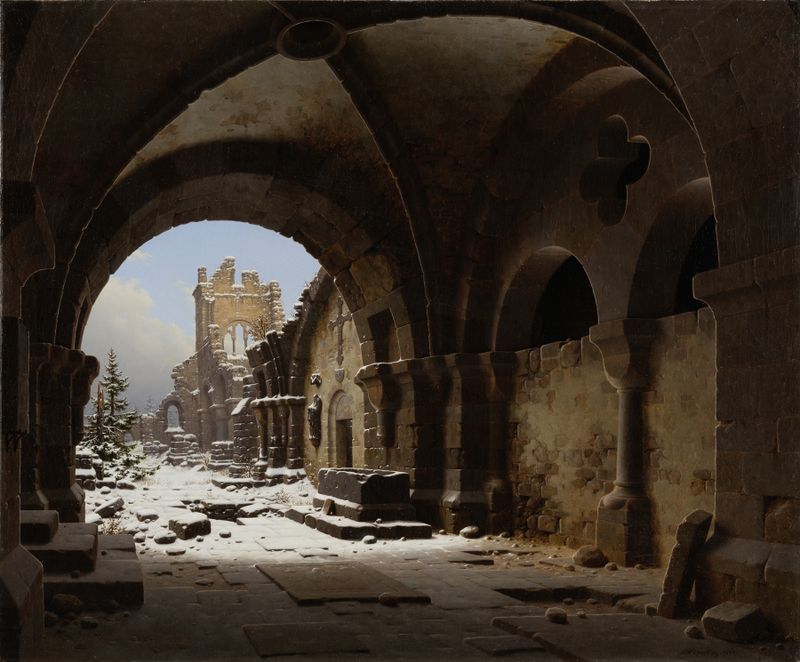
In the quiet embrace of winter, remnants of a once-thriving monastery stand stoically amidst the stark white of snow, an echo of what was lost. The chilling air wraps around the crumbled stones, whispering stories of solitude and abandonment. As the landscape breathes a frosty stillness, the spirit of the past dances lightly, urging reflection and melancholy. Look to the left at the intricate detailing of the stone walls, where the subtle hues of gray and muted blues emerge from under layers of snow.
The gentle play of light emphasizes the texture of the weathered bricks, creating a poignant contrast against the blanket of white. Notice how the delicate brush strokes capture the delicate shadows cast by the skeletal trees, suggesting life that persists despite the winter’s chill. Each element is deliberately placed, inviting the viewer to trace the contours of both nature and architecture in a melancholic embrace. Delve deeper into the painting, and observe the interplay between decay and resilience.
The starkness of the scene speaks volumes about loss, hinting at a forgotten history intertwined with the beauty of ruin. The soft light piercing through the clouds serves not only as illumination but as a metaphor for hope amid desolation. This duality compels the viewer to confront their own feelings of absence, drawing connections between personal and collective memory. Carl Georg Adolph Hasenpflug created this evocative piece in 1851, a time when Romanticism was flourishing in Germany.
Living in a period marked by political upheaval and social change, Hasenpflug found solace in capturing the serene yet haunting landscapes surrounding him. His focus on ruins speaks to a broader fascination with nostalgia and the passage of time, reflecting both his personal circumstances and the cultural currents of 19th-century art.