Kop van een hert — History & Facts
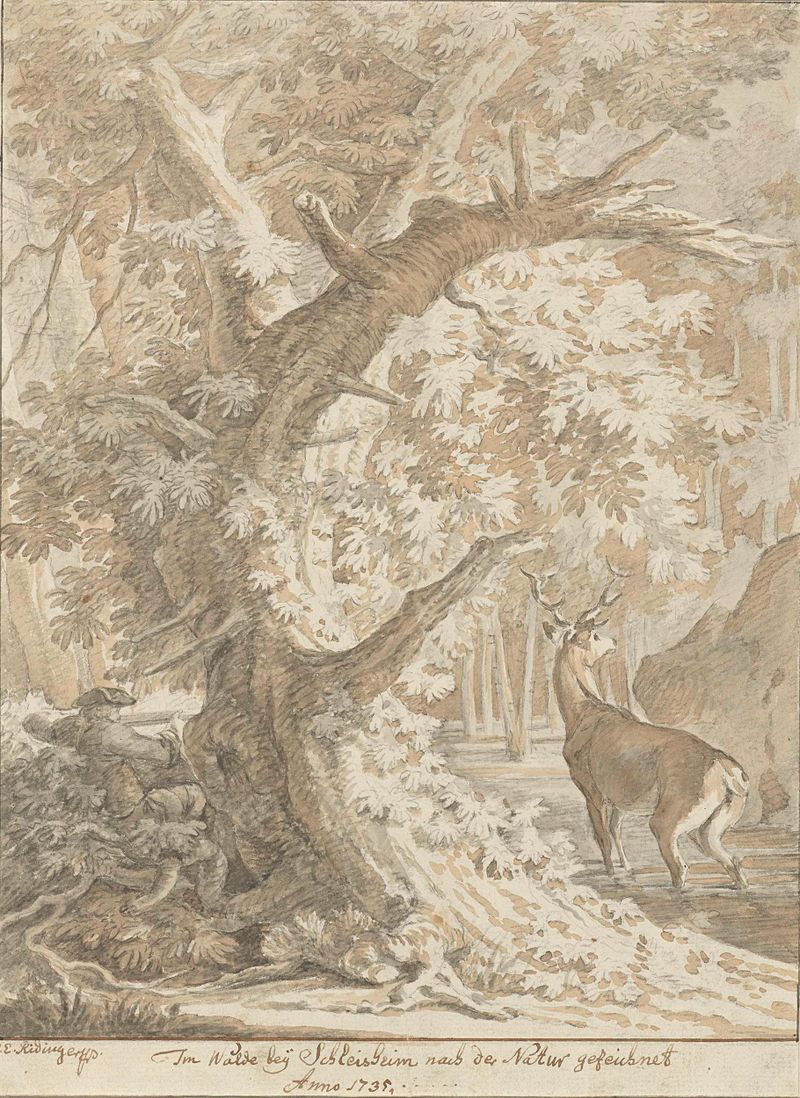
What secret hides in the quiet of the canvas? Beneath the surface of Kop van een hert, a tale of rebirth and renewal whispers through every brushstroke. Look to the left where the majestic head of the stag emerges from the darkness, its antlers gracefully arching like a crown. Notice how the earth-toned palette underscores the creature's connection to nature, while delicate highlights on its fur reveal a depth of character. The meticulous detailing captures not just the figure, but also the essence of the wild.
Each stroke breathes life into the stag, transforming it into a symbol of strength and resilience, quietly embodying the cycle of life that surrounds it. In its stillness, the artwork resonates with tension, evoking a poignant contrast between the fragility of existence and the grandeur of nature. The eyes of the stag, both piercing and serene, draw us into a conversation about survival and the dignity of life. The interplay of light and shadow across its form suggests a moment caught between the fading past and the promise of new beginnings, as if the stag is poised for its next leap into the unknown. During the years from 1708 to 1767, Johann Elias Ridinger was immersed in a world keenly focused on the natural realm.
Living in Germany, he became known for his detailed depictions of animals, reflecting the Enlightenment's fascination with nature. This period of his life was marked by a growing appreciation for the intricacies of wildlife, a theme that would shape his artistic legacy and elevate him within the realm of animal portraiture.