Kraag van kloskant met drielobbige waaierbloem — History & Facts
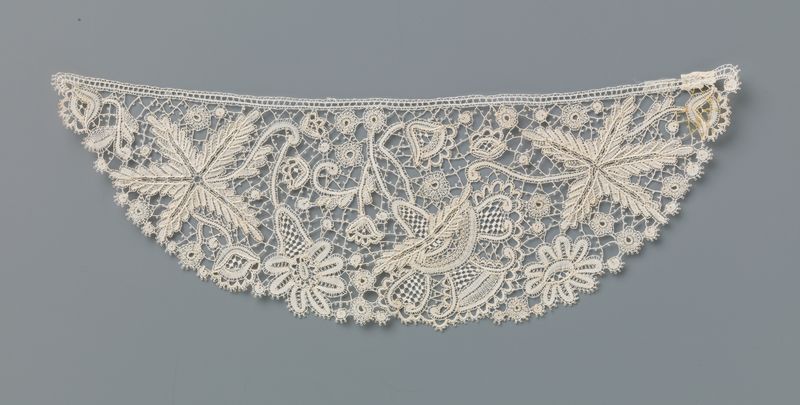
Is this a mirror — or a memory? The delicate interplay of lace and light in Kraag van kloskant met drielobbige waaierbloem evokes an ethereal realm where the past whispers softly through every intricate thread. Focus on the intricate lace collar, which draws the eye first with its finely woven patterns that resemble fragile clouds. Notice how the three-lobed florets emerge elegantly from the fabric, their forms a celebration of nature's grace. The muted color palette allows the texture to dominate, inviting a tactile response that gives life to the otherwise still piece.
The subtle shadows dance across the surface, reinforcing the notion of time held captive within the artwork. Beneath its delicate surface lies a rich tapestry of meaning. The floral motif suggests a connection to femininity and the fleeting beauty of life, while the lace itself conveys the intricate bonds we weave with memory and identity. Each fold and loop captures not just craftsmanship, but the essence of women’s artistry in a time when their voices were often stifled.
This piece resides in a realm that blurs the boundaries between the tangible and the transcendent. Created around 1915, Berkers was at the forefront of the Dutch lace revival movement, a time when her work resonated deeply with the shift towards modernism in art. Living in a post-World War I Europe, she grappled with the tensions of the changing world, yet found solace and strength in traditional craft. This artwork serves as both a personal expression and a reflection of a broader cultural dialogue, celebrating resilience through artistry.