Manchet van kloskant versierd met drielobbige waaierbloemen — History & Facts
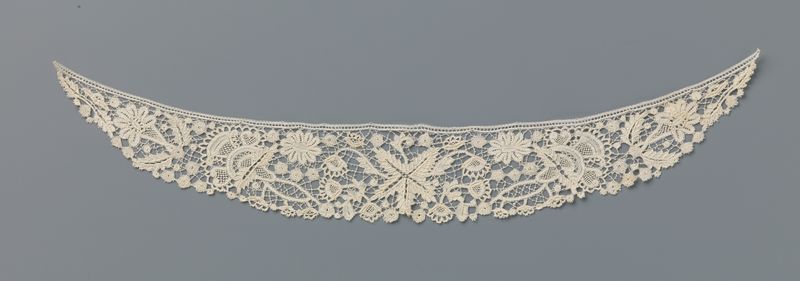
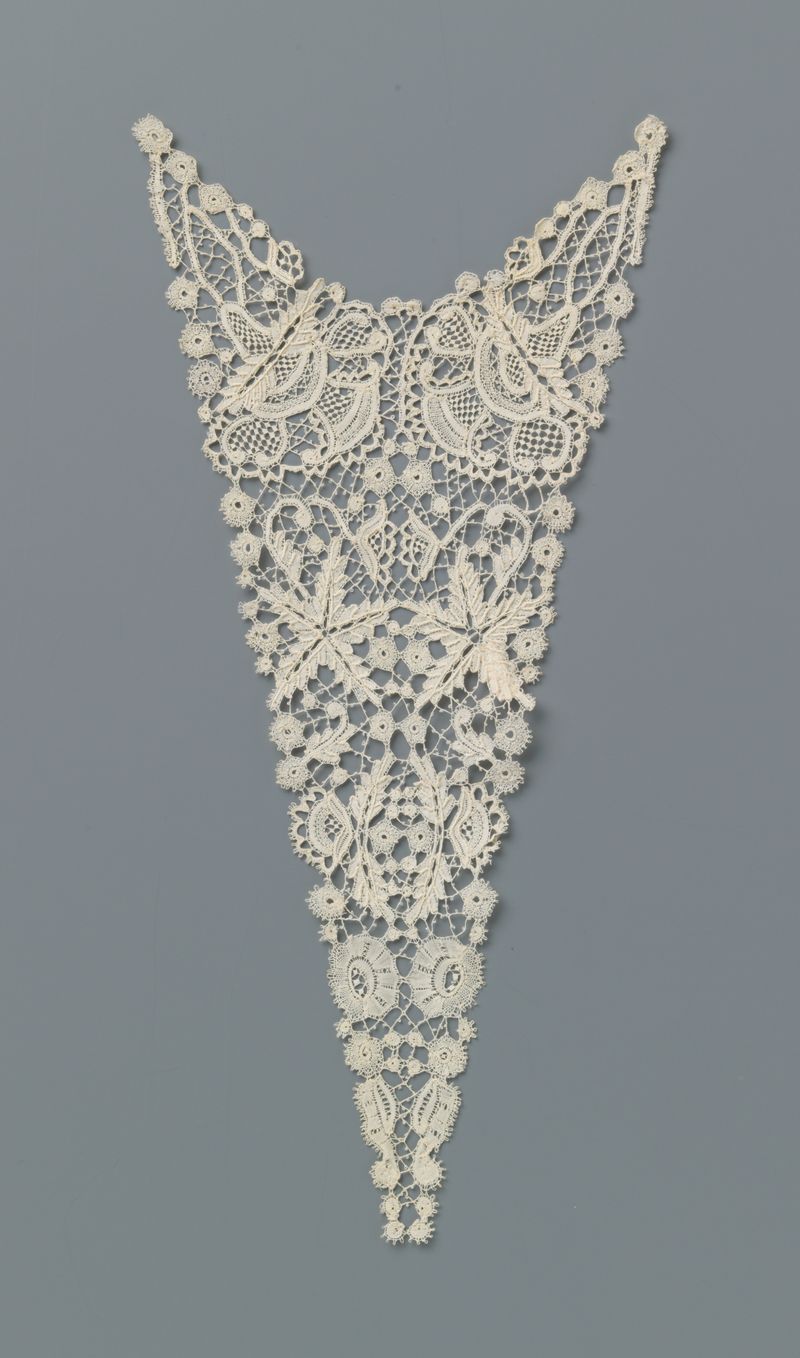
As we gaze into the delicate intricacy of this textile representation, a wave of nostalgia washes over us, beckoning memories of a time when craftsmanship was both an art and an embrace of the past. Focus on the luminous hues that dance across the fabric, where soft pastels intertwine with deeper tones, creating a visual symphony. The three-lobed flowers emerge organically from the lace, their forms both intricate and inviting. Notice how the exquisite detailing draws the eye, guiding you along the contours of each petal and frill, while the lace itself seems to whisper stories of generations long gone. Within this artwork lies a tension between fragility and resilience.
The lace, with its ethereal quality, represents the fleeting nature of beauty and memory, while the vibrant flowers assert a celebration of life and continuity. Each stitch encapsulates not only skill but also a longing for connection—between the past and present, and between the maker and the observer. It speaks to the human experience, inviting contemplation of what remains after time has passed. Created around 1915, during a period of significant change in the world, the artist was navigating her own journey amid the evolving landscape of art.
Martha Berkers crafted this piece in a time when traditional methods were being challenged, yet her dedication to intricate detail and craftsmanship reflects a deep respect for the art of lace-making. In this delicate work, she immortalizes not just a technique, but a sentiment—a bridge to a tender past.