Krajina pred búrkou — History & Facts
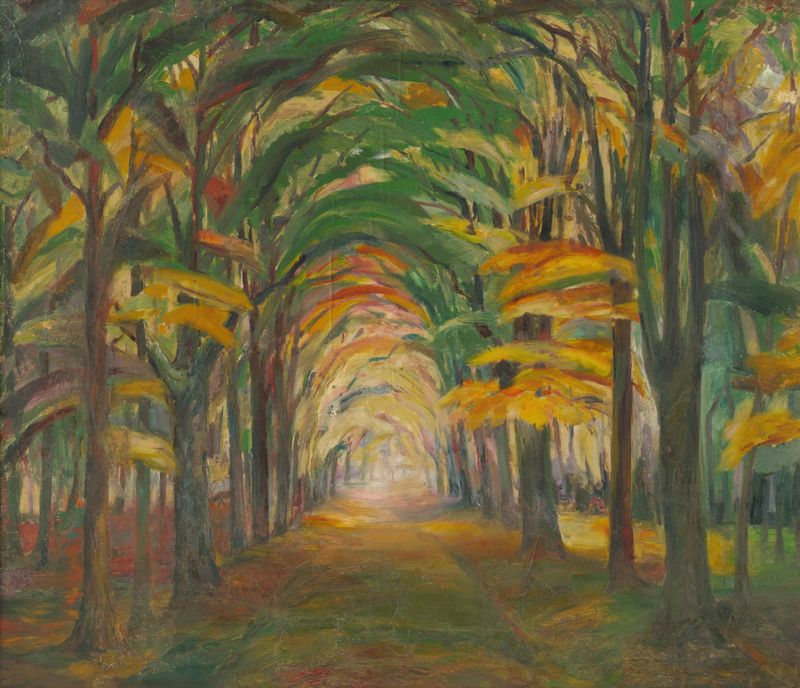
The act of reflection transforms past moments into eternal visuals, as if memories were captured under glass. Each brushstroke is a testament to vulnerability, allowing us to glimpse the delicate layers of existence. In Krajina pred búrkou, the viewer's eye is immediately drawn to the swirling clouds that dominate the horizon. Look to the center, where dark, tumultuous shades of gray and blue converge, creating an ominous yet captivating sky.
The foreboding atmosphere is contrasted against the softer, subtle greens of the rolling hills below, suggesting both turmoil and tranquility. Kernstok’s use of thick, expressive strokes gives life to the landscape, evoking the tension that ripples through nature moments before a storm. The narrative unfolds through the interplay of light and shadow, embodying a struggle between chaos and calm. Notice the faint glow peeking through the clouds, a suggestion of hope amidst the impending storm.
This duality reflects the complexity of human emotions—anticipation, fear, and the solace found in the natural world. Each element seems alive, reminding us of our own internal storms and the fragility of serenity. Created in 1930, Károly Kernstok painted this work during a period of personal and national upheaval in Hungary. The interwar years were marked by a search for identity and the anxiety of social change.
As modernism began to influence the art world, Kernstok sought to bridge tradition with contemporary themes, capturing both the beauty and turmoil of a landscape that mirrored his inner experience.