
La Bièvre — History & Facts
The stillness in the air whispers of change, a testament to transformation. In this delicate piece, the merging of nature and urban life invites contemplation on the relentless passage of time. Focus first on the flowing water that gently meanders through the foreground, glistening under the soft embrace of afternoon light. Notice how the artist captures every ripple and reflection, blending hues of blue and green, while muted browns and grays define the banks.
The composition creates a harmonious balance between the serenity of the river and the encroaching urban architecture, framing a scene that feels both tranquil and charged with the weight of impending change. Beneath the surface lies a narrative of coexistence. The vibrant life of the river juxtaposes the rigid structures looming in the background, hinting at the tension between nature and industrialization. Small details, such as the delicate leaves clinging to branches and the distant figures engaged in daily activities, evoke a sense of nostalgia for what once thrived here.
This duality of peace and progress reflects the universal theme of transformation, revealing the intricate dance between preservation and advancement. Created in the 19th century, this work emerged during a period of rapid urbanization in France, particularly in Paris. Pierre-Marcel Roy painted La Bièvre, inspired by the historic river that once flowed serenely through the city. At this time, he sought to capture the essence of a vanishing landscape, reflecting the struggles and aspirations of an era marked by both beauty and the relentless march of modernity.
More Artworks by Pierre-Marcel Roy
Browse all →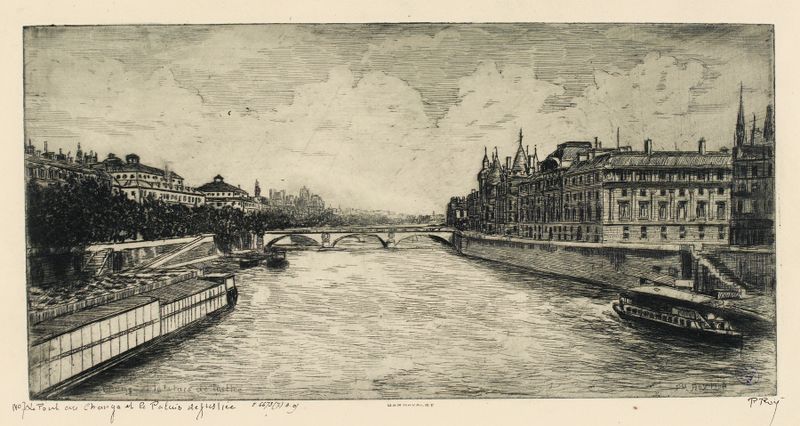
Le Pont au Change et le Palais de Justice
Pierre-Marcel Roy

Pavillon de l’Asie Russe
Pierre-Marcel Roy

La Sainte Chapelle
Pierre-Marcel Roy
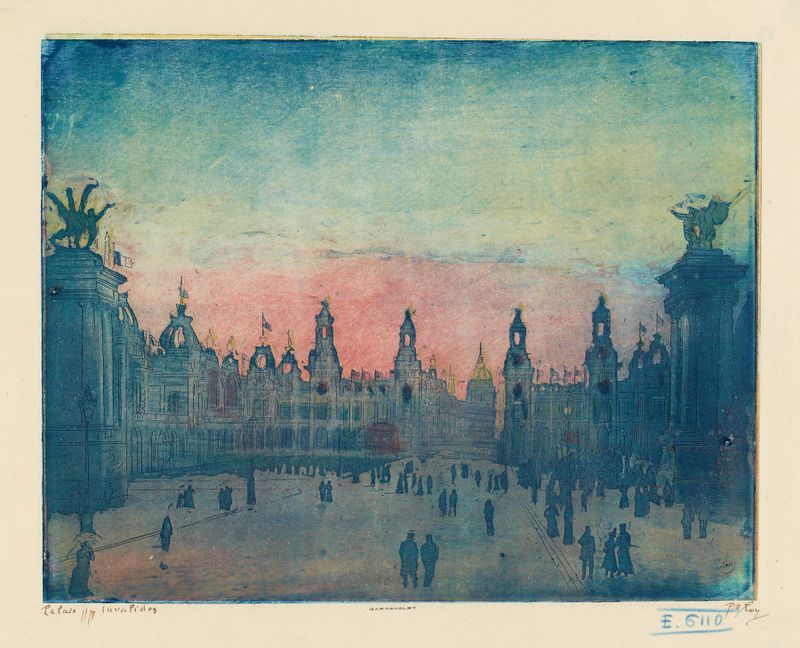
Palais des Invalides
Pierre-Marcel Roy

Eglise de Ste Eustache
Pierre-Marcel Roy

Pont Sully – Abside de Notre-Dame
Pierre-Marcel Roy

Place Maubert
Pierre-Marcel Roy

Palais d’Italie, de Norvège, d’Allemagne, d’Espagne et Roumanie
Pierre-Marcel Roy
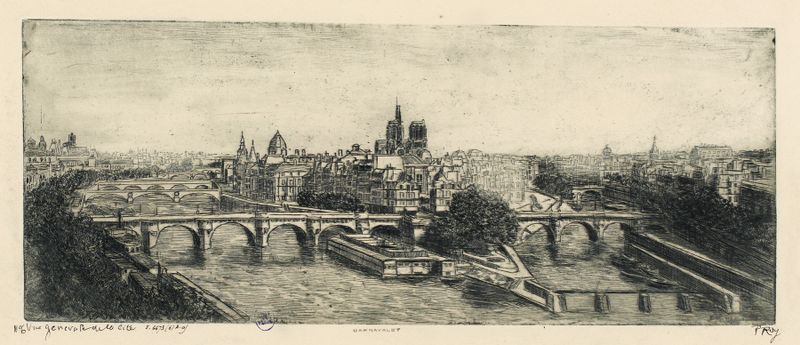
Vue générale de la Cité
Pierre-Marcel Roy

Palais de l’Electricité
Pierre-Marcel Roy





