La Bièvre, rue Croulebarbe (Usine de la veuve Lanier) — History & Facts
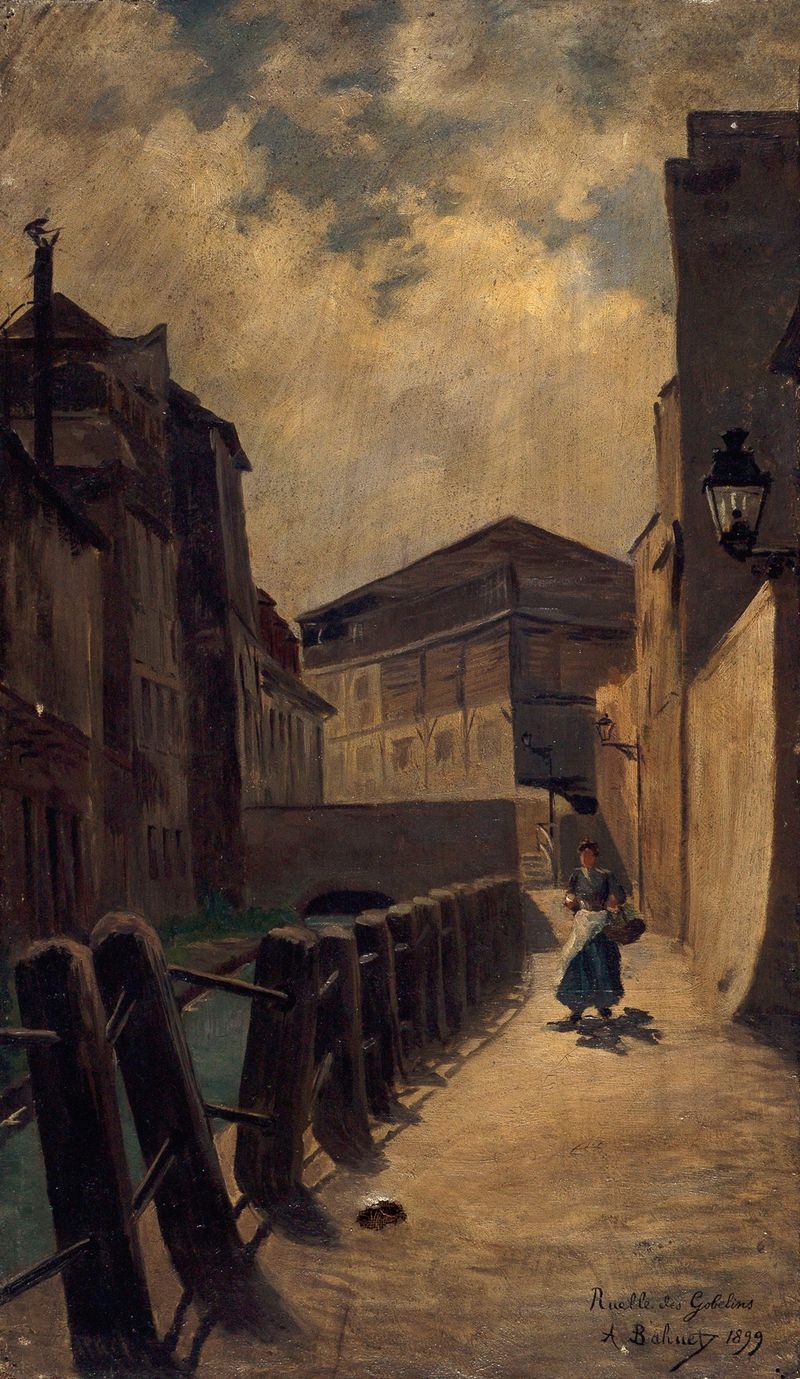
What secret hides in the quiet of the canvas? In an era where modernity surged forth, the whispers of a tranquil river beckon us to a simpler, more innocent time. Look to the left at the gentle curve of the river, its surface smooth and reflective, almost a mirror to the life surrounding it. Notice how the light spills over the water, illuminating soft greens and browns of the banks, while delicate brushstrokes create a sense of movement in the foliage. The industrial structure looms in the background, but the painter’s emphasis is on the harmony of nature, drawing your gaze to the children gathered at the water’s edge, engaging in the timeless ritual of play. As the viewer’s eye dances across the canvas, the contrast between the vibrant life along the river and the looming factory suggests a poignant tension.
The innocence of childhood, captured in joyful gestures, stands in stark opposition to the encroaching industrial landscape, a symbol of progress that threatens to overshadow these serene moments. The delicate balance of light and shadow reflects not only the physical space but also an emotional landscape, where simplicity meets complexity. In 1885, the artist found inspiration along the banks of La Bièvre while significant transformations unfolded in Paris. As industrialization reshaped the city, Bahuet sought to immortalize the essence of nature and innocence, capturing a fleeting moment amid the relentless march of time.
This work embodies a wistful longing for the past, a reminder of the charm that existed before the urban sprawl took hold.