La Bièvre, ruelle des Gobelins — History & Facts
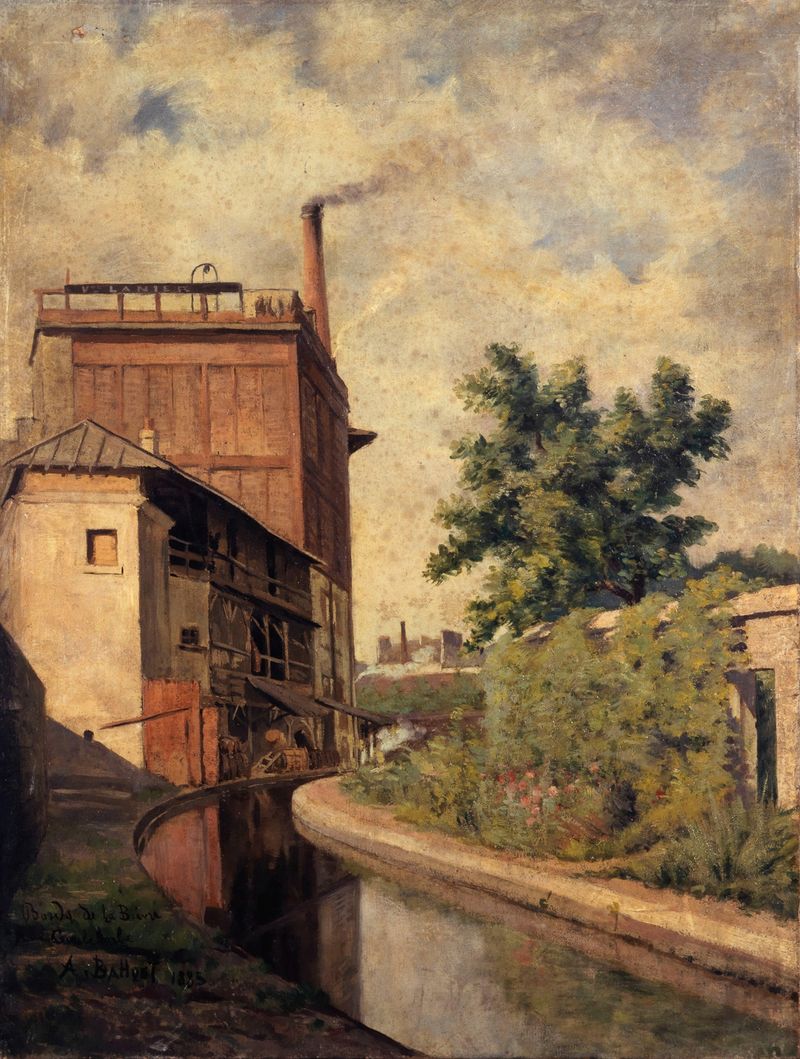
This intimate revelation lies at the heart of the canvas, where nature and urban life entwine in a delicate dance. Focus first on the gentle curve of the Bièvre River, meandering through a narrow alley, where the water reflects a symphony of greens and ochres. Notice how the foliage leans toward the water, as if whispering secrets, while the muted buildings stand guard with their quiet stoicism. The artist applies a palette of soft hues and subtle textures, creating a serene yet dynamic interplay that invites you to linger in this hidden corner of Paris. Yet, amidst this tranquil scene, an underlying tension emerges.
The juxtaposition of the fluid river and the steadfast architecture signifies the relentless push and pull of nature against human encroachment. The hurried brushstrokes hint at the passing of time, inviting contemplation on the fragility of this harmonious coexistence. Each detail, from the glistening water droplets to the weathered stones, tells a story of resilience and the fleeting beauty of life. In 1899, as Alfred-Louis Bahuet painted this piece, he was navigating his own place in the evolving art scene of France.
The Impressionist movement had blossomed, with artists exploring light and color in innovative ways. Bahuet, working in the shadows of this revolution, sought to capture the essence of Parisian life while grappling with the rapid urbanization of his beloved city. His brushstrokes remain a testament to the tension between progress and nature, a dialogue preserved on canvas for generations to ponder.