La Grosse Grange de Mezery — History & Facts
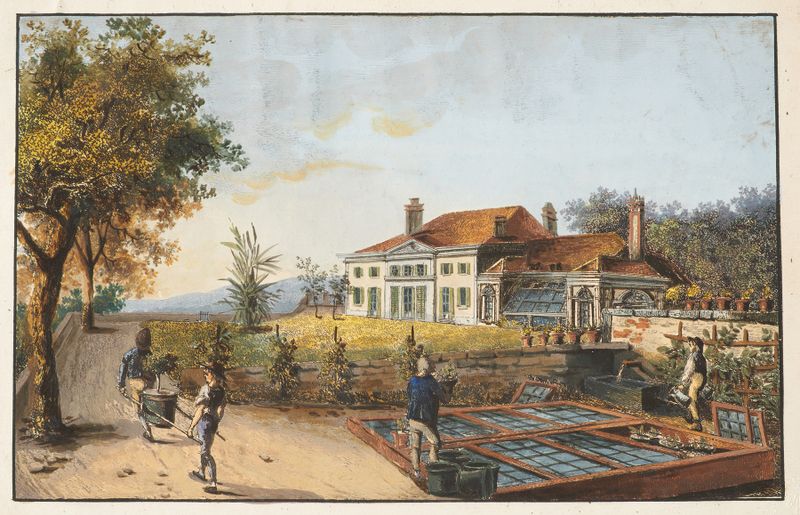
Could beauty survive in a century of chaos? The vibrant composition invites contemplation, suggesting that even amid turmoil, moments of ecstasy can flourish, captured forever in paint. Focus on the vivid green fields that dominate the canvas, symbolizing life and renewal. The eye is drawn to the expansive sky, streaked with soft, warm colors that evoke a sense of tranquility. Notice how the farmhouse stands resilient in the foreground, its weathered wood and earthy tones contrasting with the lush surroundings.
The interplay of light and shadow not only highlights the textures of the landscape but also hints at the passage of time and the stories that unfold within it. Delving deeper, one can sense the harmonious balance between nature and man. The meticulous brushwork reveals the artist's reverence for both the organic and the constructed, embodying a dialogue between the two. The positioning of the farmhouse suggests a protective stance against encroaching chaos, while the rolling hills seem to cradle it, as if nature itself seeks to embrace humanity’s imperfections.
This juxtaposition of elements captures an emotional tension — the fragility of beauty threatened by the unpredictability of life. In his silent yet evocative portrayal, Michel Vincent Brandoin painted this work during a time when the art world was grappling with the shifting tides of modernity. While the exact date remains unknown, it is likely that he created it in the late 19th century, a period characterized by both innovation and nostalgia. As society faced upheaval, artists like Brandoin sought solace in nature, exploring themes of resilience and beauty amid uncertainty, ultimately leaving a lasting impact on the art that followed.