
La maison de Beaumarchais et la Bastille — History & Facts
Can beauty exist without sorrow? In La maison de Beaumarchais et la Bastille, the artist captures a moment steeped in contradiction, where elegance brushes against the weight of history and impending change. Look to the intricate architectural details framing the scene. The façade of Beaumarchais’ home stands resplendent, its neoclassical lines meticulously rendered, while the shadowy outline of the Bastille looms ominously in the background. Notice how the soft glow of the afternoon sun bathes the structures, highlighting the rich textures of the stones and the delicate play of light on nearby foliage.
The palette is a subtle dance of warm ochres and cool blues, evoking both a sense of serenity and an underlying tension. Within this composition, a poignant narrative unfolds. The juxtaposition of Beaumarchais’ vibrant residence against the stark, foreboding fortress encapsulates the duality of enlightenment and repression. Through this contrast, the artist comments on the fragility of beauty in the face of turmoil, as the bright façade may soon be overshadowed by the darker forces of revolution.
Each detail, from the bustling figures in the foreground to the distant battlements, signifies the impending shift in societal order, leaving the viewer to ponder the cost of progress. Created in 1788, this piece emerged during a critical moment in French history, as the nation teetered on the brink of the Revolution. Genillion, an observer of his time, witnessed the tension between the ideals of the Enlightenment and the oppressive structures of the ancien régime. This work reflects not only a personal artistic exploration but also the collective consciousness of a society on the cusp of transformation.
More Artworks by Jean-Baptiste François Genillion
Browse all →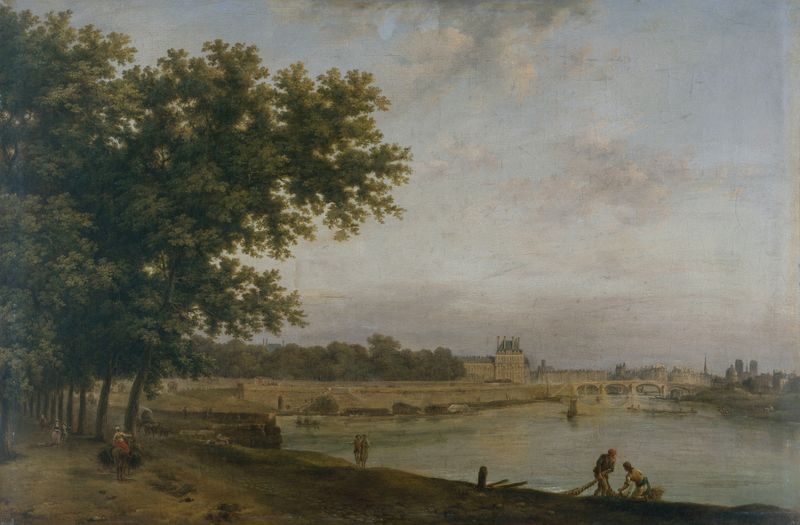
More Architecture Art
Browse all →
The statue of Liberty
Frédéric Auguste Bartholdi

View of Houses in Delft, Known as ‘The Little Street’
Johannes Vermeer

View of Houses in Delft, Known as ‘The Little Street’
Johannes Vermeer

The Cathedral in Rouen. The portal, Grey Weather
Claude Monet

The yellow house
Vincent van Gogh

The Church in Auvers-sur-Oise, View from the Chevet
Vincent van Gogh