Les Tuileries et le Pont Royal, vus du Cours-la-Reine — History & Facts
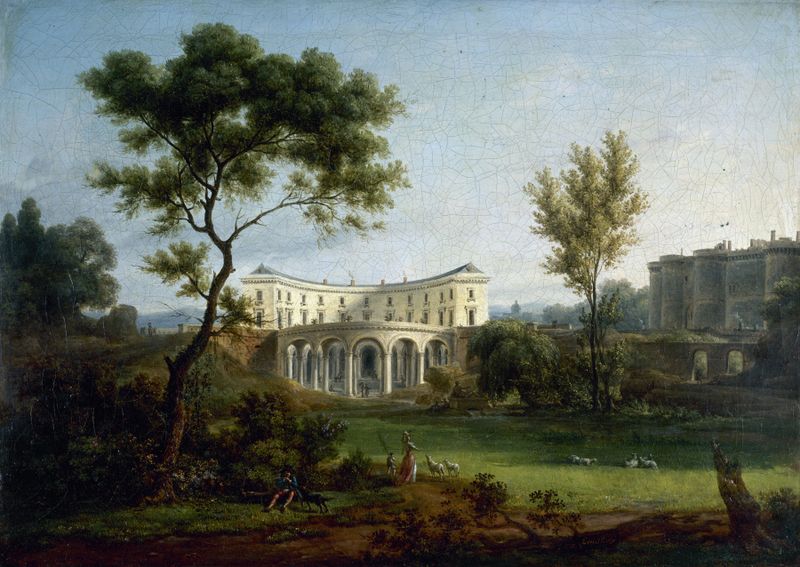
Can beauty exist without sorrow? This poignant question resonates through the soft hues and intricate lines of an elegant cityscape, capturing the delicate balance of light and shadow that defines the transient nature of life itself. Focus on the serene expanse of the gardens as they stretch towards the horizon, where the majestic Pont Royal arches gracefully over the water. Notice how the dappled sunlight filters through the trees, casting gentle shadows that dance on the cobblestones. In the foreground, clusters of people stroll leisurely, their figures slightly blurred, suggesting motion against the stillness of the landscape.
The painter employs a palette of muted greens and blues, creating a harmonious atmosphere that evokes both tranquility and an underlying sense of nostalgia. Delve into the contrasts at play: the vibrancy of human life juxtaposed with the enduring solidity of architecture and nature. Each figure seems to embody a fleeting moment, a reminder of the inevitable passage of time. The juxtaposition of the delicate blossoms in the gardens against the robust stone structure of the bridge suggests the fragility of beauty amidst permanence.
In these details, one finds layers of emotion that hint at longing and joy interwoven, portraying a world that thrives on balance. In 1783, Genillion painted this scene while living in Paris, a city on the cusp of monumental change as the winds of the Enlightenment stirred revolutionary sentiments. The tranquility depicted in Les Tuileries et le Pont Royal, vus du Cours-la-Reine contrasts sharply with the political unrest brewing just beyond the canvas, capturing a moment of beauty in a time of tumult.