
La pointe de Cador (à Morgat) — History & Facts
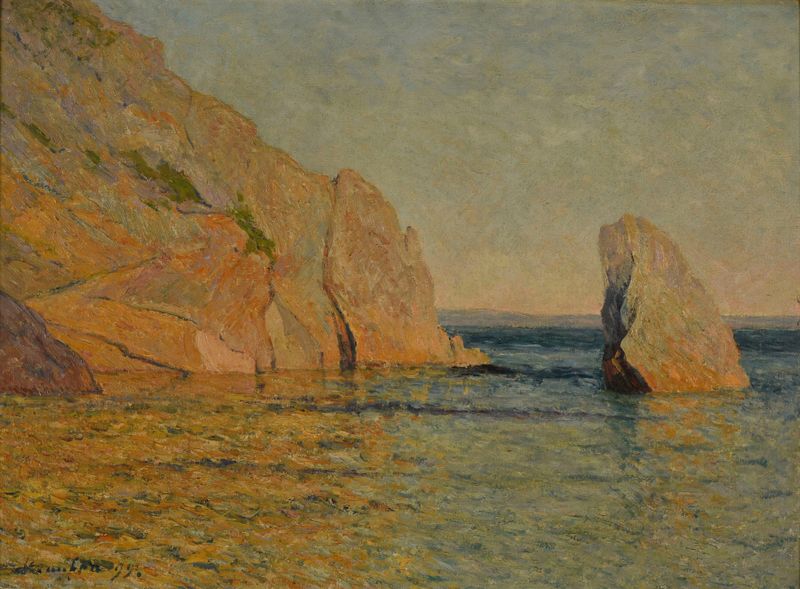
In its stillness, it captures beauty in its most honest form, inviting us to pause and reflect. Look to the left at the soft, rolling waves lapping against the rocky shore, their gentle rhythm meeting the solid, enduring cliffs. Notice how the artist uses a palette of muted greens and blues, evoking a sense of tranquility, while the splashes of white foam breathe life into the scene. The composition draws your gaze towards the horizon, where the sky melds seamlessly with the sea, creating an atmosphere of infinite possibility. Yet beneath this serene facade lies a tension between nature's permanence and fleeting moments.
The rough textures of the rocks contrast sharply with the smoothness of the water, hinting at the eternal struggle between stability and change. Maufra’s choice to focus on the interplay of light and shadow enhances the emotional depth of the landscape, inviting the viewer to ponder their own relationship with nature. Painted in 1902, this work emerged during a transformative period in Maufra's life, as he was exploring the Impressionist techniques that would define his artistic journey. At this time, the art world was shifting, increasingly embracing the nuances of color and light.
Maufra, residing in Brittany, was deeply influenced by the rugged coast, reflecting both personal introspection and the broader evolution of landscape painting.
More Artworks by Maxime Maufra
Browse all →
Le pont de l’Isle-Adam ou le Vieux pont
Maxime Maufra

Féérie nocturne: Exposition Universelle Paris 1900
Maxime Maufra
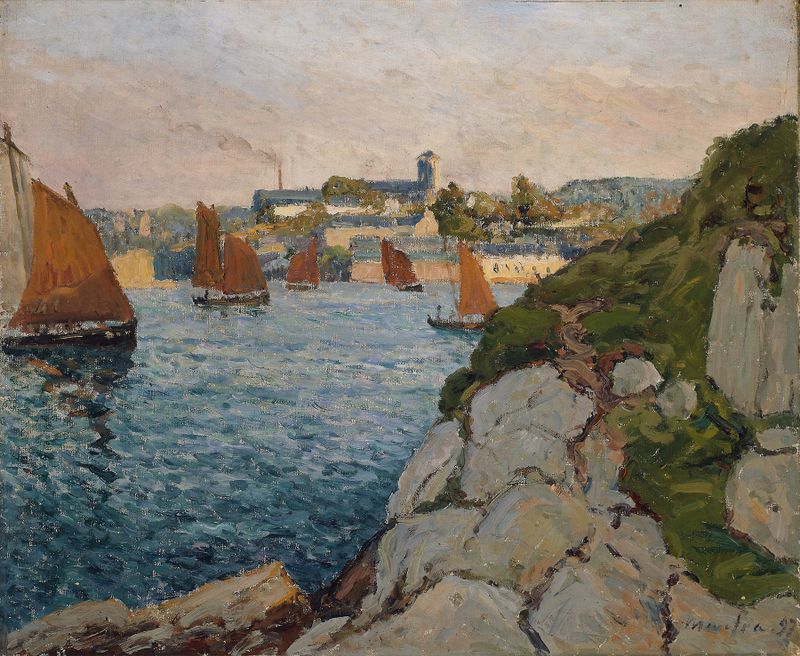
Douarnenez in Sunshine
Maxime Maufra
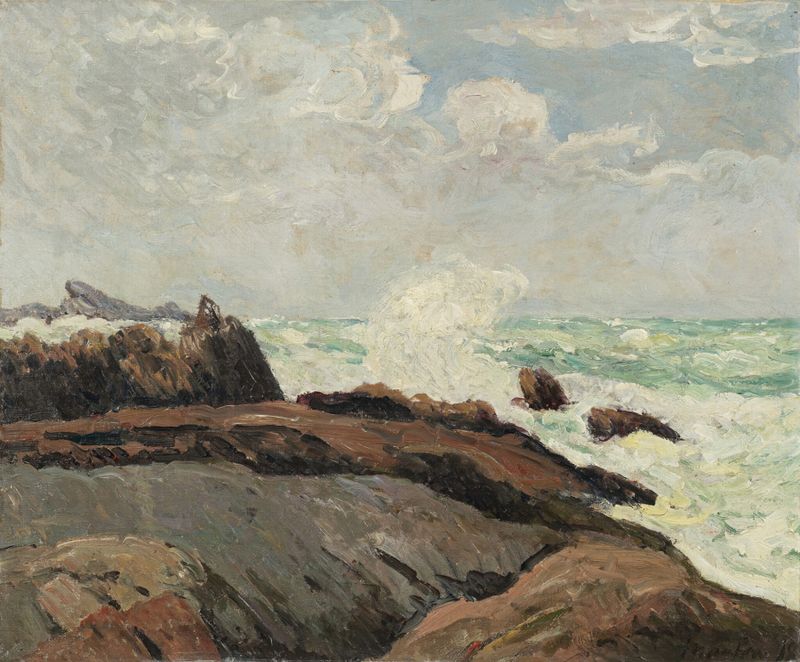
Mer forte à Saint-Guénolé Penmarc’h
Maxime Maufra

Marée Basse À La Plage De Port-Blanc, Presqu’île De Quiberon
Maxime Maufra
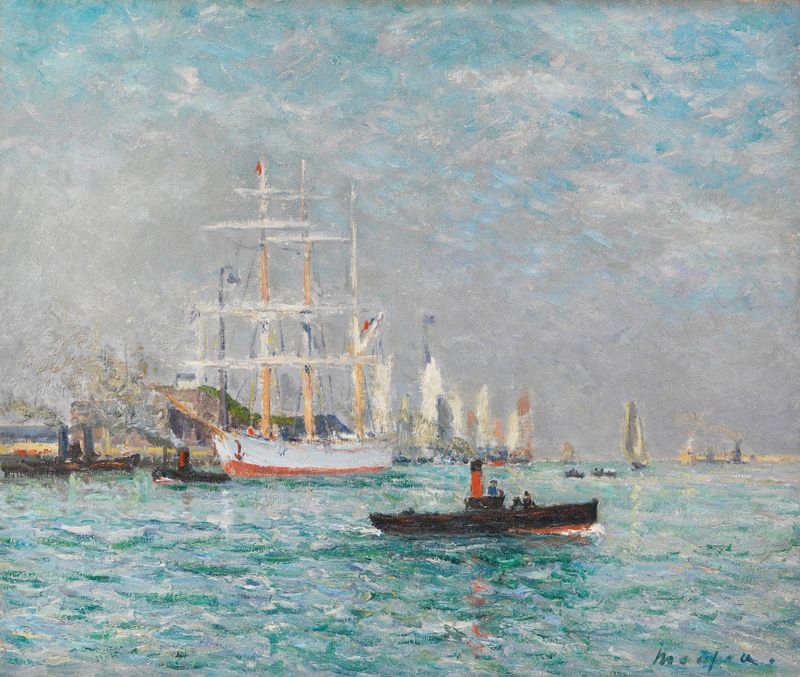
Entré d’un trois-mats, Le Havre
Maxime Maufra

Les rochers du château de Dinan, Morgat, Novembre 1903
Maxime Maufra
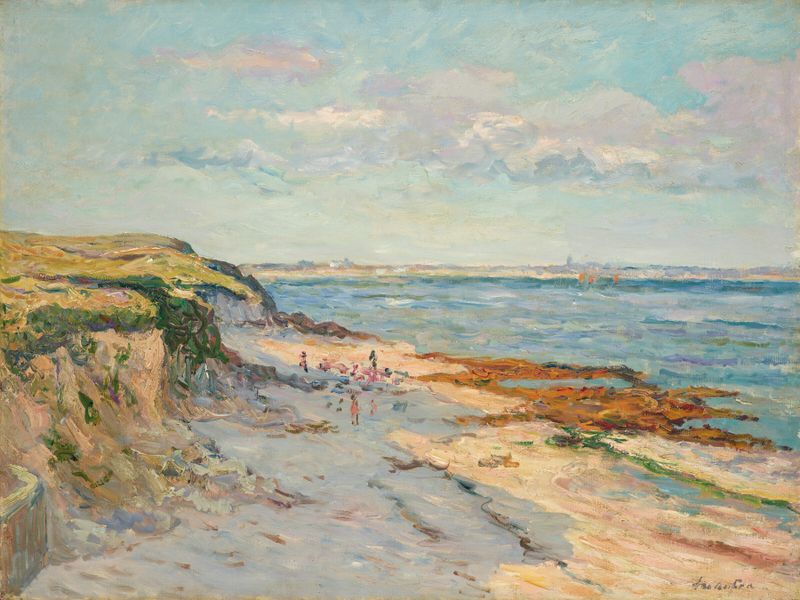
La Plage de Kerhostin, Morbihan
Maxime Maufra
Rochers au soleil couchant
Maxime Maufra
Soir D’orage À Kerhostin
Maxime Maufra





