
La porte du temple (Temple Gate) — History & Facts
What if silence could speak through light? In La porte du temple, vibrant hues seem to converse, wrapping the viewer in a palpable sense of tranquility. Look to the center, where the temple gate stands majestically, bathed in warm amber and soft gold tones. The intricate details of the stonework invite your gaze, revealing a masterful interplay of shadow and light that enhances the architectural grandeur. Notice how the colors shift subtly along the contours, giving life to the stoic structure while softening its edges.
This delicate balance between vibrancy and restraint pulls you deeper into the scene. Hidden beneath the surface, contrasts unfold. The luminous warmth of the gate stands in stark opposition to the cool, muted tones of the surrounding foliage, evoking a tension between man-made and natural beauty. The way light filters through the archway suggests an invitation—perhaps to a sacred space or a moment of introspection.
The colors resonate with emotional weight, hinting at the spiritual significance of the temple while simultaneously evoking a sense of serene isolation. Created in 1837, Georges Barrière painted this piece during a time when Romanticism was flourishing in Europe. Living in France, he was influenced by the shifting artistic currents that celebrated nature and emotional depth. Barrière's work reflects a growing interest in color and light as essential elements of expression, marking a significant moment in the evolution of the visual arts.
More Artworks by Georges Barrière
Browse all →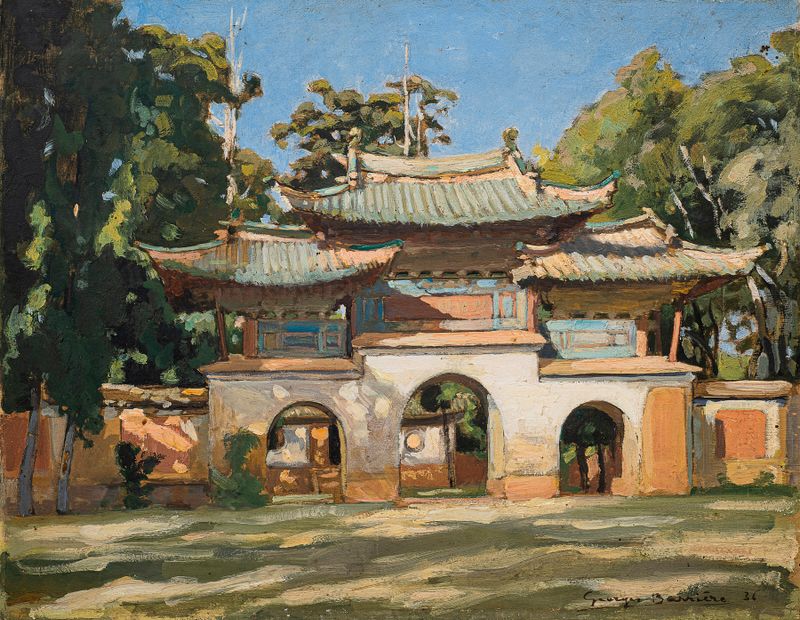
More Architecture Art
Browse all →
The statue of Liberty
Frédéric Auguste Bartholdi

View of Houses in Delft, Known as ‘The Little Street’
Johannes Vermeer

View of Houses in Delft, Known as ‘The Little Street’
Johannes Vermeer

The Cathedral in Rouen. The portal, Grey Weather
Claude Monet

The yellow house
Vincent van Gogh

The Church in Auvers-sur-Oise, View from the Chevet
Vincent van Gogh