
Porte de la pagode des supplices (The Gate of the Pagoda of Torments) — History & Facts
Who listens when art speaks of silence? In Porte de la pagode des supplices, shadows stretch and breathe, whispering secrets of a forgotten world, inviting a deeper exploration of their meanings. Look to the left at the looming architecture of the pagoda, its intricate details cast in a muted palette of browns and grays. The play of shadow and light here is masterful; notice how the sunlight kisses the edges of the columns, illuminating the ornate carvings with a soft glow. The composition draws the eye upward, guiding one’s gaze through the heavy silhouettes that frame the entrance, creating an ominous yet alluring threshold. Within this ethereal space lies a tension between oppression and freedom, embodied in the contrasting light and dark.
The shadows mingle with the structure's solemnity, suggesting a haunting presence that evokes the weight of history. Additionally, the absence of any figures accentuates the sense of desolation, prompting viewers to ponder who has traversed this gate, and what burdens they carried with them. The artwork invites contemplation on the fleeting nature of existence, as shadows remind us of all that remains unseen. In 1836, Georges Barrière painted this work amidst a flourishing interest in Orientalism and exotic themes in European art.
Living in Paris during a time of political upheaval, he was influenced by the romantic exploration of distant cultures reflected in contemporary artistic movements. The image captures a moment where art began to grapple with deeper meanings, merging the allure of far-off lands with profound emotional experiences.
More Artworks by Georges Barrière
Browse all →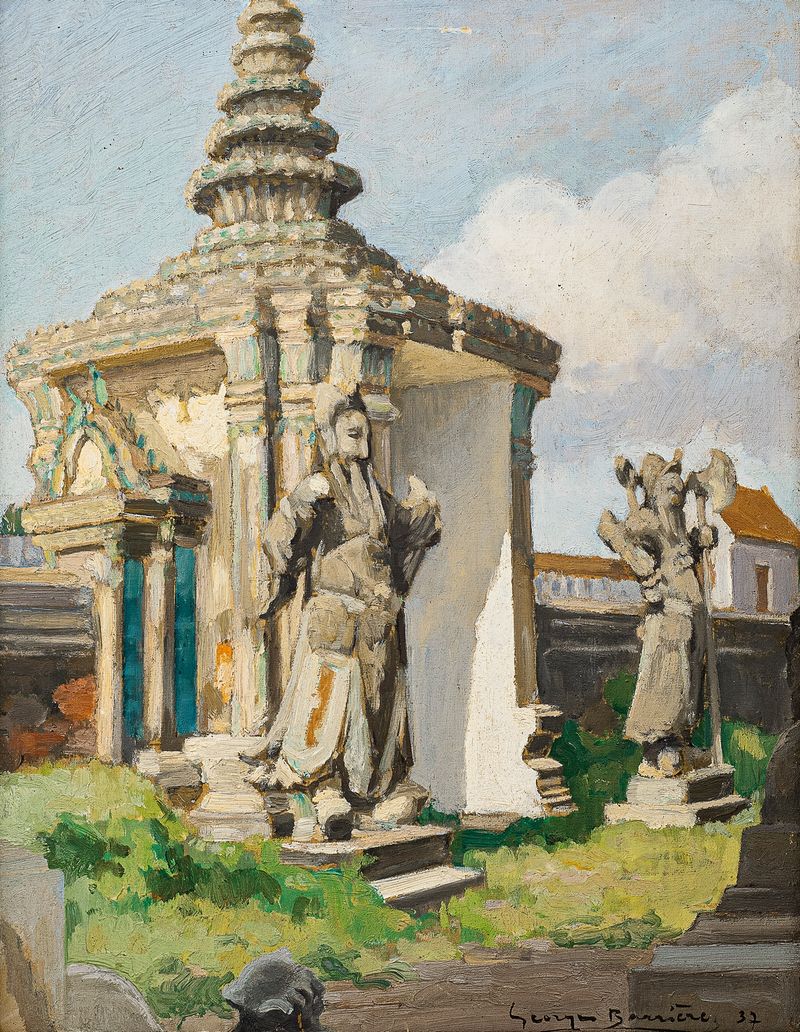
More Architecture Art
Browse all →
The statue of Liberty
Frédéric Auguste Bartholdi

View of Houses in Delft, Known as ‘The Little Street’
Johannes Vermeer

View of Houses in Delft, Known as ‘The Little Street’
Johannes Vermeer

The Cathedral in Rouen. The portal, Grey Weather
Claude Monet

The yellow house
Vincent van Gogh

The Church in Auvers-sur-Oise, View from the Chevet
Vincent van Gogh