
La Rue des Ursins — History & Facts
Where does light end, and longing begin? In the gentle embrace of twilight, one can find the bittersweet echo of emptiness that permeates so many lives. Look to the foreground, where the cobblestones glisten beneath a soft wash of dusk. The wear of the street hints at countless footsteps, each holding a story lost to time. Notice how the light falls upon the gabled rooftops, casting elongated shadows that stretch towards the horizon, as if reaching out for something just beyond grasp.
The muted palette—earthy browns and deep blues—invites contemplation, creating a sense of quiet solitude that is both haunting and beautiful. This artwork speaks to the tension between presence and absence. The narrow path suggests a journey, yet it remains devoid of figures, leaving the viewer to ponder who has traversed this way before. The play of light and shadow reflects not only the physical space but also the emotional weight of yearning.
Each corner of the composition hints at stories untold, evoking nostalgia for connections that might have once been. Dufour painted during a period marked by profound change in the art world, as impressionism was beginning to take hold. Working in France, the artist navigated a landscape where traditional boundaries were being challenged, and individual expression found new avenues. It was within this context of artistic evolution that La Rue des Ursins emerged— a poignant reflection of both his personal experiences and the broader cultural shifts surrounding him.
More Artworks by Jean-Jules Dufour
Browse all →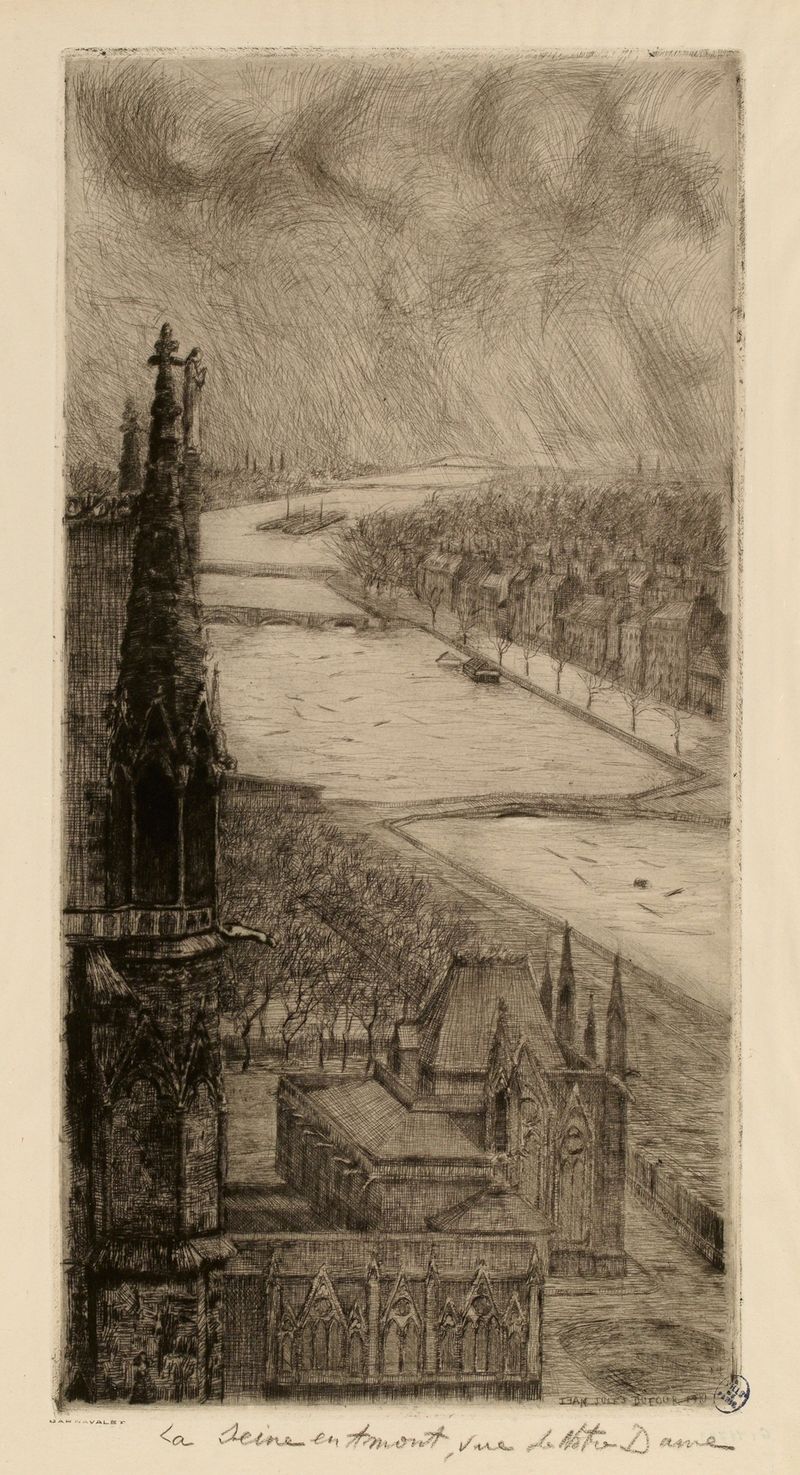
La Seine en amont, vue de Notre-Dame
Jean-Jules Dufour
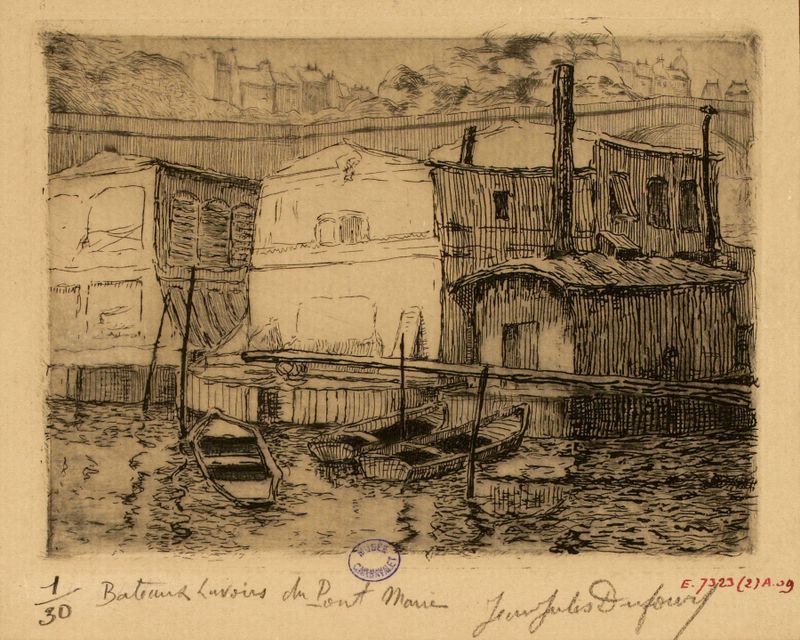
Bateaux-Lavoirs du Pont-Marie
Jean-Jules Dufour
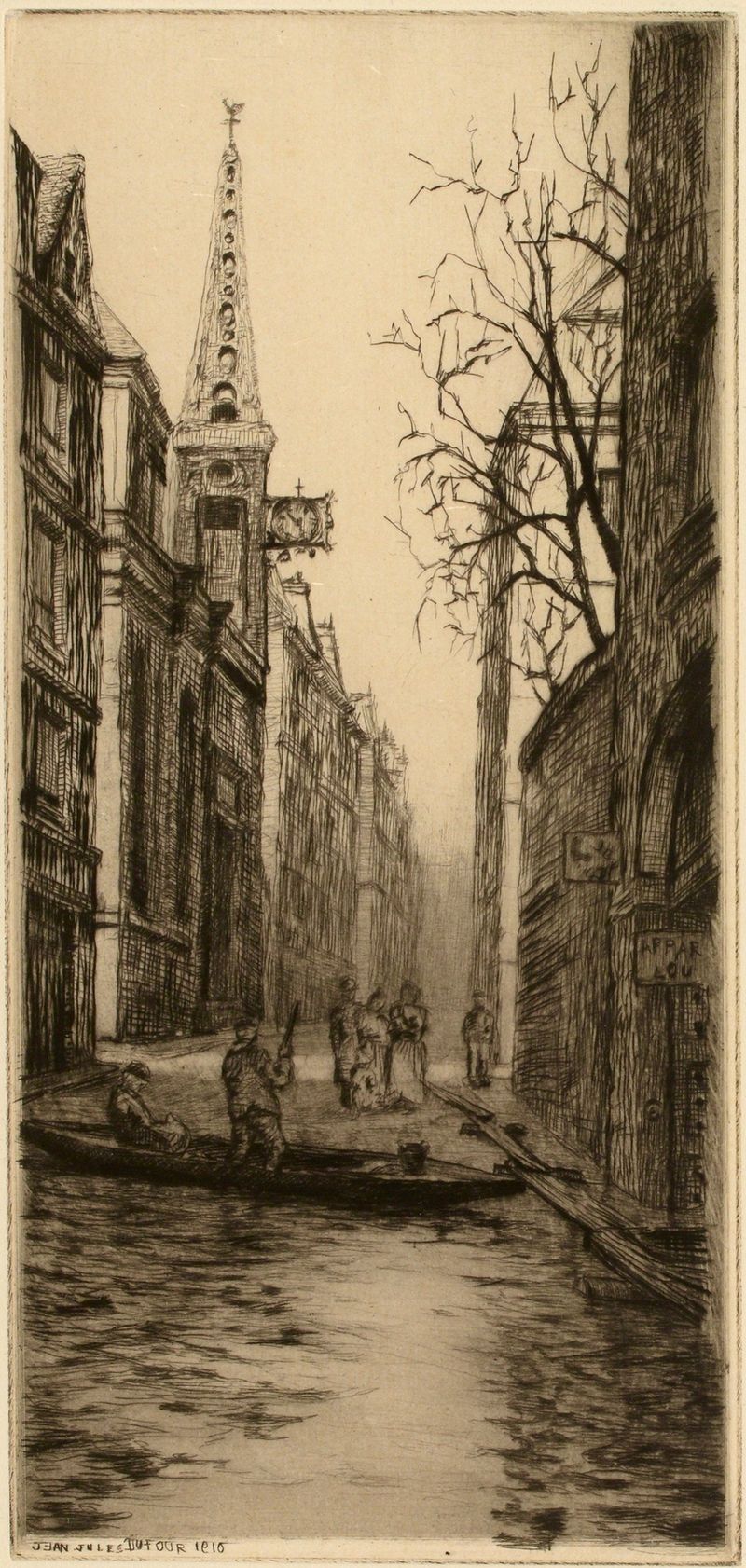
La rue St Louis en l’île
Jean-Jules Dufour

Intérieur d’église
Jean-Jules Dufour

La Rue Grenier sur l’Eau
Jean-Jules Dufour

Notre-Dame dans l’Eau. Rue du Cloître Notre Dame
Jean-Jules Dufour
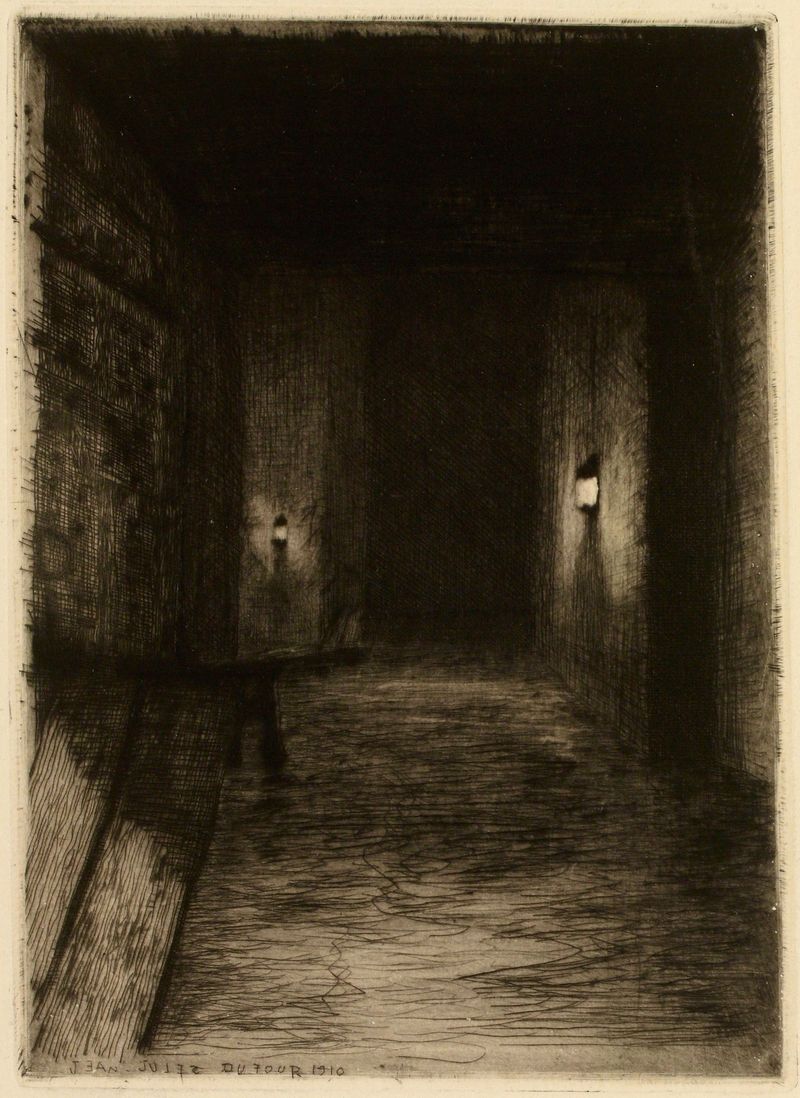
Porte rue Chanoinesse
Jean-Jules Dufour

Place Maubert, Rue du Haut-Pavé
Jean-Jules Dufour
Eglise St Germain de Charonne
Jean-Jules Dufour
Porte rue Massillon
Jean-Jules Dufour





