
La tempête à Quiberon (Morbihan) — History & Facts
Is this a mirror — or a memory? In La tempête à Quiberon (Morbihan), the tumultuous sea becomes a haunting reflection of our innermost fears, capturing that moment when nature's fury meets the fragile psyche of humanity. Look to the horizon, where dark, rolling clouds swirl ominously above crashing waves, each brushstroke imbued with urgency. The artist employs a palette of deep blues and grays, contrasting the wildness of the storm with the sharp white of the tumultuous surf. Notice how the waves seem to reach outward, almost grasping, as if the very ocean longs to emerge from the canvas.
The chaotic movement of the water invites the viewer's eye to dance across the surface, eliciting a visceral response to the impending tempest. Beneath this powerful display lies a deeper tension: the relationship between man and nature, vulnerability versus strength. The stormy scene not only evokes fear but also draws attention to the solitude of the figures that might inhabit this coastal realm, hinting at a universal struggle with the forces beyond our control. This duality of awe and dread is palpable, as the swirling atmosphere seems to conjure memories of personal fears, lost in the chaos around us. Maxime Maufra painted this evocative piece in 1904, during a period of artistic exploration in France, where the Symbolist movement was giving way to a new appreciation for Impressionist techniques.
The artist found inspiration in the coastal landscapes of Brittany, grappling with his own artistic identity amidst a rapidly changing world. The storm, laden with emotional weight, reflects both the artist's personal battles and the existential questions that permeated early 20th-century art.
More Artworks by Maxime Maufra
Browse all →
Le pont de l’Isle-Adam ou le Vieux pont
Maxime Maufra

Féérie nocturne: Exposition Universelle Paris 1900
Maxime Maufra
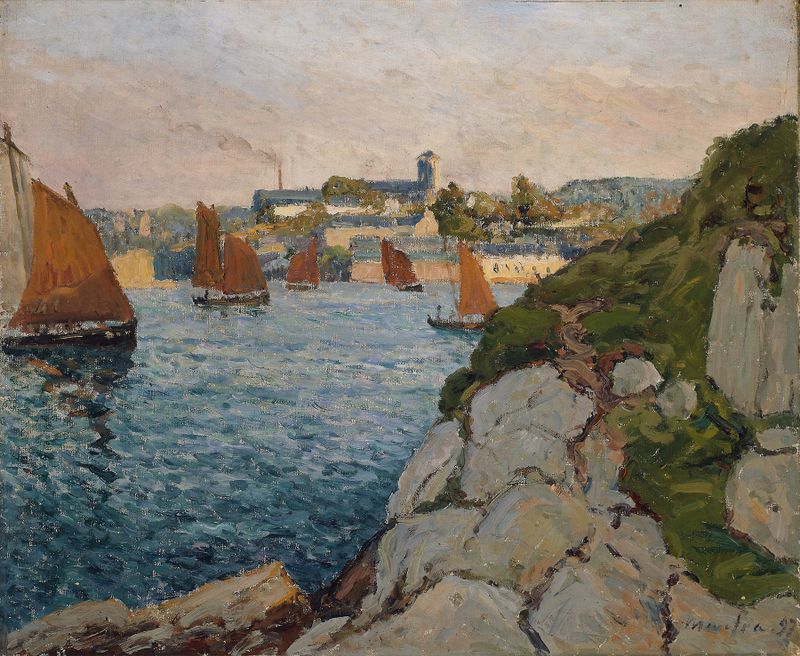
Douarnenez in Sunshine
Maxime Maufra
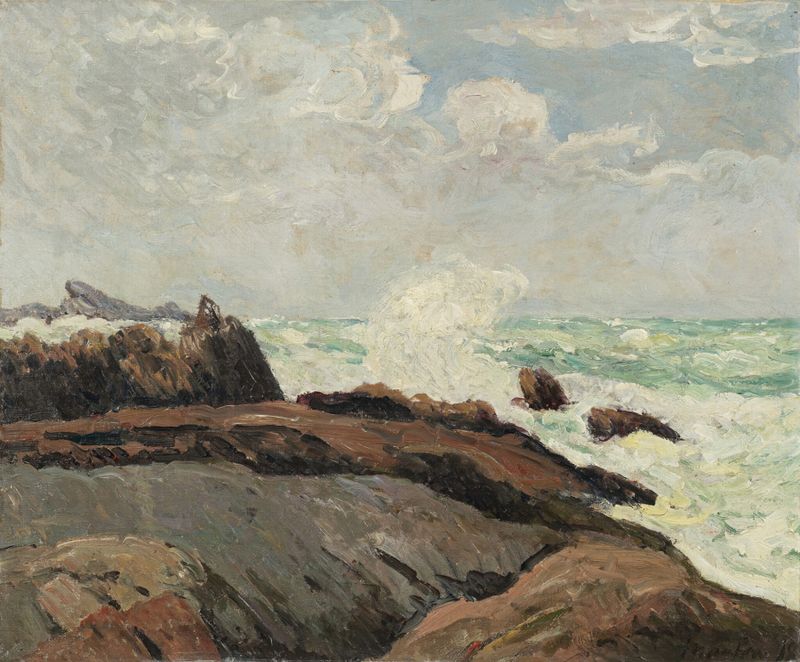
Mer forte à Saint-Guénolé Penmarc’h
Maxime Maufra

Marée Basse À La Plage De Port-Blanc, Presqu’île De Quiberon
Maxime Maufra
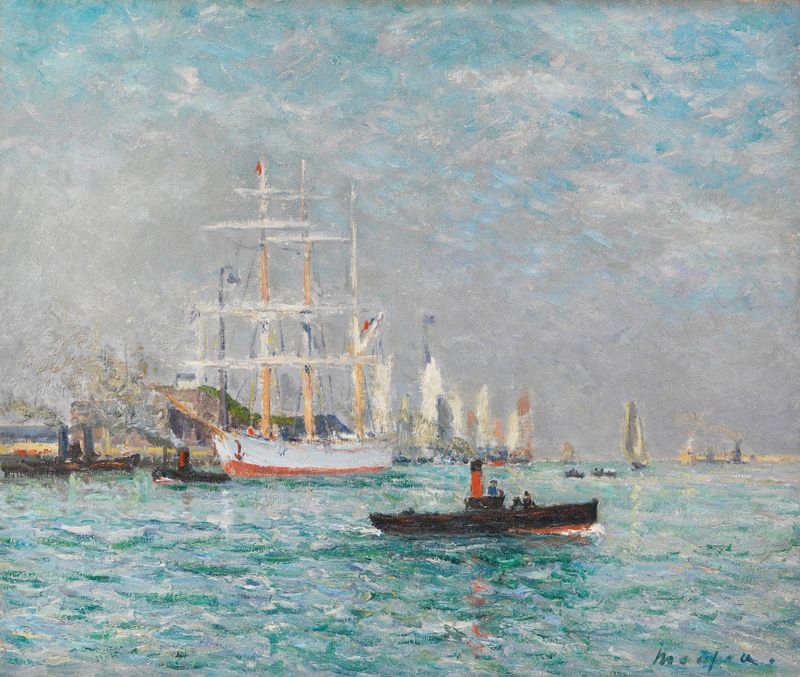
Entré d’un trois-mats, Le Havre
Maxime Maufra

Les rochers du château de Dinan, Morgat, Novembre 1903
Maxime Maufra
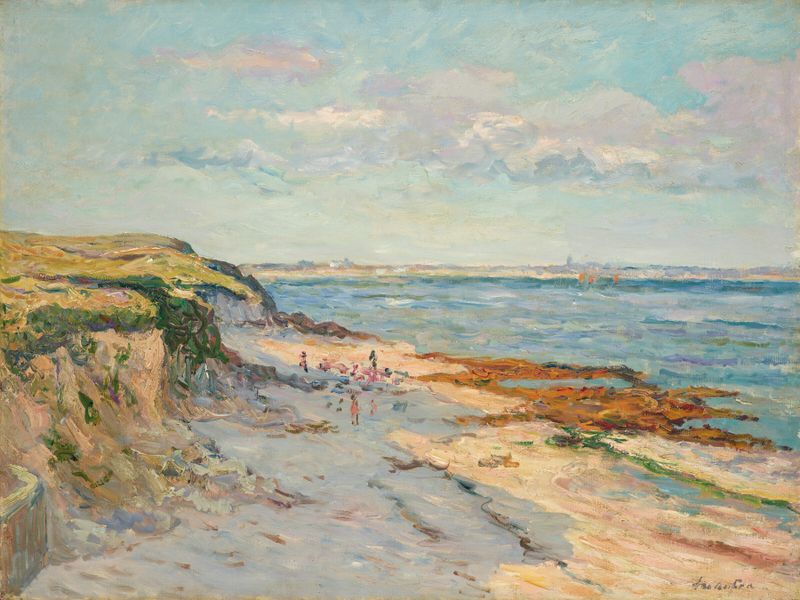
La Plage de Kerhostin, Morbihan
Maxime Maufra
Rochers au soleil couchant
Maxime Maufra
Soir D’orage À Kerhostin
Maxime Maufra





