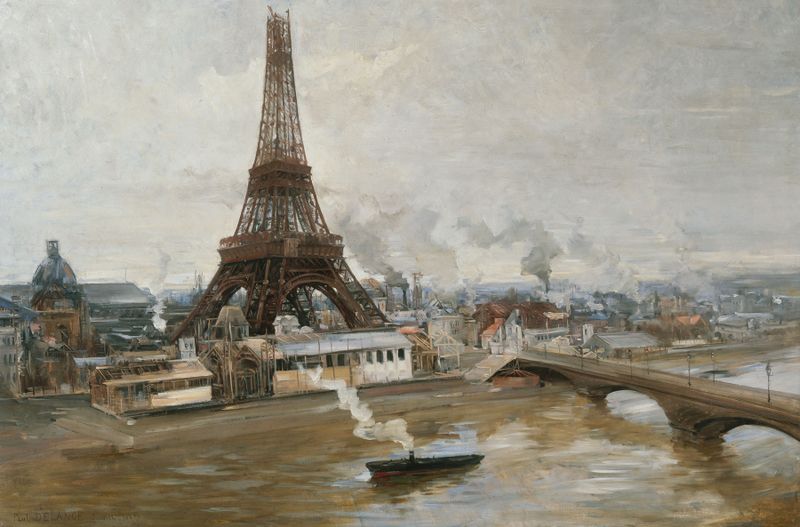
La tour Eiffel et le Champ-de-Mars, en janvier 1889 — History & Facts
Can beauty exist without sorrow? In the twilight of January 1889, a sense of longing lingers in the air, echoing through the intricate lines of this piece. Look to the foreground, where delicate trees frame the iconic silhouette of the Eiffel Tower, drawing your gaze upward. Notice how the cool, muted tones of winter contrast with the bright, hopeful sky that hints at the promise of a new age. The artist uses a soft palette to evoke a tranquil yet melancholic atmosphere, suggesting both reverence and yearning for the monumental change symbolized by the tower’s ascent.
The meticulously detailed architecture stands proud, yet it feels intertwined with the stillness of the surrounding landscape. Beneath the surface, the painting captures a poignant juxtaposition: the triumph of human ingenuity against the backdrop of nature's enduring grace. The space between the trees and the tower whispers of ambition, yet the muted colors speak to the fleeting nature of time and achievement. Through this visual narrative, we sense an unfulfilled aspiration, as if the artist acknowledges not just the marvel of construction, but also the bittersweet cost of progress—a longing for connection amidst the isolation of modernity. In 1889, Paul Louis Delance was immersed in the vibrant Parisian art scene, celebrating the completion of the Eiffel Tower—a feat of engineering that had divided public opinion.
This moment marked a significant turn in both his life and the city’s identity, as the world began to embrace modernism. As Delance captured this important landmark, he reflected on the complexities of change, balancing admiration with a nuanced awareness of what might be lost in the rush towards the future.