La venue de l’aube à Fosset — History & Facts
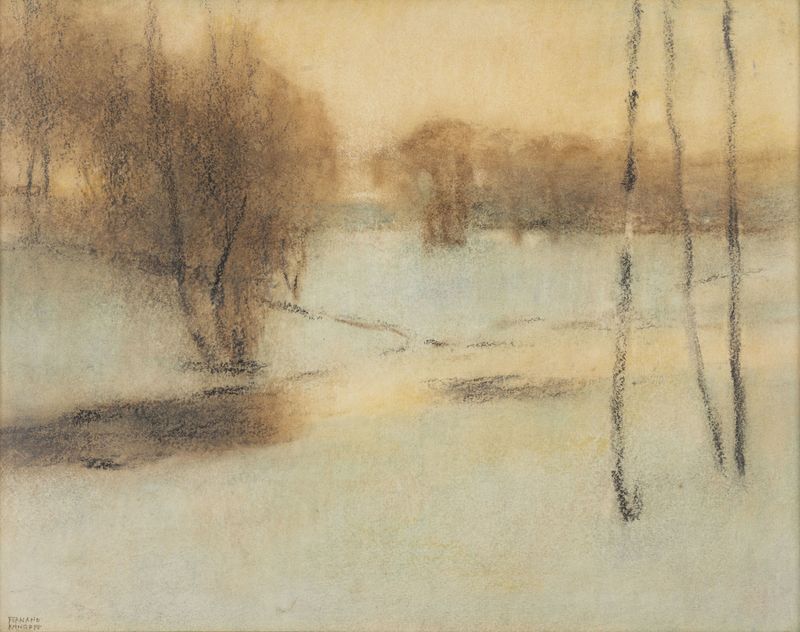
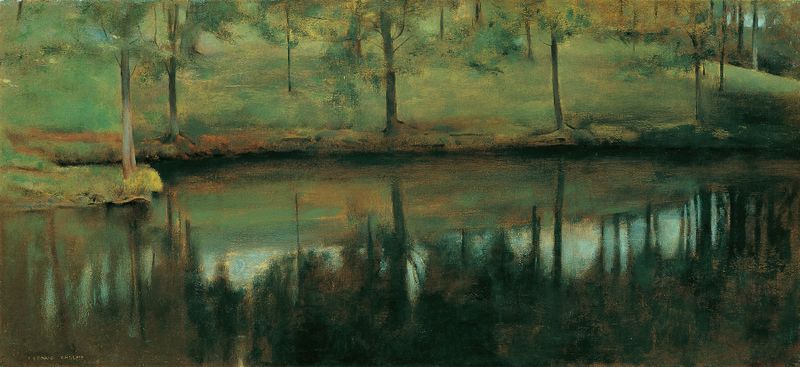
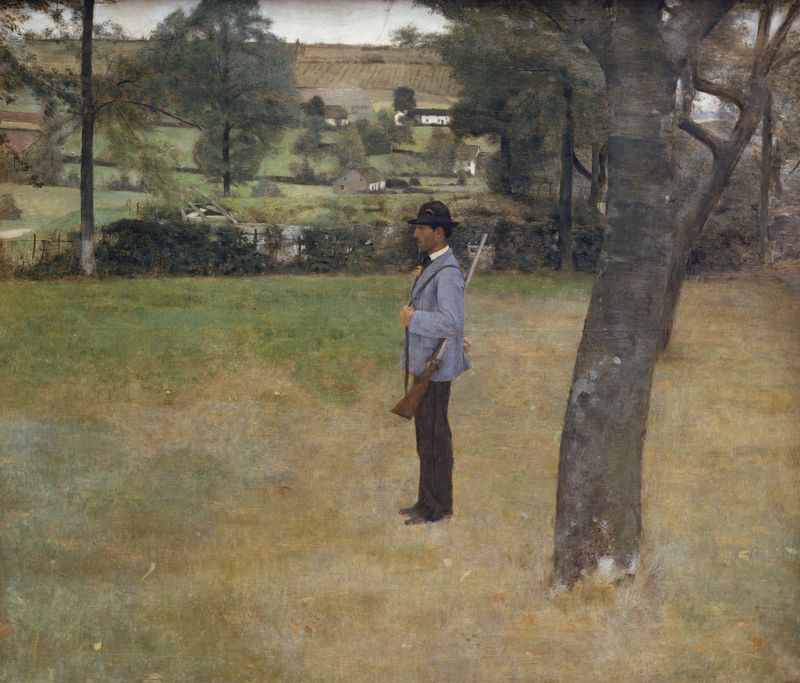
In the still moments of dawn, a horizon of yearning stretches across the canvas, echoing the quiet ache of unfulfilled desires. Look to the soft hues of the sky, where delicate pastels blend seamlessly into one another, signaling the day’s first embrace. Focus on the ethereal figure at the center, bathed in light yet shrouded in shadow, her posture suggestive of anticipation. Notice the intricate detailing of her flowing garments, each fold capturing the gentle caress of the morning breeze, while the landscape around her cradles both mystery and promise.
Khnopff’s masterful use of oil creates an almost tactile texture, inviting the viewer to feel the weight of the moment. Beneath the surface, the painting vibrates with contrasts: light versus shadow, hope against the weight of longing. The figure, poised yet elusive, embodies a silent dialogue with the awakening landscape, suggesting a connection that transcends words. This quiet tension evokes a sense of melancholy, as if the dawn signifies not only a new beginning but also the bittersweet nature of unrealized dreams. Painted in 1882, this work emerged during a significant period for the artist, who was deeply influenced by Symbolism and its exploration of inner experiences.
Working from his studio in Brussels, Khnopff was navigating a world teetering between tradition and modernity in art. The burgeoning Symbolist movement offered him a platform to convey complex emotional states, allowing him to encapsulate the intricate relationship between man and nature, longing and fulfillment, within the delicate confines of his canvas.