Landschap met brug te Fosset — History & Facts
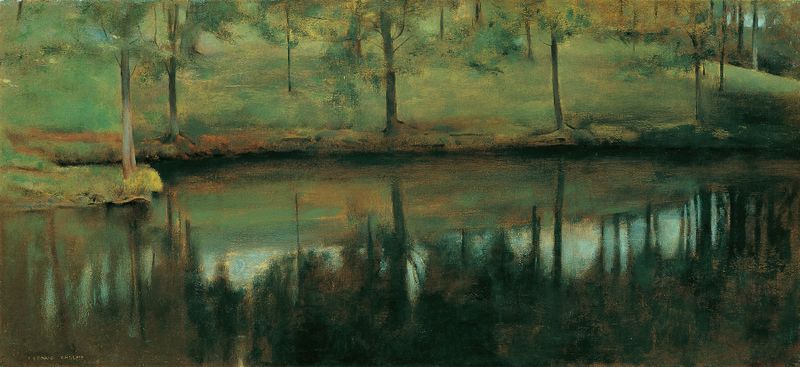
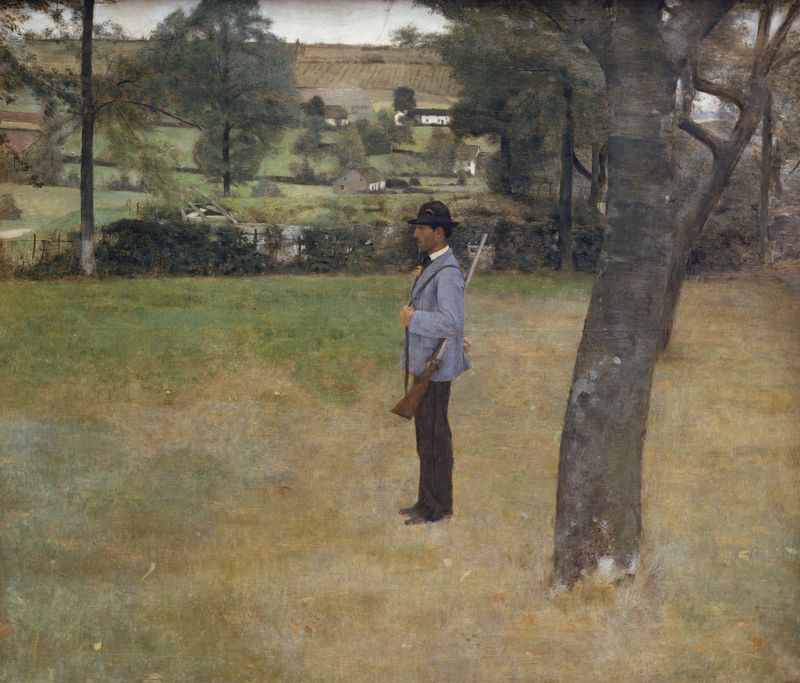
When did color learn to lie? In a world where hues whisper secrets, the interplay of nature and illusion captivates the soul. Look closely at the vibrant greens and browns that dominate the canvas, guiding your gaze toward the serene bridge arching over the gentle waters. The brushwork is delicate yet purposeful, with each stroke breathing life into the foliage. Notice how the light filters through the trees, creating a dappled effect that dances across the surface, invoking a sense of tranquility and harmony in this idyllic landscape. Yet, beneath this serene facade lies a tension that speaks to the complexity of creation.
The bridge, both a literal and figurative connection, emerges as a symbol of transition and exploration, a pathway bridging reality with dreams. The juxtaposition of the still water reflecting the vibrant world above hints at the duality of existence, while the fragmented light suggests the fleeting nature of moments, urging the viewer to ponder what lies beyond the visible. Created between 1882 and 1883, this piece reflects Fernand Khnopff’s evolving style during a time of experimentation in the Symbolist movement. Living in Belgium, he was deeply influenced by the emerging artistic discourse that sought to explore the subconscious and dream-like realms.
As he painted this landscape, the world around him was rife with a burgeoning interest in the synthesis of emotion and myth, fostering an environment where art could transcend mere representation and venture into the depths of imagination.