Laguna Al Atardecer — History & Facts
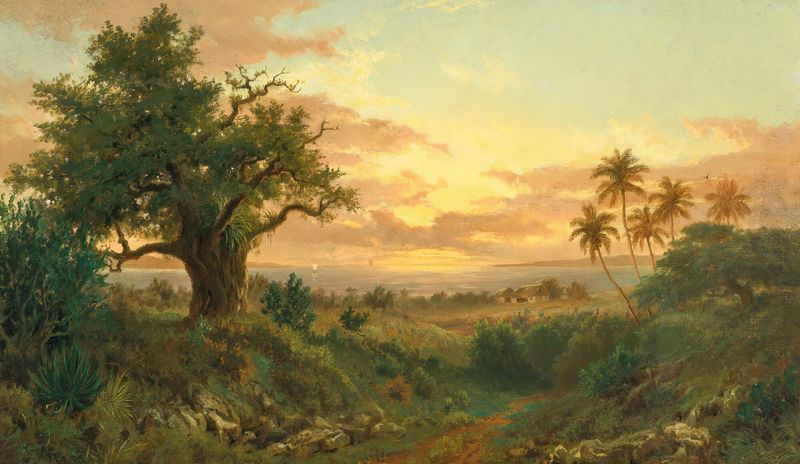
In the embrace of twilight, the world thrums with an exhilarating pulse, each color reverberating with the essence of life. Look to the lower left at the gentle ripples gracing the water, reflecting shades of deep violet and fiery orange. The horizon blurs, inviting the viewer’s gaze to glide seamlessly between the ethereal sky and the tranquil lagoon. Notice how the delicate brushwork captures the interplay of light, as if the sun's descent spills warmth across the canvas, creating a vivid tapestry that transcends mere representation. The juxtaposition of light and shadow embodies the ecstasy of fleeting moments, where nature's beauty teeters between serenity and the frenzy of dusk.
The distant silhouettes of trees stand as guardians, framing the scene, while the warm hues symbolize the day's end, inviting a contemplation of both loss and renewal. Each stroke conveys an emotion, a memory, intertwining the viewer’s heart with the landscape's whispers. Esteban Chartrand painted Laguna Al Atardecer during a period marked by personal introspection and the vibrant pulse of post-impressionism. Though the exact date remains unknown, his work reflects a dedication to capturing the essence of Cuban landscapes in the late 19th century.
At that time, the art world was embracing color and light in new ways, and Chartrand was emerging as a key figure, merging his introspections with the dynamic shifts around him.