Lake Brienz — History & Facts
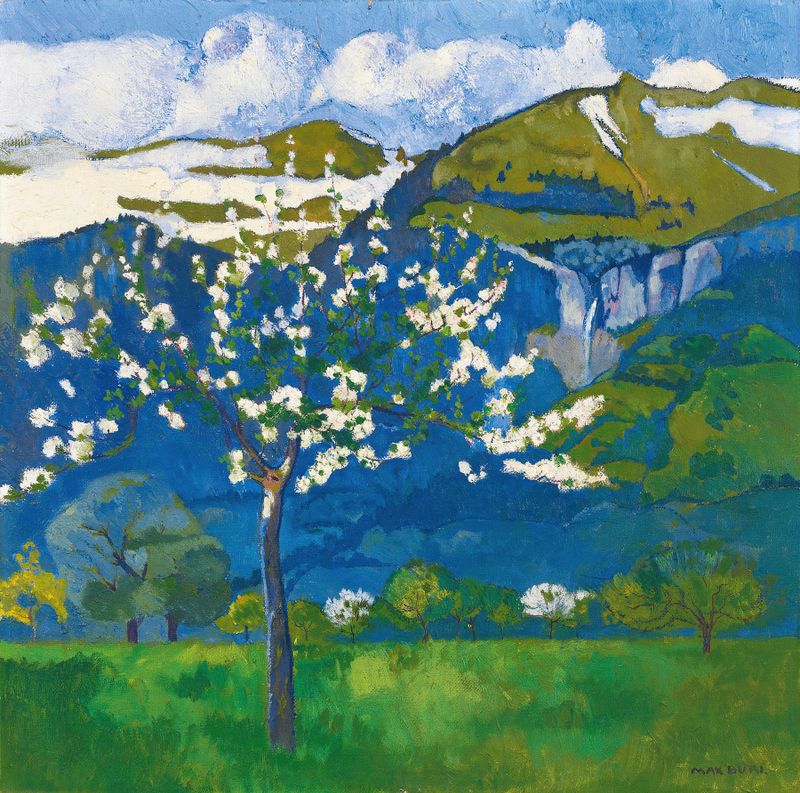
When did color learn to lie? The juxtaposition of life and decay breathes through the layers of paint, revealing a world balanced on the edge of perception. Focus on the deep blues and greens that dance across the canvas, swirling with hints of gray and brown. These colors echo the tranquil surface of Lake Brienz, yet a tension simmers beneath, churning unseen. Notice how the delicate brushwork captures the shimmering reflections of the surrounding mountains, while blurs of muted hues give life to an unsettling sense of decay.
It’s as if the water itself sighs, offering a moment of calm before revealing the inevitable passage of time. Delve into the subtle contrasts in the painting; the idyllic beauty of the lake is interwoven with the somber decay of the surrounding foliage. The vibrant greenery hints at life’s vitality, yet it is marred by hints of brown, suggesting a transformation toward the end. The gentle ripples of the water, reflecting both the sky’s brilliance and the encroaching shadows, serve as a reminder of fleeting moments—an invitation to consider what lies beneath the surface. In 1910, the artist found himself in Switzerland, captivated by the serene landscape yet fully aware of the broader shifts in art toward modernism.
This period marked a transition for many, as traditional representations gave way to more expressive interpretations of reality. Buri, part of a generation influenced by both Impressionism and the burgeoning avant-garde movements, was exploring the delicate interplay of color and form, revealing not only the beauty of nature but also its poignant fragility.