Lake in the Forest — History & Facts
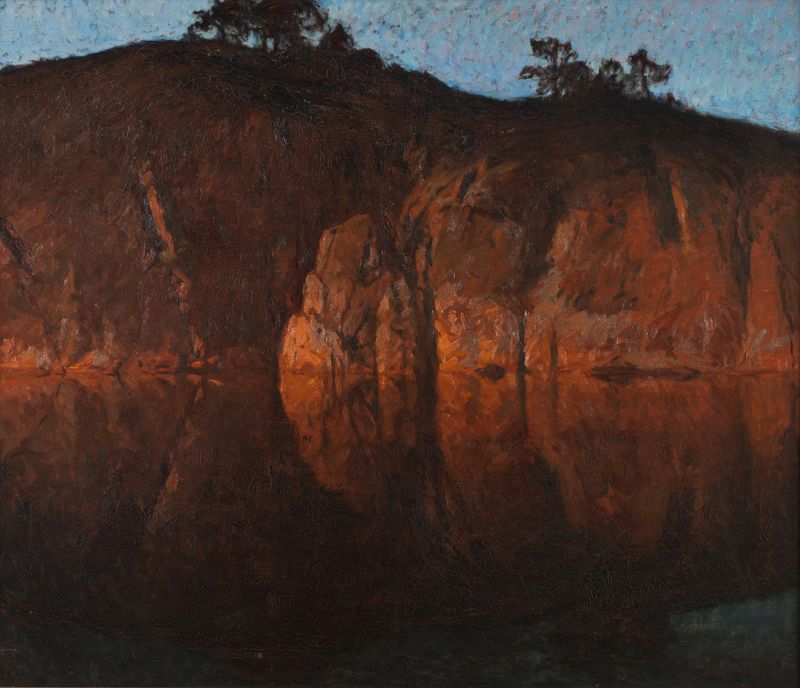
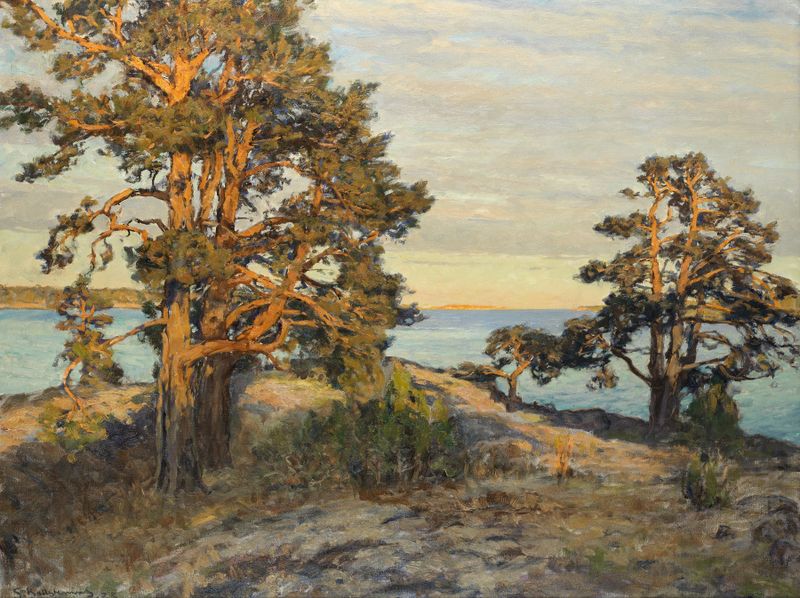
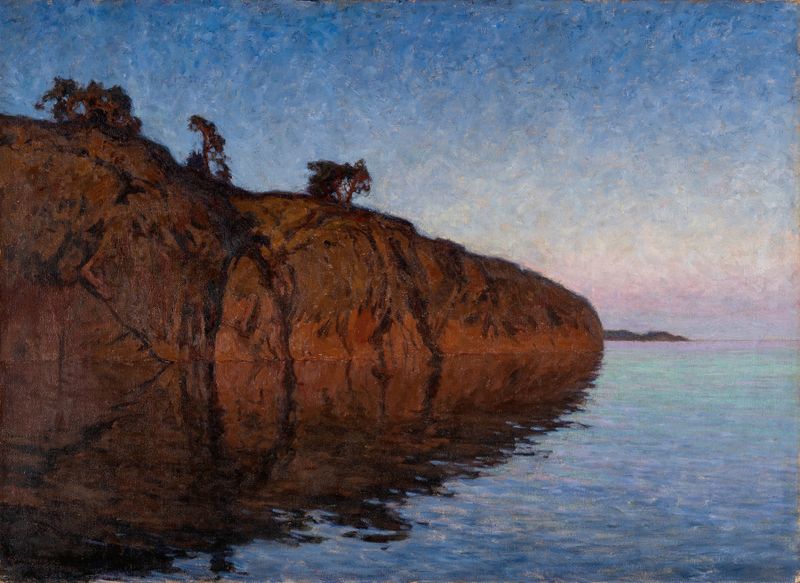
When did color learn to lie? Each hue in Lake in the Forest dances with deceptive elegance, inviting viewers to question the very essence of truth in nature. Look to the center, where the lake mirrors the trees above, creating a seamless blend of greens and blues. The brushwork is both precise and fluid, capturing the shimmering surface of the water as it reflects the dappled light filtering through the foliage. Notice how the vibrant greens of the forest seem to pulse with life, while the soft blues imbue a sense of calm.
The interplay between warm and cool tones creates a tension that draws you deeper into the scene. Yet, beneath this tranquil beauty lies a more complex narrative. The vivid greens suggest vitality, yet the muted lake seems to whisper secrets of stillness and introspection, inviting contemplation. The forest, alive with color, contrasts starkly against the tranquil depths of the water, evoking feelings of isolation that coexist with the exuberance of life.
The painting captures the essence of nature's duality — its ability to nurture and to conceal. In 1898, Gottfrid Kallstenius painted this piece during a transformative moment in the realm of Impressionism, while living in Sweden. This period marked a growing interest in capturing the fleeting moments of light and color, a departure from the more rigid forms of earlier styles. The artist was influenced by both the natural beauty surrounding him and the evolving artistic movements that sought to redefine representation, making Lake in the Forest a profound statement of its time.