Landscape — History & Facts
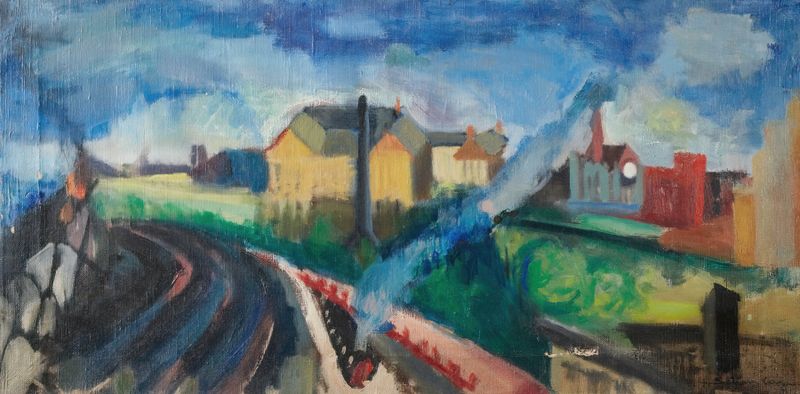
Could beauty survive in a century of chaos? In Landscape, the answer flickers like the dance of shadows across a sunlit field, hinting at both fragility and resilience. Focus first on the broad expanse of the canvas, where vibrant greens and warm earth tones collide in a symphony of color. Look to the horizon, where a gentle rise suggests depth, and observe how the brushstrokes meld into a soft blur, imbuing the scene with a sense of tranquility. The interplay of light and shadow creates a rhythmic balance, as dark areas punctuate the lighter ones, drawing your eye into the heart of this serene yet dynamic landscape. Beneath the surface, the painting hints at emotional layers; the shadows may reflect the anxiety of the times, whispering stories of uncertainty amid natural beauty.
There’s a tension between the idyllic setting and the looming threat of modernity, perhaps symbolized by the abstract shapes that emerge at the edges. This contrast invites contemplation, urging the viewer to ponder how progress may cast long shadows over the simplicity of pastoral life. Created around 1912, during a time of immense social and technological shift, the artist was navigating the complexities of the early 20th century in America. Schamberg was influenced by the burgeoning movements of modernism, striving to reconcile traditional landscapes with a new artistic vision.
As he painted, the world outside was caught between the charm of the natural and the encroaching clamor of industrial life, marking this work as both a personal and cultural reflection.