Landscape — History & Facts
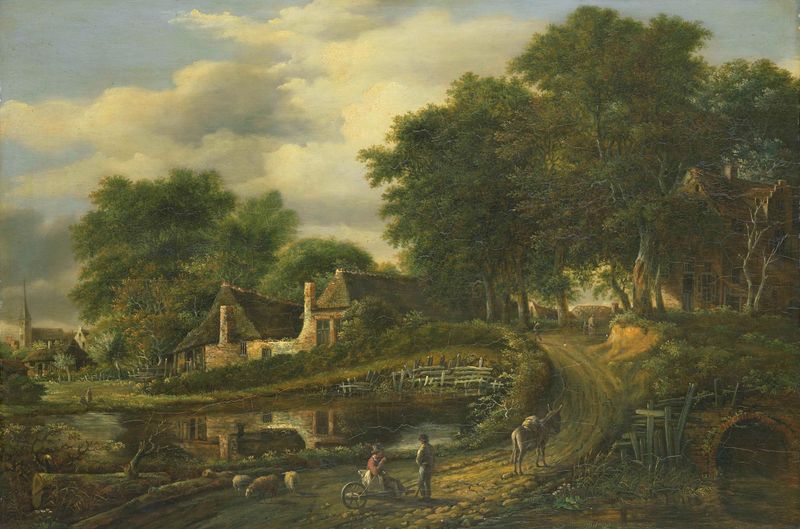
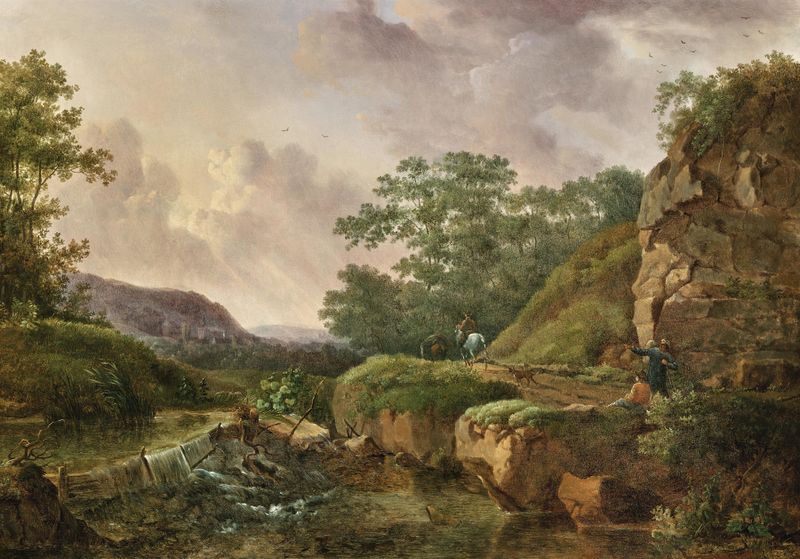
Can beauty exist without sorrow? In the gentle sweep of Landscape, the question lingers like a whisper in the wind, inviting the viewer to wander through its serene yet unsettling depths. Look to the horizon, where the soft, muted greens and blues blend harmoniously into a gradient that evokes both tranquility and unease. Notice how delicate brushstrokes create a textured sky, hinting at the chaos just beyond the edges of perception. The scattered trees stand resilient, their forms bending slightly, as if resisting some unseen tempest, while light spills over the landscape, illuminating the contrasting shadows that stretch and creep through the scene. The emotional tension lies in the juxtaposition of natural beauty and an underlying sense of madness.
Each element seems to dance on the verge of dissolution, suggesting that tranquility is but a facade. The presence of darker hues creeping into the corners hints at an encroaching storm—an embodiment of the internal struggles we often deny. Here, the landscape is not merely a backdrop but a living entity, reflecting the tumultuous human experience of joy interwoven with despair. Ducorron painted Landscape between 1800 and 1837, a period marked by profound changes in European art and society.
Emerging amidst the Romantic movement, he sought to capture the sublime in nature, a stark contrast to the neoclassical ideals of his predecessors. This painting reflects his inner conflicts and the world around him, where beauty often coexists with the specter of madness, capturing a poignant moment in his creative journey.