Landscape — History & Facts
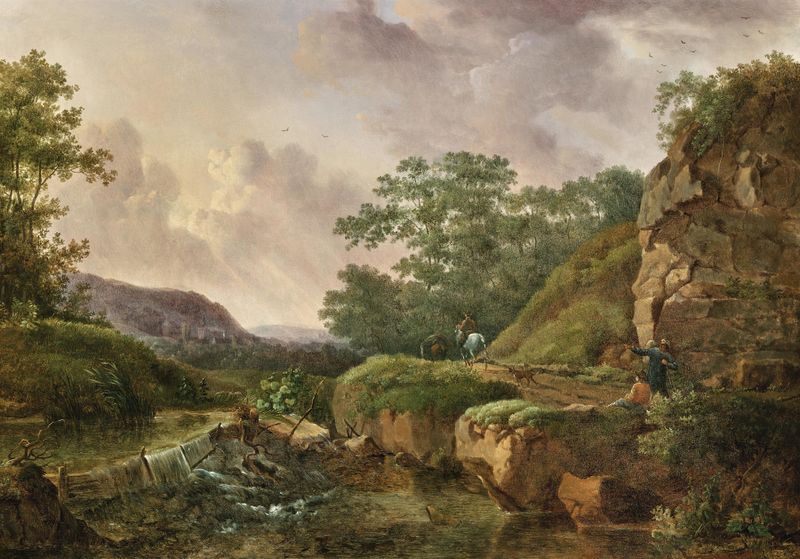
In the stillness of existence, fear lurks beneath the surface of serenity, waiting to be unveiled. Focus on the distant horizon where soft hills gradually rise, their muted greens and browns echoing a sense of quietude. The sky, painted in delicate shades of twilight, suggests an imminent change, hinting at the emotional undercurrents that lie within the tranquil landscape. Notice how the brushstrokes evoke a sense of movement, as if the scene itself is caught in a breath—trapped between the calm of nature and the turbulence of thought. The contrast between the tranquil foreground and the stormy sky elevates the emotional tension, embodying a silent battle between hope and dread.
Hidden figures might wander among the trees, representing solitude or the fears that haunt the soul. Subtle highlights glint off the foliage, suggesting moments of enlightenment amidst the shadows, inviting viewers to ponder the nature of their own fears and aspirations. Julien Joseph Ducorron painted Landscape during the early 19th century, a period marked by burgeoning Romanticism. Living in a time when the world was embracing industrialization, he sought solace in nature, capturing the juxtaposition of beauty and anxiety.
As the Romantic movement took shape, artists began to express their inner emotional landscapes, reflecting the tumultuous changes of their era while searching for deeper meaning through the natural world.