Landscape — History & Facts
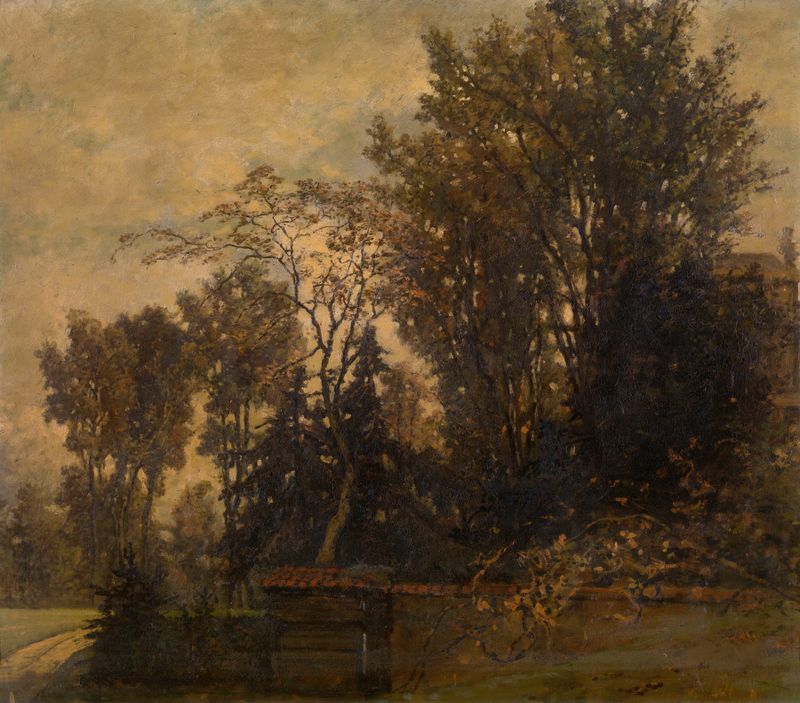
Where does light end, and longing begin? In the delicate strokes of a canvas, the boundary between the two becomes a poignant dialogue, echoing the deep yearning within us all. Focus on the horizon, where soft brushstrokes merge the sky and land in an embrace of muted greens and blues. The interplay of color creates an ethereal atmosphere, inviting your gaze to wander toward a distant, almost dreamlike landscape. Notice how the light subtly dances across the rolling hills, casting gentle shadows that evoke a sense of depth and tranquility—each layer of paint revealing Lies' mastery in capturing the essence of nature. Yet, behind this serene surface lies a profound emotional tension.
The contrasting tones of light and shadow suggest the coexistence of hope and melancholy. Look closely at the wisps of clouds, tinged with a somber gray—do they symbolize fleeting moments of happiness, or the inevitability of change? The landscape, though beautiful, hints at an elusive paradise, forever out of reach, prompting reflections on the nature of desire and fulfillment. Joseph Lies created this piece during a time when the Romantic movement began to influence artists across the continent, emphasizing emotion and the sublime beauty of nature. Working in the late 19th century, Lies found himself part of a broader artistic conversation, exploring the depths of human experience through landscape painting.
The context of his era—marked by industrialization and a yearning for pastoral simplicity—enriched his work, inviting viewers to contemplate their own relationships with the natural world.