Landscape — History & Facts
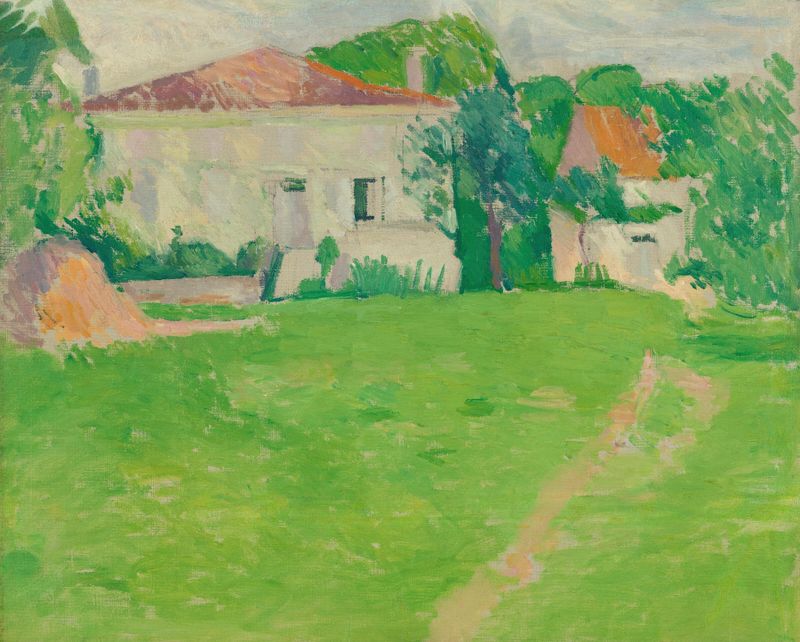
When did color learn to lie? Patrick Henry Bruce's Landscape challenges our perception, weaving a tapestry of hues that seems to dance beyond the realm of reality. Look to the left at the bold strokes of emerald and sapphire, where the artist’s palette sings with an intensity that captivates the eye. The sweeping horizon is not merely a depiction of nature; it is an abstraction that draws the viewer into a space that feels both familiar and foreign. Notice how the brushwork creates a rhythm, a kind of heartbeat that pulses through the canvas, inviting the viewer to explore the relationship between color and form. In this work, the juxtaposition of vibrant colors against more subdued tones creates emotional tension and a dialogue between the known and the unknown.
The gentle curves of the landscape suggest tranquility, yet the unexpected clashes of color evoke unease, as if nature itself is in conversation with time. The overall composition challenges our understanding of the natural world, hinting at a deeper narrative about the passage of time and the evolution of perception. Created between 1910 and 1914, this piece emerged during a transformative era in the art world. Bruce was heavily influenced by the modernist movement, leading him to explore abstraction and the emotional resonance of color.
The early 20th century was a time of great experimentation, as artists sought to break away from traditional representation. Bruce's work reflects this shift, as he sought to redefine the landscape genre, inviting viewers to question their relationship with the world around them.