Landscape — History & Facts
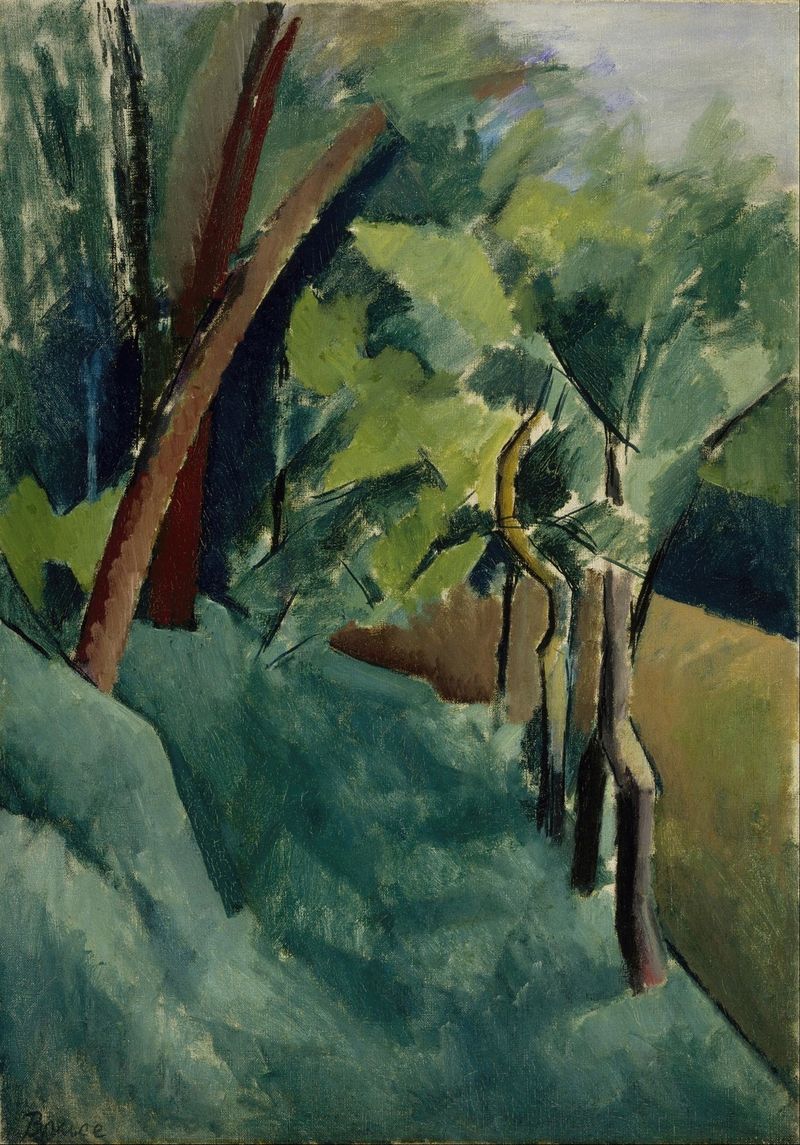
In this landscape, the absence of human presence speaks volumes about betrayal, loss, and the weight of unspoken words. The viewer is invited to explore the profound depths of solitude revealed through the artist’s brush. Look to the upper left at the gentle sway of the trees, their dark silhouettes contrasting against the soft, muted colors of the sky. The painter employs a delicate palette of greens and blues, with hints of ochre, creating an atmosphere that is both serene and melancholic.
The composition draws the eye down towards the horizon, where the land seems to ripple with an undercurrent of tension—each stroke hinting at a deeper narrative beneath the tranquil surface. This work embodies a paradox: the calm beauty of nature is juxtaposed with an unsettling stillness that suggests hidden discontent. The trees stand sentinel, their stoic forms echoing the weight of unexpressed emotions and unresolved conflicts. Perhaps there’s a fear of the past lurking in those shadows, a reminder of broken promises and betraying winds that whisper through the leaves. Created in 1910, this piece emerged during a transformative period for Patrick Henry Bruce, who was experimenting with abstraction while navigating the complex art scene in New York City.
At this time, he was increasingly influenced by the works of European modernists, seeking to articulate human experience through a new visual language. Reflecting personal and societal upheavals, this landscape captures not just the environment but also the turmoil of the artist's own heart.