Landscape — History & Facts
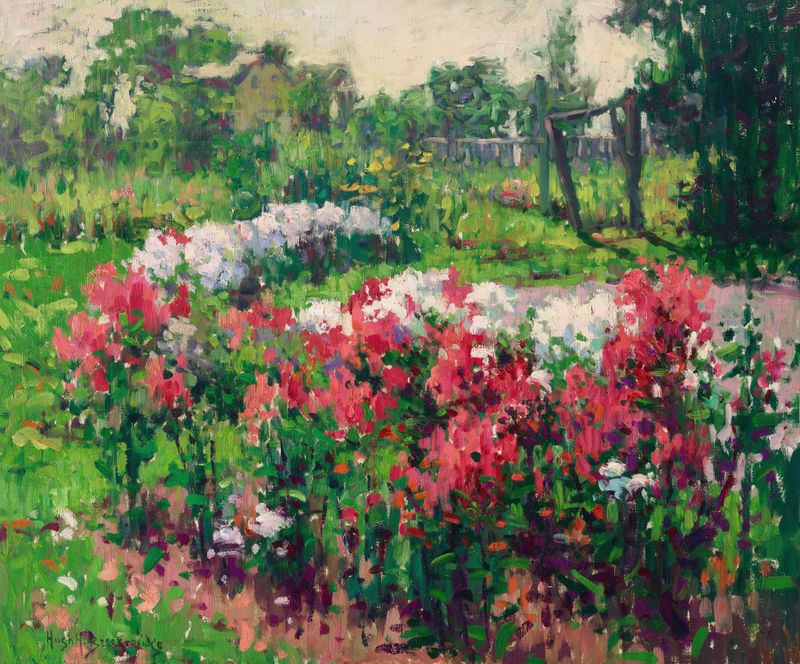
Can paint confess what words never could? In Landscape, the vivid strokes and swirling forms challenge not just perception, but also our understanding of reality itself, hinting at the madness that lingers beneath the surface. Look to the center, where vibrant greens and blues swirl together in a chaotic dance, a visceral representation of nature that defies conventional boundaries. The brushstrokes are both aggressive and tender, conveying an urgency that pulls the viewer into this world of fervent color. Notice how patches of sunlight break through the tumultuous clouds, casting fleeting highlights on the landscape, juxtaposing calm and chaos in a striking visual narrative. Delve deeper into the painting’s layers, and you'll find contrasts that speak to the human psyche.
The frenetic energy of the foreground seems to pulse with life and movement, while the distant mountains loom like silent witnesses to the unraveling chaos. This tension between vibrant immediacy and distant stability suggests an inner conflict, reflecting the turmoil Breckenridge may have felt in his own life. The madness is woven into the fabric of the scene—both beautiful and unsettling. In 1908, while living in Pennsylvania, the artist was immersed in a world that was rapidly evolving, marked by shifting artistic paradigms and the dawn of modernism.
Landscape emerged during a time when Breckenridge sought to express his emotions and thoughts on canvas, embracing abstraction in a world increasingly influenced by industrialization and change. It was a pivotal moment for him, as he navigated the delicate balance between tradition and innovation in his work.