The Phlox Garden — History & Facts
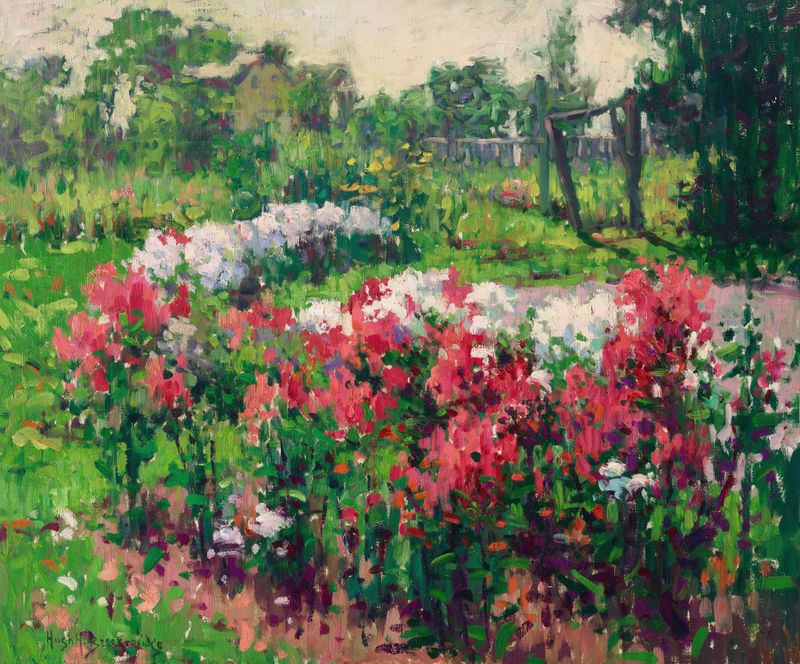
Amidst the vibrant blooms, a gentle breeze stirs the petals of the phlox, creating a soft symphony of color and movement. A lone figure, perhaps a gardener or a contemplative soul, wanders through the lush greenery, their silhouette framed by a riot of pinks, purples, and whites. Dappled sunlight filters through the flourishing branches, casting playful shadows that dance across the earth, capturing the serene yet dynamic balance of nature in this tranquil haven. Look to the left at the explosion of color where the flowers burst forth, their delicate forms contrasting beautifully against the muted greens of the foliage.
Notice how Breckenridge employs bold brush strokes, layered with rich pigments that suggest both depth and vibrancy. The composition draws the eye naturally, guiding it through the garden’s path and inviting you to explore every corner. Each element in the painting feels harmoniously arranged, reflecting the artist's deft hand and intention to evoke the essence of a flourishing garden in full bloom. Yet beneath the surface beauty lies an exploration of balance—the equilibrium between nature’s wildness and the careful cultivation of the garden.
The figure's relaxed posture suggests a moment of introspection, indicating a relationship between human presence and nature's untamed spirit. The interplay of light and shadow further emphasizes this theme, revealing the transient yet harmonious moments that exist in the cycle of growth and decay, a reminder of life's fleeting nature. Hugh Henry Breckenridge painted The Phlox Garden in 1906 during his time in Pennsylvania, a period marked by his dedication to capturing the American landscape. The early 20th century was a vibrant time for American artists, with movements like Impressionism beginning to take root.
Breckenridge, influenced by both European styles and the lush surroundings of his home, sought to express the beauty of the natural world through his unique lens, contributing to a broader dialogue about American art and its connection to place.