Landscape — History & Facts
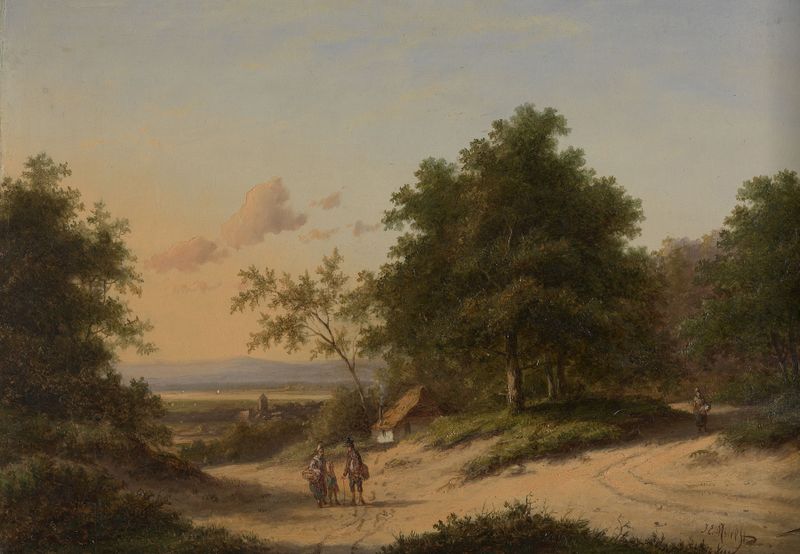
Could beauty survive in a century of chaos? The interplay of light and shadow within this landscape invites us to ponder the resilience of nature amid human turmoil and the looming shadows of history. Look to the foreground, where a serene meadow unfolds, painted in vibrant greens and dotted with delicate wildflowers. The horizon stretches wide, drawing your gaze toward a gentle hill crowned with trees. Notice how the soft, diffused light washes over the landscape, creating an ethereal atmosphere, while the darker, more tumultuous skies hint at an underlying tension.
Each brushstroke seems to dance with life, yet carries within it an echo of something lost. As you explore further, the juxtaposition of tranquility and impending upheaval becomes palpable. The lush green of the meadow is a stark contrast to the dark clouds that swirl above, representing the loss of peace that shadows human existence. The winding path suggests a journey, yet it beckons the viewer to contemplate where it leads—perhaps toward the chaos hinted at in the distant horizon.
This balance of beauty and foreboding leaves us questioning what will be left of this serene landscape in the tide of time. In the late 18th and early 19th centuries, Jan Evert Morel painted Landscape, a period marked by great social and political unrest. Living in the Netherlands, the artist navigated the shifting tides of the Enlightenment and the emerging Romantic movement. This work reflects his keen observation of nature’s quiet strength amidst the chaos of the age, capturing both the aesthetic and the emotional weight of his surroundings.