Wooded Landscape — History & Facts
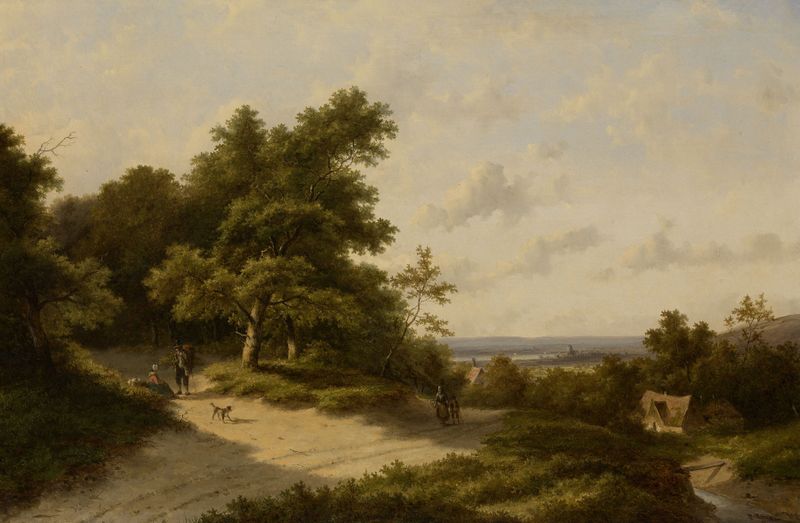
Did the painter know this moment would outlive them? The stillness of a wooded landscape whispers secrets of chaos beneath its serene surface, inviting contemplation of nature's eternal dance. Look to the center of the canvas, where a tangled thicket of trees rises majestically, their gnarled branches intertwining like old friends. Notice how the light filters through the foliage, creating dappled patterns on the forest floor, guiding your eye to the subtle interplay between shadow and illumination. The deep greens and earthy browns echo the vitality of life, while delicate brushstrokes reveal a masterful balance of realism and romanticism, inviting you to wander into this tranquil yet charged realm. The essence of chaos sits just beneath the calm exterior—each tree stands firm yet hints at an unseen storm, an imminent change that looms in the silence.
The juxtaposition of light and dark symbolizes the duality of existence: peace within the embrace of nature and the unpredictable forces at play. Tiny details, like the delicate flowers peeking through the underbrush or the uneven terrain, provoke thoughts on resilience and adaptability. These contrasts underscore the transient nature of beauty, reminding us of the fragile harmony of the world. Created between 1769 and 1808, this piece emerged during a period of burgeoning Romanticism, a time when artists like Morel sought to capture the sublime qualities of nature.
Living in the Netherlands, Morel was deeply influenced by the landscape surrounding him, as he wrestled with the conflicts of an evolving artistic movement that yearned for emotional depth and connection to the natural world. In this context, his wooded landscape becomes a testament to the enduring power of art to encapsulate a moment in time, even amidst the chaos of change.