Landscape — History & Facts
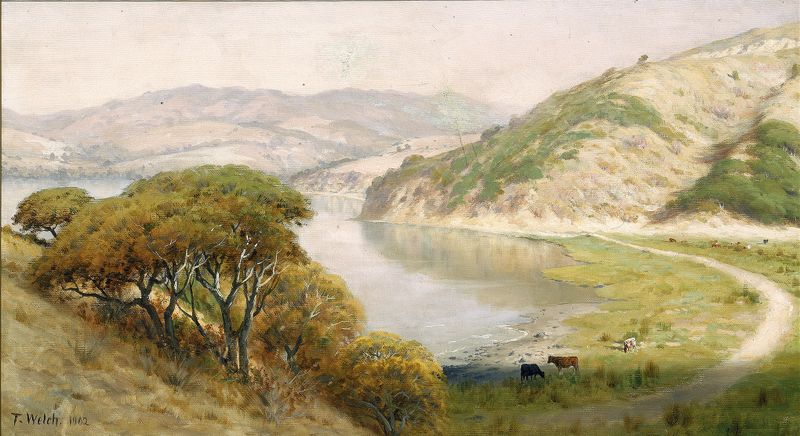
In Landscape, the viewer is invited into a serene dialogue with nature, a reminder of the beauty that emerges from contemplation and creation. Look to the foreground, where delicate brush strokes depict a gentle meadow, a soft palette of greens and yellows seamlessly blending into each other. The trees stand sentinel on the horizon, their muted browns and deep greens contrasting with the vibrant sky that encapsulates a fleeting moment of dusk. Notice how subtle variations in color reveal the artist's skillful technique, allowing light to filter softly, casting an enchanting glow that invites the viewer to linger. Hidden within this tranquil scene are layers of emotional depth, reflecting the artist’s connection to nature as both a creator and a participant.
The interplay of light and shadow suggests an ephemeral quality, a reminder of time’s passage. The rhythmic movement of the grass, captured in soft strokes, evokes a sense of life and continuity, while the stillness of the landscape speaks to the profound silence that accompanies solitude. At the turn of the century, Thaddeus Welch painted Landscape in 1902, a period marked by a growing interest in impressionism and the exploration of the natural world. Living in a time when industrialization was reshaping society, Welch sought refuge in the beauty of untouched landscapes, capturing fleeting moments of tranquility in a rapidly changing world.