Landscape — History & Facts
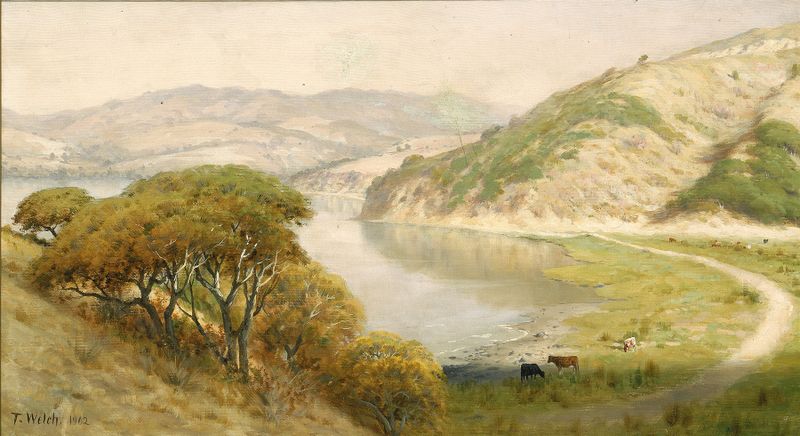
What secret hides in the quiet of the canvas? In the stillness of Landscape, an intricate narrative unfolds—a legacy whispered through the strokes of paint, inviting us to listen closely. Look to the foreground, where gentle hills rise and fall like waves of tranquility, their soft greens harmonizing with muted earth tones. Notice how brushstrokes blend seamlessly, creating a sense of depth that draws the eye into the horizon. The light plays delicately across the scene, casting shadows that dance along the textured surface, hinting at the passage of time.
Each element, from the expansive sky to the distant trees, contributes to a composition that feels at once both expansive and intimate, as if the viewer is peering into a sacred moment of nature. The emotional tension lies in the contrast between the stillness of the landscape and the ephemeral nature of existence. The subtle hues suggest a fleeting beauty, reminding us of the inevitable transience of life. The distant trees, while seemingly sturdy, stand as quiet sentinels to the changes brought by time, embodying both resilience and vulnerability.
Here, the artist encapsulates the delicate balance between permanence and the ephemeral, inviting us to reflect on our own legacies. In 1902, Thaddeus Welch painted this piece during a time of artistic innovation and exploration in America. Settled in a country rapidly changing with the rise of industrialization, the artist sought solace in the natural world, capturing its essence as a quiet rebellion against the noise of modernity. This work not only reflects his personal connection to the landscape but also serves as a timeless reminder of the beauty that endures amidst the chaos of life.