Landscape, Antibes — History & Facts
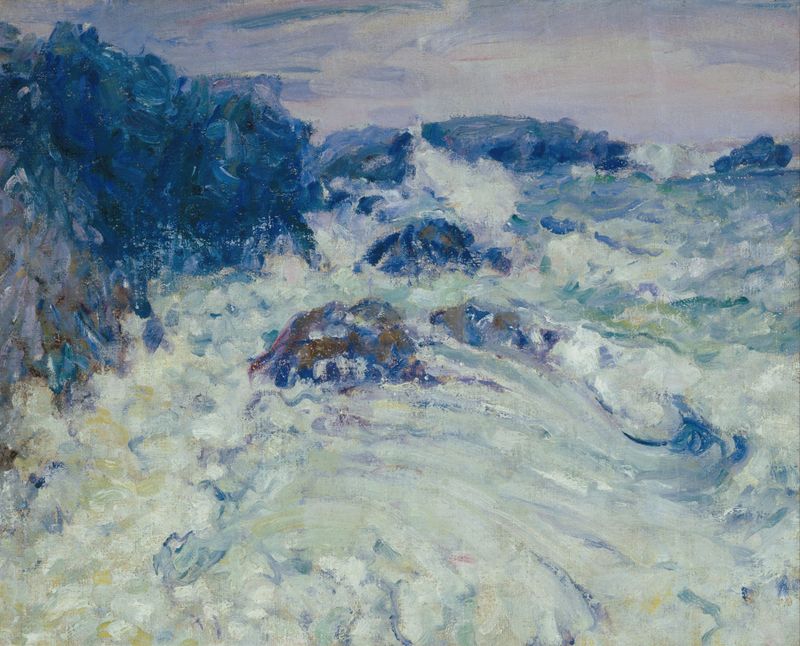
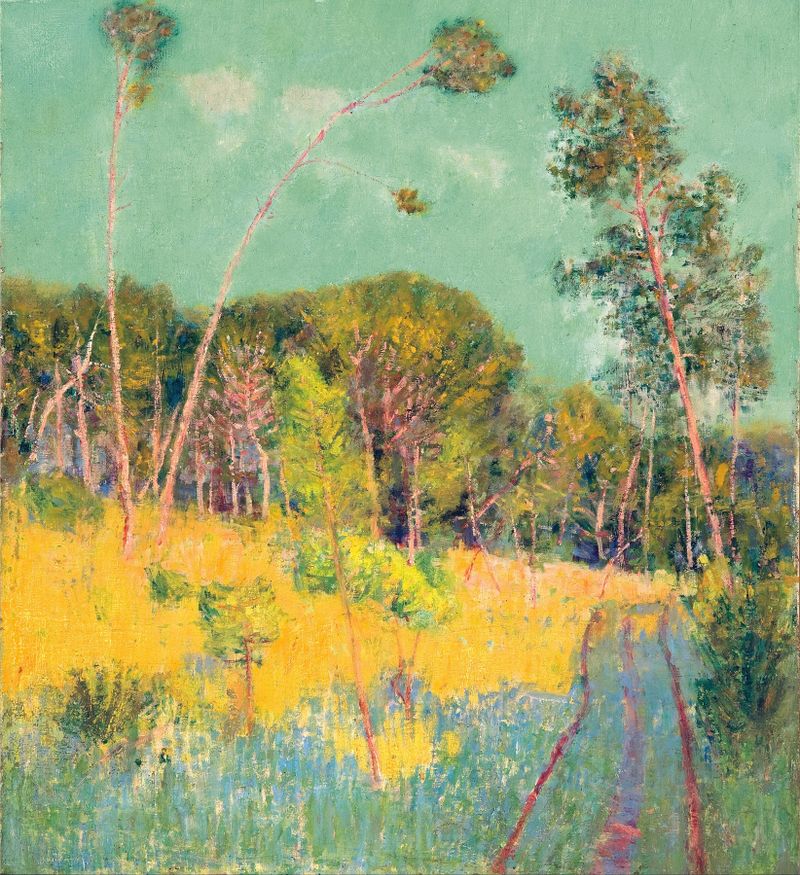
Who listens when art speaks of silence? In John Peter Russell’s Landscape, Antibes, one feels the echoes of a sun-drenched day nestled within the folds of time, whispering tales of beauty and nostalgia. Look to the foreground where the lush greens of the foliage embrace the coastline, their vibrant hues juxtaposed against the serene blue waters. Notice how the sunlight dapples through the leaves, creating a delicate interplay of light and shadow that dances on the canvas. The gentle brushstrokes convey a sense of movement, as though the breeze carries the fragrance of salt and earth into the viewer's space, inviting you to linger in this tranquil moment. There’s a profound contrast between the stillness of the landscape and the undercurrent of human absence.
The calm sea, dotted with white sails far in the distance, evokes a sense of longing for connection, while the untouched land speaks of solitude. The rich textures of the land evoke emotions tied to memory, suggesting that nature itself is a keeper of stories, each blade of grass a witness to moments long past. Russell painted Landscape, Antibes in 1905 while living in the French coastal town, a time when the Impressionist movement was gaining momentum. Engaging deeply with the vibrancy of the Mediterranean, he sought to capture the essence of light and color in his work, reflecting both his artistic evolution and the aesthetic shifts of his contemporaries.
This piece embodies not just a moment in time, but also his personal journey amidst the beauty of a world in transition.