Landscape at Mjøsa — History & Facts
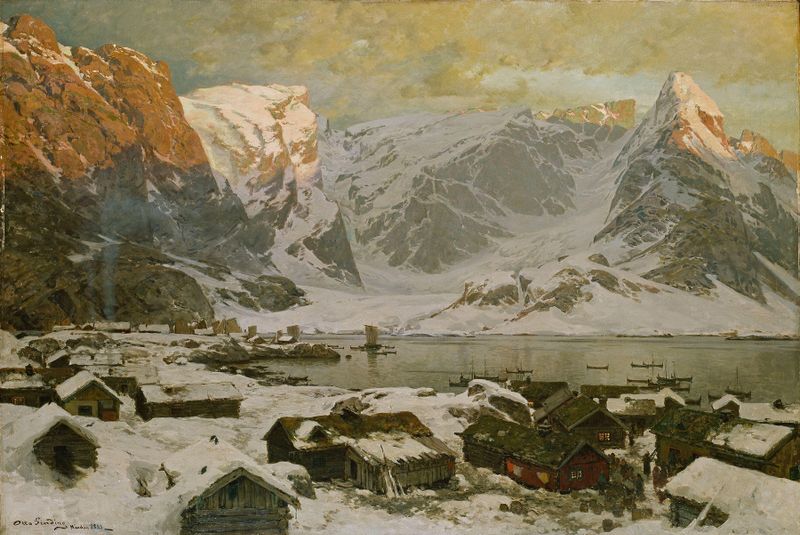
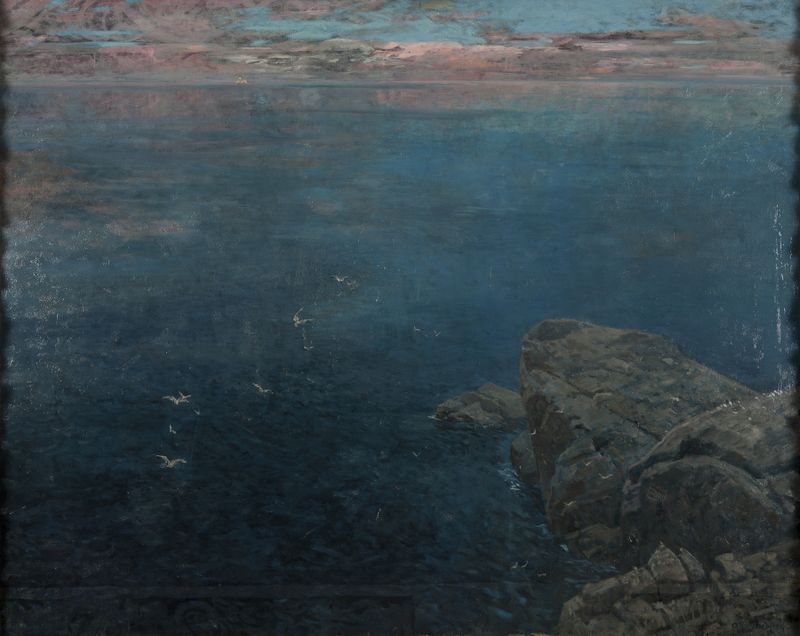
In the quiet expanse of a landscape, what remains unspoken often carries the most weight. Here, a world unfolds where emptiness breathes a haunting silence, inviting introspection and reflection. Look to the horizon, where the placid waters of Mjøsa stretch infinitely, their surface mirroring the muted hues of the sky. Notice how the soft blues and greys intermingle, creating a seamless division between land and sky.
The gentle brushstrokes evoke a tranquil stillness, while the sparse composition emphasizes the vastness of the scene. Each tree, rendered with tender precision, stands like a solitary figure, grounding the viewer amidst the surrounding solitude. Beyond its serene façade, the painting speaks to the tension between nature and solitude. The vast emptiness fosters an emotional resonance, tapping into feelings of longing and introspection.
The gentle undulation of the hills juxtaposes the still waters, symbolizing the contrast between inner turmoil and outer calm. This delicate balance invites viewers to ponder their own place in the vastness of the world, making the silence resonate deeply. Created in 1877, this work emerged during a time when Otto Sinding was refining his style in Norway, navigating the transitional landscape of European art. Embracing the natural world, he sought to capture its essence amidst broader artistic movements.
As he painted in the tranquil environment of Mjøsa, Sinding was both influenced by and contributing to the evolving discourse on realism in landscape painting, where the depiction of nature served as a mirror for human emotions.