The Outermost Skerries — History & Facts
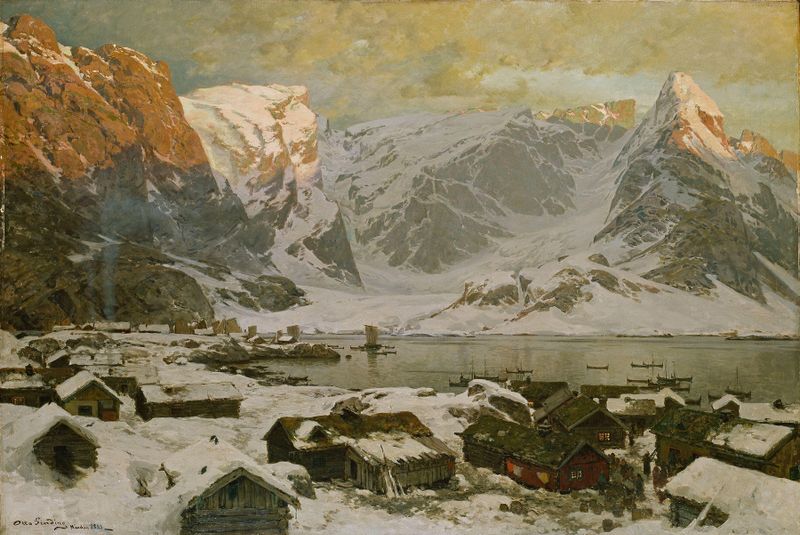
When did color learn to lie? In the depths of The Outermost Skerries, the hues intertwine with a quiet resilience, beckoning the viewer to explore the layers of truth and illusion within the natural world. Focus first on the vibrant blues that dominate the canvas, where sea and sky merge into a harmonious yet tumultuous dance. Notice how the brushstrokes create a texture that breathes life into the waves, each ripple and crest reflecting a different shade of hope. The rocky skerries, rendered in earthy browns and grays, stand steadfast against the vibrant chaos, anchoring the viewer’s gaze and suggesting a permanence amidst the transience of nature. Delve deeper, and you'll find the tension between light and shadow, where the radiance of the sun casts a golden glow on the tumultuous waters, hinting at the duality of joy and struggle.
The delicate interplay between the shimmering surface and the shadowy depths beneath speaks to the complexity of human emotion—light as a symbol of hope, yet shadow suggesting the challenges that color our perceptions. It’s a reminder that beauty can exist alongside turmoil, and that hope perseveres even in stormy seas. Otto Sinding painted The Outermost Skerries during a time when he was deeply influenced by the natural splendor of Norway, reflecting the Romantic movement's emphasis on emotion and nature. While the exact date remains elusive, Sinding’s work emerged around the late 19th century, a period marked by a growing interest in landscape painting and an appreciation for the sublime, as he sought to capture the essence of the Norwegian coastline and its profound effect on the human spirit.