
Landscape by the Rhine — History & Facts
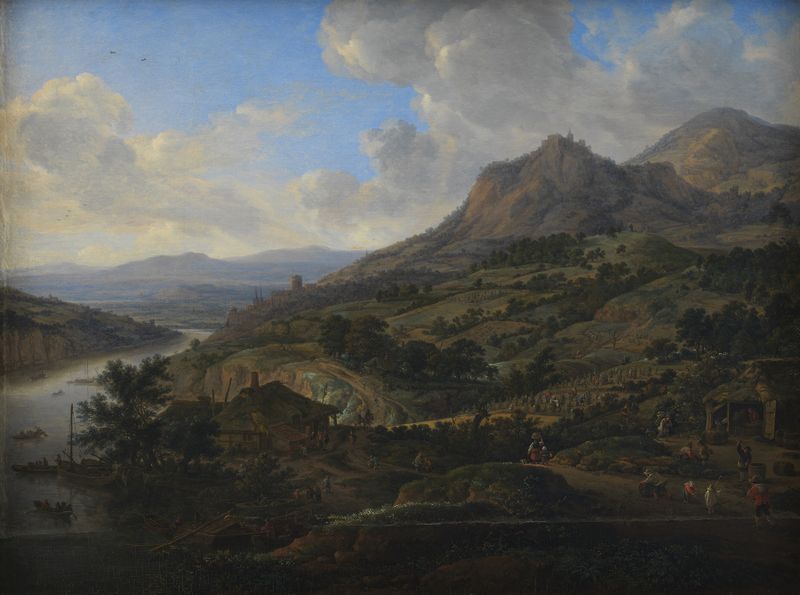
Did the painter know this moment would outlive them? In Landscape by the Rhine, a serene tableau unfolds, capturing an eternal tranquility that seems almost divine. Look to the center of the canvas where the river meanders gently, reflecting the soft hues of the setting sun. Notice how the artist employs a delicate palette of greens and golds, weaving together nature's bounty with ethereal light. The distant hills cradle the horizon, inviting the eye to wander deeper into the landscape, while wispy clouds dance above, infusing the scene with a sense of calm and wonder.
Each stroke reveals Saftleven's mastery of light and shadow, guiding the viewer to appreciate the delicate balance of nature and humanity. Within this serene landscape, contrasts come alive. The vibrant life along the bank—lush trees and tiny figures engaged in the toil of daily life—stands against the vast, contemplative sky, suggesting a connection to something higher. The interplay between the bustling riverbank and the expansive, tranquil sky evokes a profound sense of peace, as if the viewer is invited to pause and reflect on their own existence within such beauty.
The divine whispers through the quiet, reminding us of the fleeting nature of time. Created between 1649 and 1659, this work reflects Saftleven’s deep engagement with the beauty of the natural world during a time when Dutch landscape painting was gaining prominence. Living in a period marked by economic prosperity and artistic flourish in the Netherlands, he imbued his landscapes with a reverence for nature, capturing its essence while emerging as a notable figure within the artistic community of his time.
More Artworks by Herman Saftleven
Browse all →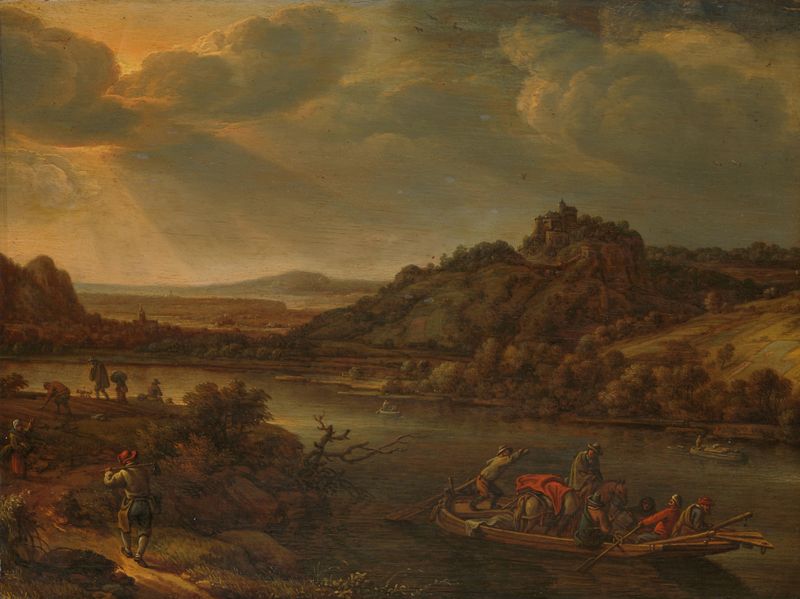
River view with ferry
Herman Saftleven
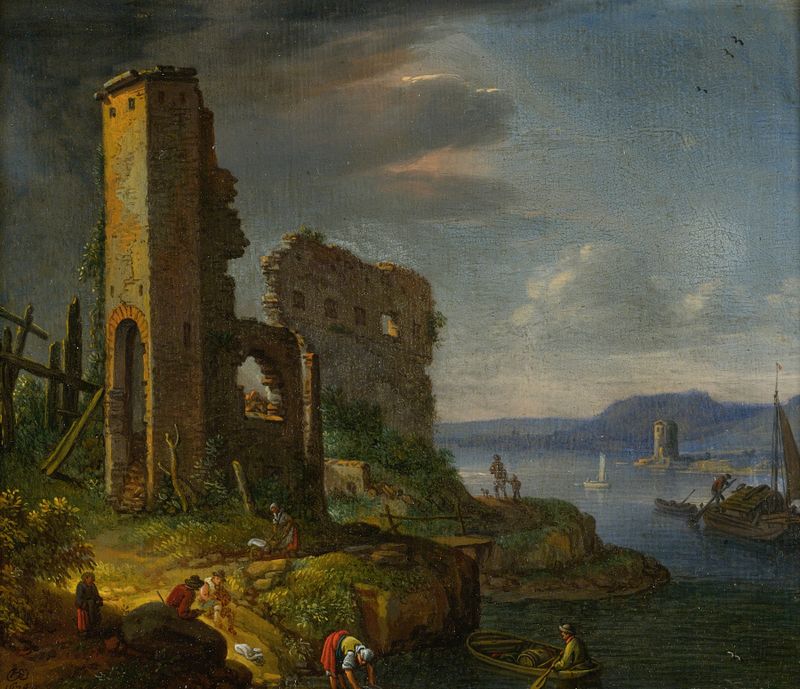
River Landscape With Ruins, Boats And Figures
Herman Saftleven
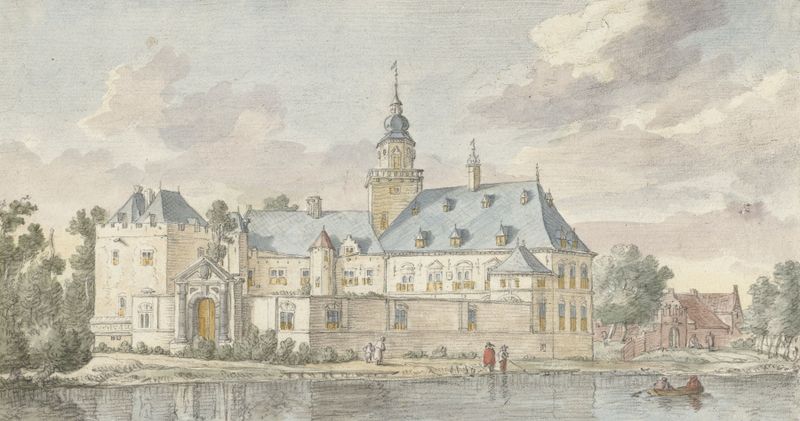
Gezicht op kasteel Nijenrode
Herman Saftleven
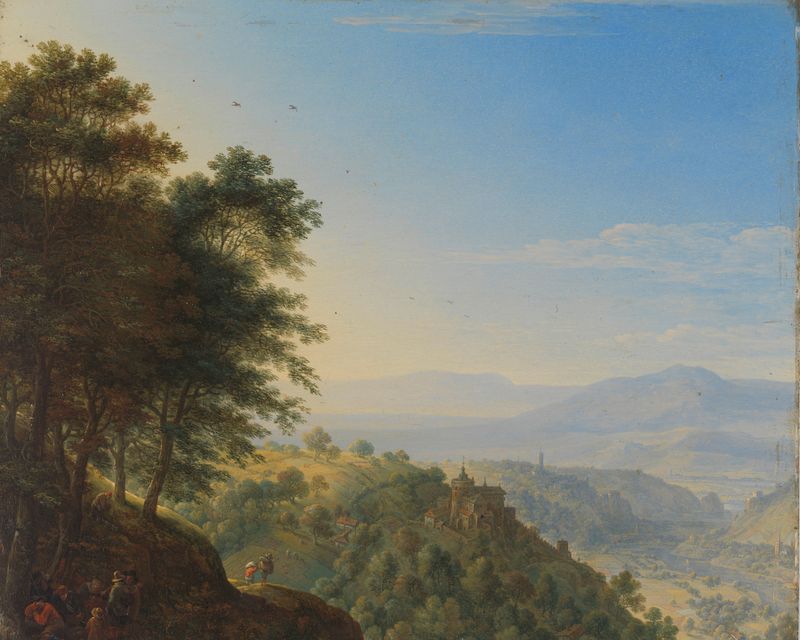
Berglandschap bij Boppard aan de Rijn
Herman Saftleven
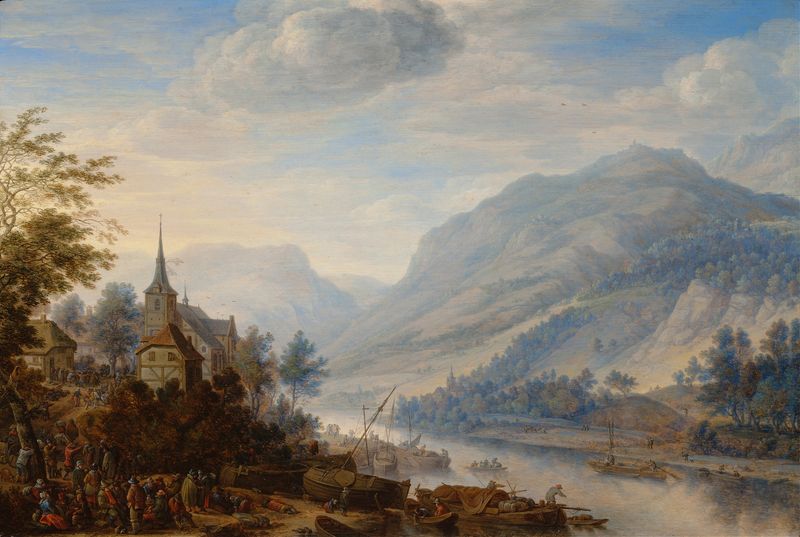
View of the Rhine at Reineck
Herman Saftleven
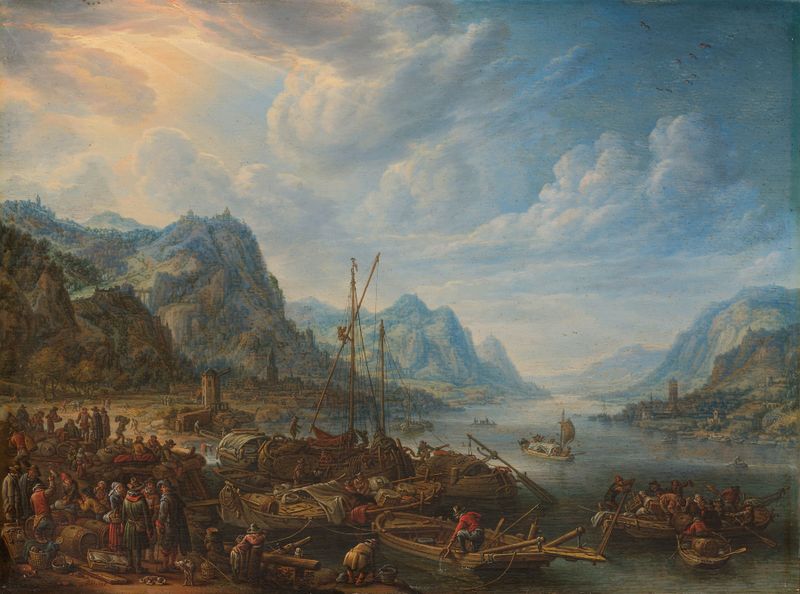
Riviergezicht met aanlegplaats
Herman Saftleven
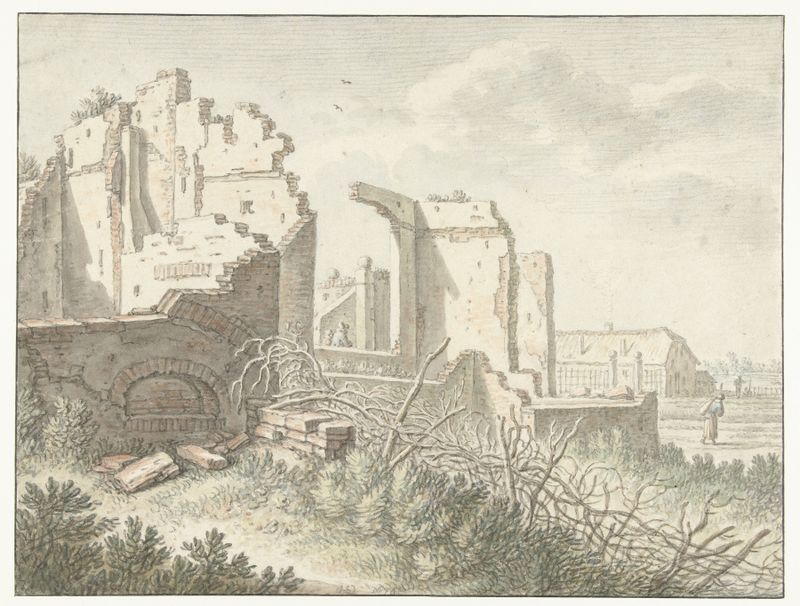
Ruïne buiten de Wittevrouwenpoort te Utrecht
Herman Saftleven
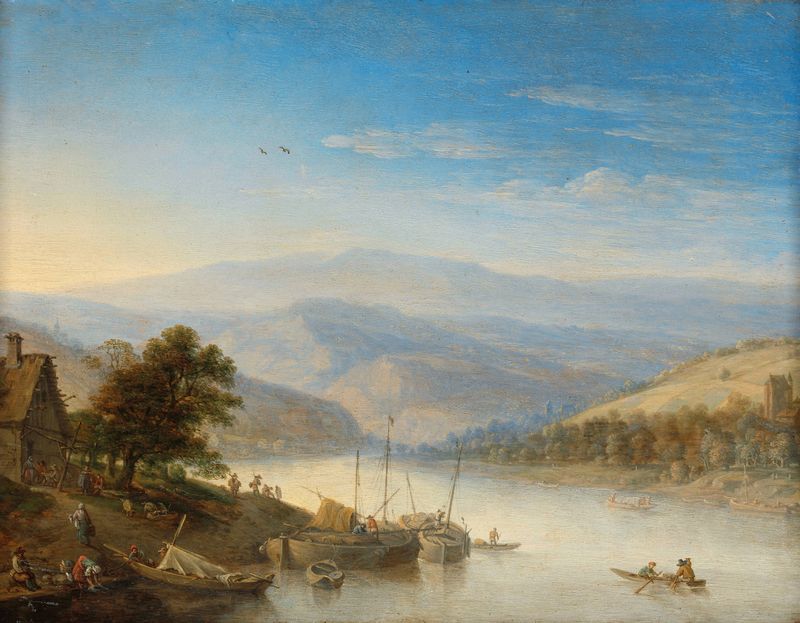
View of the Rhine River near Andernach
Herman Saftleven
Wine Harvest at the Rhine
Herman Saftleven
Gezicht op de Rijn bij Andernach
Herman Saftleven





