Landscape from Holmsbu — History & Facts
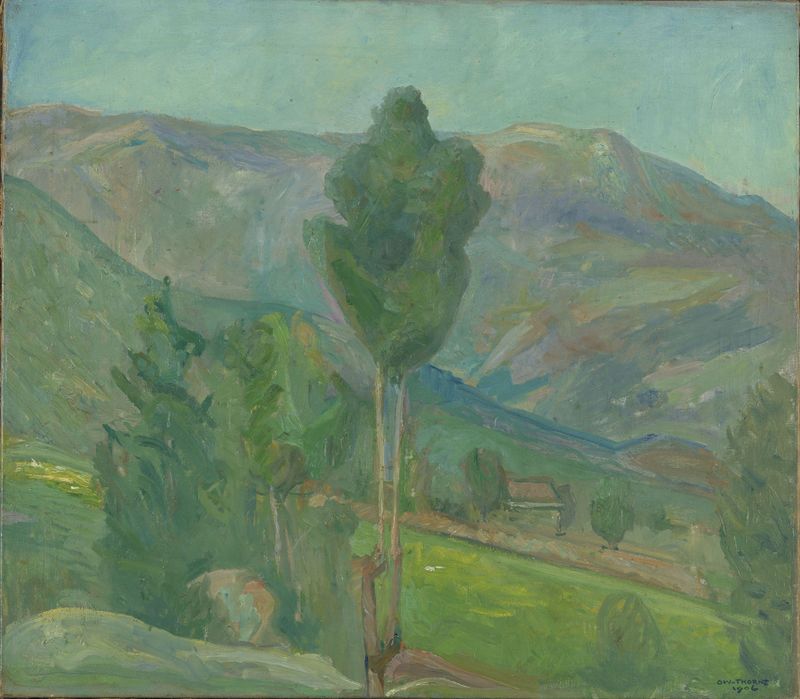
In the delicate interplay of hues lies a profound melancholy that resonates with the viewer, inviting introspection and contemplation. Look to the left at the gentle undulation of hills, their soft greens merging seamlessly with the muted blues of the water. The artist masterfully employs a subtle palette, allowing the landscape to breathe with a sense of stillness. Notice how the wispy clouds above reflect in the calm surface below, creating a mirror-like quality that enhances the painting’s tranquility.
The careful brushstrokes convey both movement and serenity, drawing one’s gaze across the scene as if it were a whisper carried by the wind. Beneath the surface, the contrast between the vibrant foreground and the shadowy recesses of the background suggests a deeper emotional narrative. The light spilling over the hills conveys a fleeting optimism, while the somber tones in the water evoke a feeling of lost time. This dynamic between light and shadow encapsulates the bittersweet nature of memory and the passage of life, hinting at stories untold and moments forever cherished. Created in 1911, the artwork emerged during a time of great transformation for Oluf Wold-Torne, who was living in Norway.
The early 20th century saw a shift towards modernism in art, and this piece reflects his response to the changing landscape of Norwegian life and his exploration of natural beauty. Wold-Torne's experiences in Holmsbu, a picturesque village, allowed him to immerse himself in the serene yet evocative environment that inspired this captivating work.