Landscape from Petržalka — History & Facts
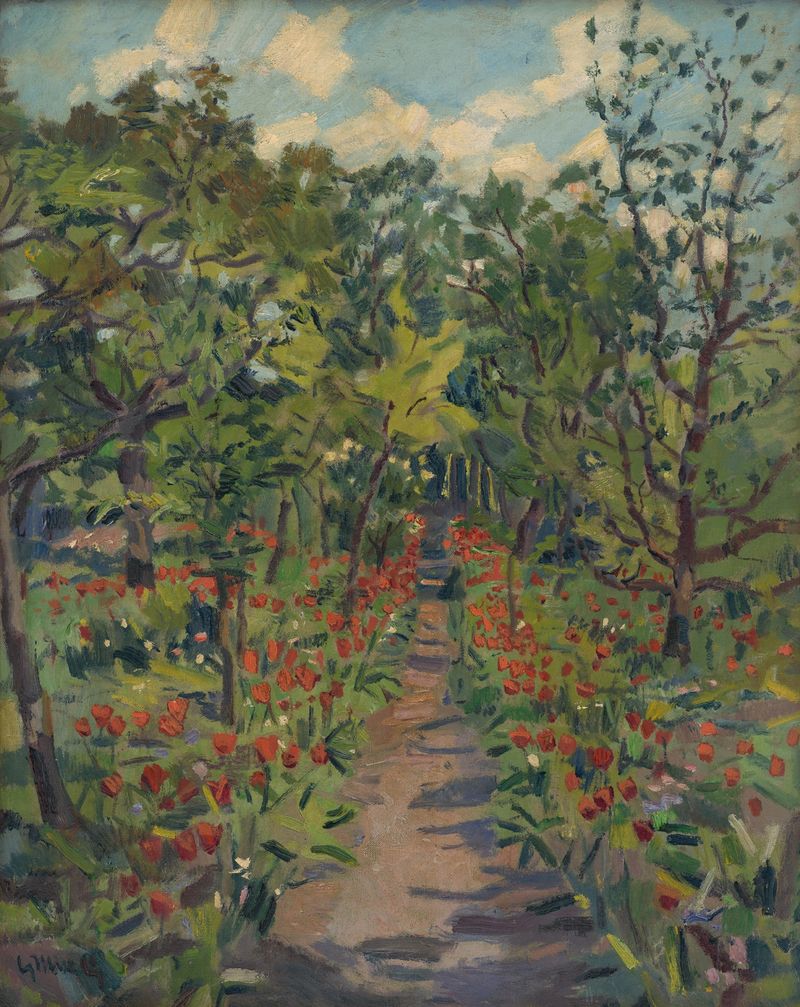
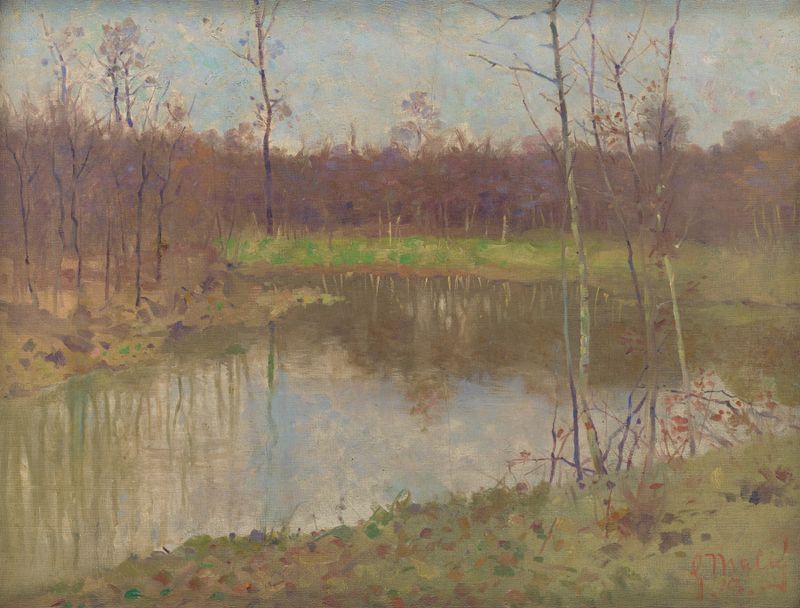
This sentiment echoes through the brushstrokes of a landscape that teeters on the edge of serenity and emptiness, inviting a journey into the heart of a void where nature and existence converge. Look to the left at the sweeping horizon, where the gentle undulations of the hills are washed in muted greens and browns. Notice how the artist captures the fleeting whispers of twilight, with soft pastels embracing the sky in a gradient of melancholic hues. The composition leads the eye toward a solitary tree, its skeletal branches reaching out against the soft backdrop, a poignant reminder of life’s fragility amidst a tranquil expanse. As you explore deeper, consider the contrast between the expansive beauty of the landscape and the stark isolation of the tree.
This juxtaposition unveils layers of meaning—an exploration of solitude, the interplay of hope and despair, and the haunting silence that can envelop nature. The vivid yet restrained palette evokes a sense of longing, as if the viewer is being beckoned to confront an emotional void that lies beneath the surface calm. In 1911, the artist worked on Landscape from Petržalka while living in Vienna, a city at the cusp of modernity, where the art world was in turmoil and transformation. Gustáv Mallý was influenced by the burgeoning movements of Impressionism and Symbolism, seeking to distill complex emotions through seemingly simple landscapes.
His work reflects not only personal contemplations but also a broader dialogue about the nature of existence in a rapidly changing world.