Landscape from Rome, Villa dei Quintili near Via Appia — History & Facts
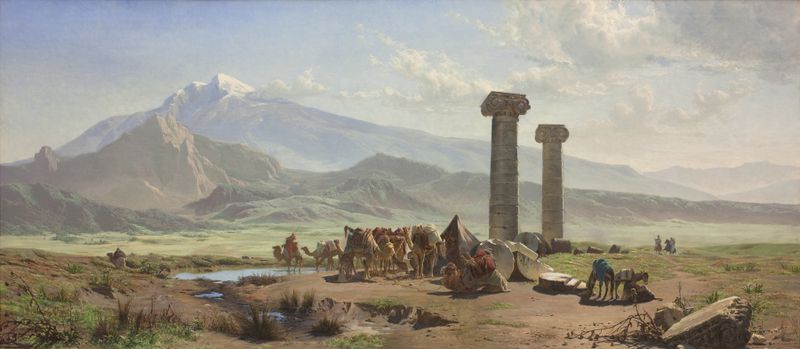
Who listens when art speaks of silence? In Landscape from Rome, Villa dei Quintili near Via Appia, the stillness stretches like an echo across the canvas, inviting contemplation. Focus first on the gently rolling hills that cradle the villa, their soft greens and warm ochres creating a harmonious embrace. Notice how the light spills across the landscape, illuminating the path winding through the trees, leading the viewer’s gaze deeper into the scene. The delicate brushwork captures both the lush foliage and the crumbling ruins, offering a sense of history entwined with nature.
The sky, a tranquil blue, acts as a backdrop, contrasting with the earthy tones below and evoking a serene yet poignant atmosphere. Hidden within this pastoral beauty lies a deeper narrative of longing and reflection. The villa, a symbol of both grandeur and decay, speaks to the transient nature of human endeavors. Each brushstroke suggests a moment frozen in time, yet the interplay of light and shadow hints at the inevitable passage of time, leaving the viewer pondering their own journey.
The composition balances serenity with an undercurrent of melancholy, inviting a dialogue about beauty and impermanence. In 1870, Jerichau painted this work while living in Rome, a city that stood as a beacon for artists seeking inspiration from its rich history and stunning landscapes. At this time, artistic movements were wresting with realism and impressionism, and Jerichau was influenced by both, striving to capture the essence of the Italian countryside. His life in this vibrant city during a transitional period in art reflects a profound engagement with themes of memory, beauty, and the silent whispers of the past.