The Lydian Plain near Sardis, Asia Minor (Turkey) — History & Facts
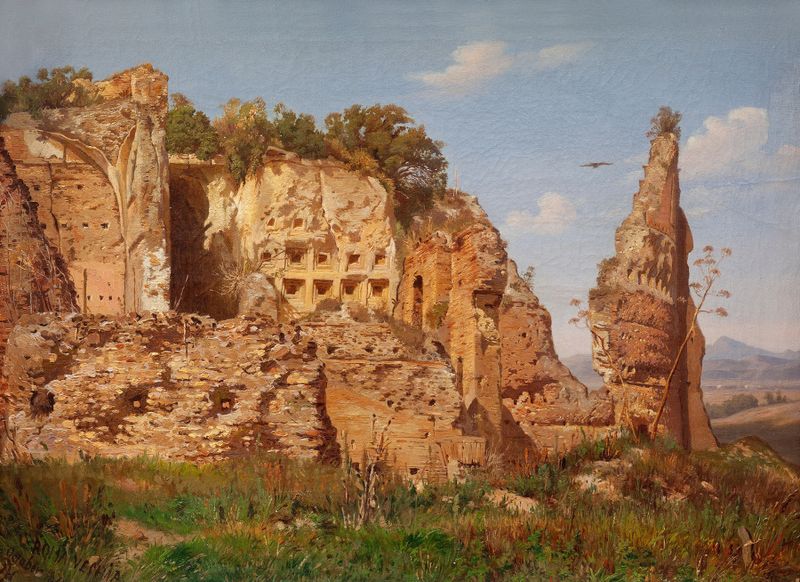
When did color learn to lie? In the hues of a landscape, questions arise as the eye traverses the painted terrain. What truths lie beneath the vibrant surface, echoing the fear of what nature conceals? Look to the foreground, where a rich tapestry of greens and browns entwines to create the rolling hills of the Lydian Plain. Notice how the light dances across the peaks, illuminating patches of wildflowers that bloom defiantly among the earth.
The sky, a gradient of cobalt blue, looms over the landscape, suggesting an impending storm or a fleeting moment of tranquility. Jerichau’s brushwork captures both the beauty and trepidation of the scene, inviting viewers to ponder the delicate balance between nature's splendor and its unpredictability. Yet, amid this pastoral allure lies a subtle tension. The horizon, jagged and imposing, hints at the untamed wilderness, provoking a sense of foreboding.
The lively colors mask an underlying anxiety, as the viewer grapples with the vastness that can both inspire and intimidate. Every stroke reflects the duality of existence—where beauty exists side by side with the unknown, urging us to confront our own fears. In 1878, the artist captured this striking landscape during a period of artistic exploration in Europe. Living in a time of transition, Jerichau was immersed in the influences of Romanticism and Realism, painting in Europe while engaging with the themes of nature and the human experience.
His work reflects both personal and societal reflections, offering a glimpse into how the era's complexities shaped artistic vision.